Malden Wood Flooring has done wood-flooring in Woburn for more than 20 years, and much of that work happens in houses that have outlived the families who first lived in them. We sand, refinish, repair and install hardwood for owners who plan to stay, owners getting a house ready to sell, and owners who want their floors easier to live on as the years go by.
Older floors reward a slow start. Before any sanding, we check the build year and look for painted surfaces, because Massachusetts runs its own lead-safe renovation rules for homes built before 1978. On old pine and early oak we count the boards and check their thickness first, since a floor sanded several times already has less wood left to give.
Large houses also mean long jobs, so we plan them in stages that let you keep using the rooms you need. Stairs get their own price by the tread and riser, patches go in as woven boards rather than filler, and every finish we use fits the Massachusetts VOC limits for wood coatings, which are tighter than the federal ones.
Floors in Woburn’s Oldest Houses
How Old the Housing Stock Really Is
Woburn’s Housing Production Plan for fiscal 2027 to 2032, prepared by JM Goldson, puts numbers on what anyone walking the older streets already senses. Its chart of residential structures by year of construction, drawn from 2024 MassGIS parcel data, shows 17.62 percent built between 1801 and 1900, 18.42 percent between 1901 and 1950, and 0.76 percent before 1800.
That 19th-century share dates to the years when Woburn was a tannery city; by 1884, 26 large tanneries employed 1,500 people. The same plan notes that older homes often require more maintenance because of aging systems, materials and layouts. Floors are part of that picture, since they sit on framing that has moved, dried and been cut into for a century or more.
Old Boards and the Wood That Is Left
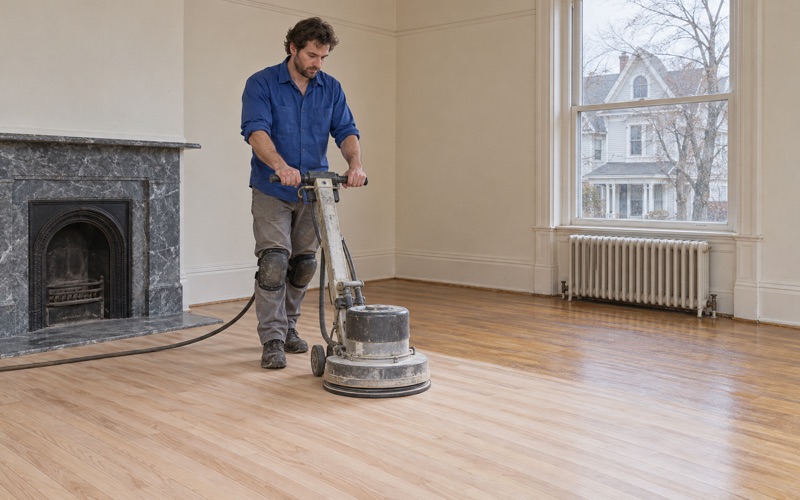
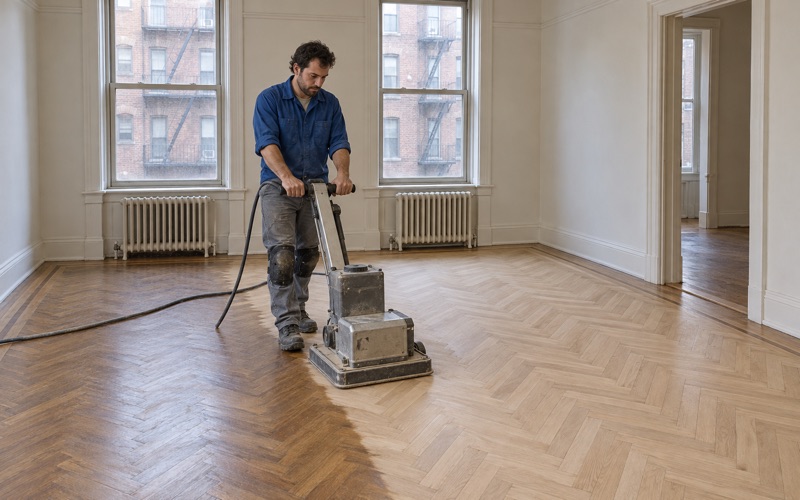
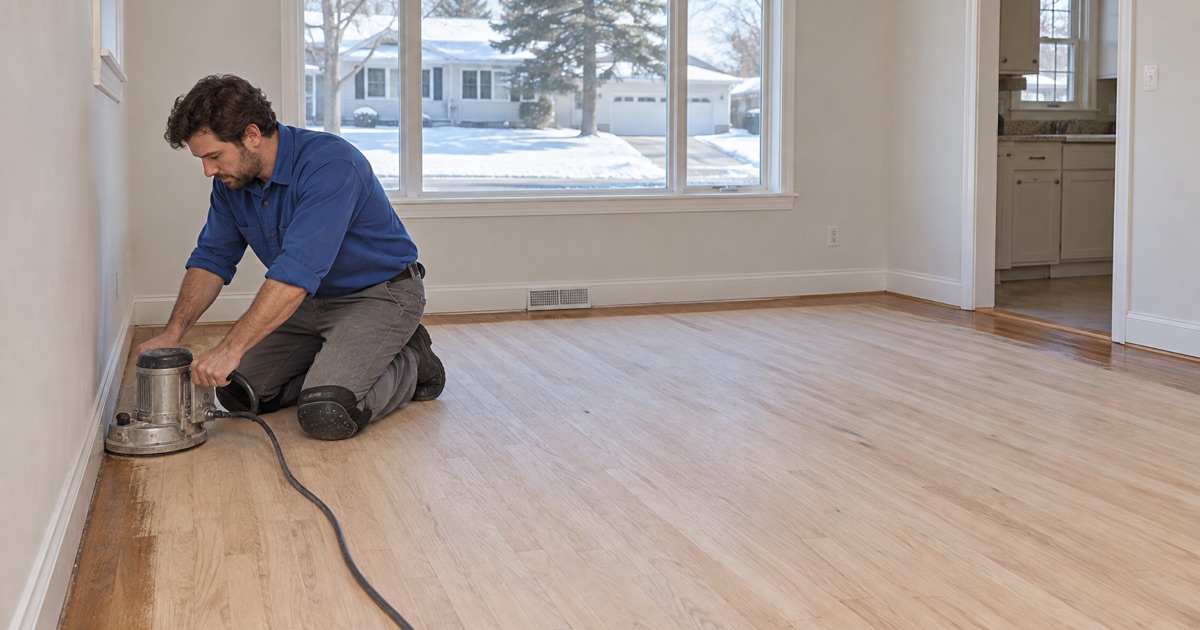
We never assume what is underfoot in an old house, because a floor that has been refinished three or four times can be closer to the tongue than it looks. We pull a floor register or a threshold where we can, measure the board above the tongue and groove, and only then decide between a full sanding with a drum sander and a lighter pass.
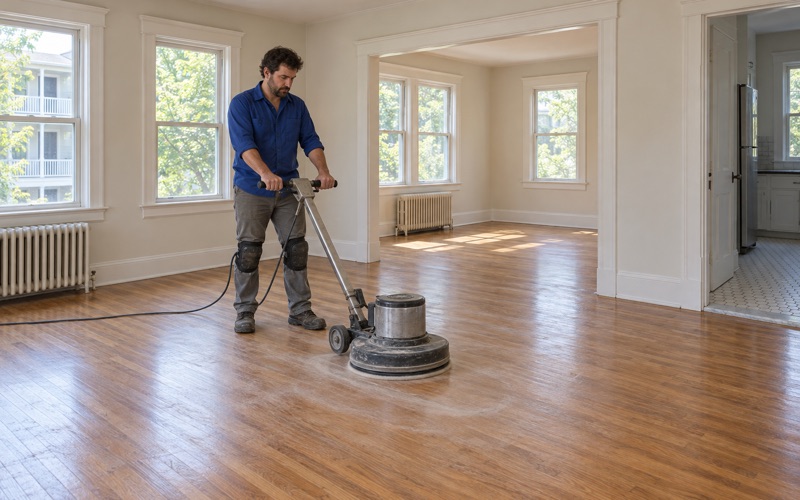
Where the wood is thin, a screen and recoat with a buffer may be the right call, even on a floor with worn traffic lanes. Face nailing with cut nails, loose boards and old shellac finish all show up in houses of this age, and each changes how we sand, how we fill and which grit sequence the floor can take.
Painted Edges and Pre-1978 Finishes
Many older rooms carry a painted border or painted stairs, left from decades when a rug covered the middle and paint covered the rest. The plan points out that homes built before 1978 may require lead paint abatement, and for floors that means checking before a sander touches a painted surface, not after.
We work with a HEPA vacuum and dustless sanding equipment, and we tell you plainly when a painted surface needs handling under the Massachusetts Lead Law rather than a quick sanding. That conversation happens at the estimate, so the price you see already accounts for it rather than surfacing halfway through the job.
Looking for wood-flooring closer to Nahant? See Wood-Flooring Services in Nahant.
Refinishing a Big Family House in Woburn
Big Houses, Smaller Households
The same housing plan finds that 55 percent of Woburn’s housing stock is homes with three or more bedrooms, the majority of them single-family, while 59 percent of households are just one or two people. In practice that means a lot of floor area in rooms that no longer see daily use, next to a kitchen, hallway and stairs that see all of it.
We price and schedule those houses around how they are actually lived in. A spare bedroom may only need a screen and recoat, while the front hall and the path to the kitchen need a full sanding to take out gray, worn traffic lanes and the water stains that gather near the doors.
One Level at a Time
Refinishing a whole house at once means moving out for days, and most owners in a large home would rather not. We can take the house one floor at a time, finishing the upstairs bedrooms while you live downstairs, then trading places once the finish has cured enough to walk on.
Waterborne polyurethane cures faster and smells less than an oil-modified polyurethane, which matters when you are sleeping one floor away. We go over the tradeoffs in sheen level and color, including how waterborne finishes keep red oak lighter while oil-based ones warm it toward the orange oak look many older floors already have.
What Sits Under Carpet and Linoleum
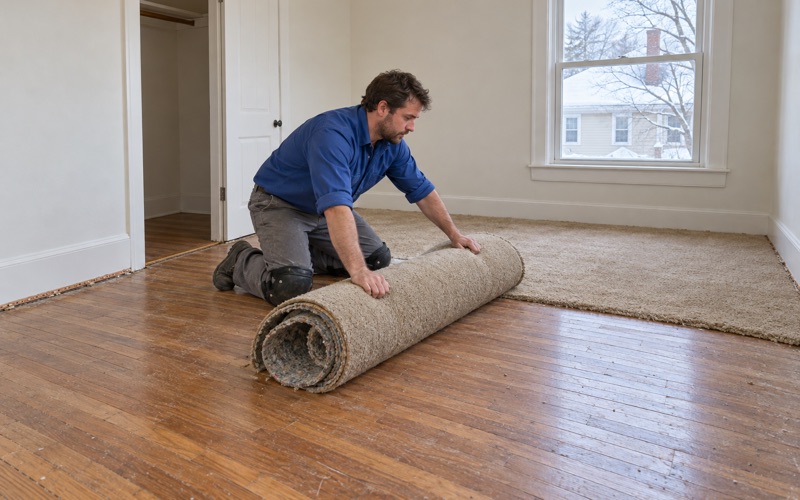
Big family houses were often carpeted room by room over the years, and it is common to find oak under carpet pad, tack strip or old linoleum. We strip the pad, pull every staple and tack strip, and clean off adhesive before sanding, because leftover glue or black mastic clogs the paper and smears across the floor.
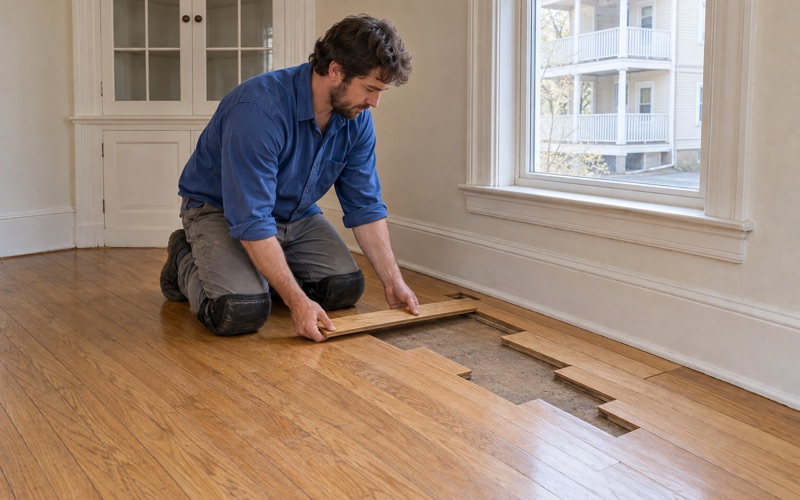
Where a radiator or pipe once came through the floor, we weave matching boards into the surrounding pattern instead of filling the hole. A radiator removal patch done that way reads as part of the original floor once it is sanded and finished, which matters to anyone who later walks through the house.
Floors for Owners Staying Put, and for the Next Owner
Woburn’s Growing Older Population
The plan, approved on August 4, 2026 by the state’s Executive Office of Housing and Livable Communities, tracks residents 65 and older at 17.9 percent of the population in 2020 and projects 22.5 percent by 2030. It also states that renovating existing homes can be part of the solution, especially for older residents with mobility limitations.
We are floor people, not accessibility consultants, so we don’t promise that refinishing changes how a house works for anyone. What we can do is fix the floor problems that owners who plan to stay tell us bother them most: lifted board edges, a tall threshold between rooms, loose treads, and finishes worn down to bare wood.
Smoother Transitions and Flatter Boards
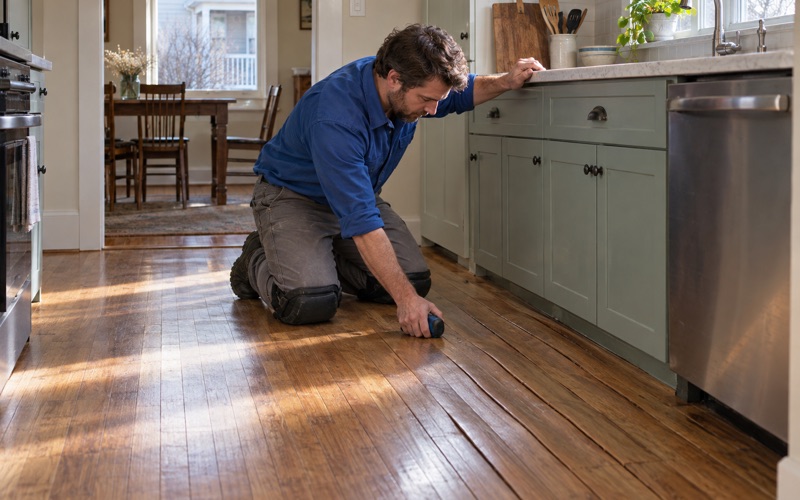
Cupping, crowning and buckling all leave a surface that is no longer flat, and in an old house the cause is usually moisture from below or a past leak. We find the cause with a moisture meter first, then replace or flatten boards so the surface is even again rather than sanded around the problem.
Transitions get the same attention. We can swap a tall threshold for a lower reducer where the adjacent floors allow it, reset loose quarter round and baseboard, and close up board gapping that catches heels and collects grit.
Stairs, Tread by Tread
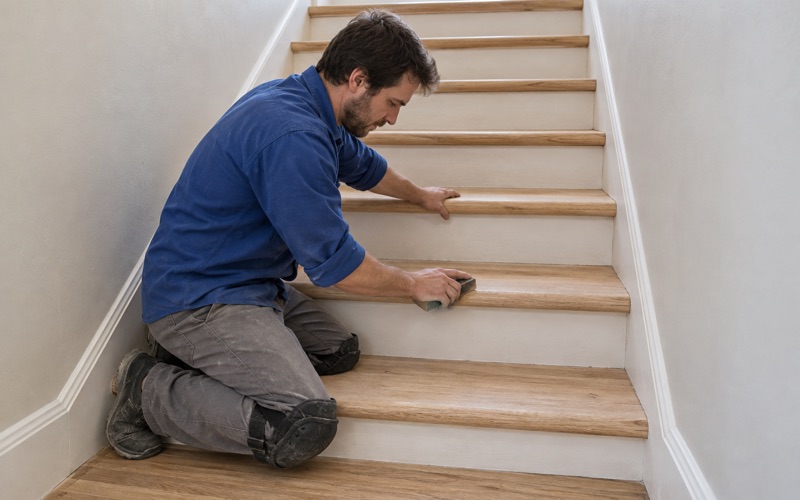
Stairs in older houses take hard wear at the nosing, and they are the part of the house where a worn or loose surface matters most. We quote stairs by the tread and riser, not as a slice of a square-foot price, so you can see exactly what refinishing, replacing a cracked tread or rebuilding a stair nosing costs.
Painted risers with stained treads are a common look in older houses, and we can keep it, restore it or change it. Where risers carry old paint, the pre-1978 lead check from the estimate applies here too.
Preparing a House for the Next Owner
Not every older owner is staying. For a house headed to market, we focus on what buyers notice first: the front rooms, the stairs, and any water stains or pet urine stains that need board replacement rather than a sanding. Stain samples on site let you choose a color that suits the house without guessing from a chip.
A full sanding with a neutral finish usually shows an old floor at its best for listing photos, but a screen and recoat may be enough if the finish is only dulled. We tell you which one your floors need, and how long the house must stay empty while the finish cures.
Planning a Floor Project in Woburn
Seasons, Moisture and Winter Gaps
Woburn falls in National Weather Service forecast zone MAZ014, Southeast Middlesex, and floors here swing with the New England seasons. Radiator heat dries boards through the winter and opens winter gaps, and humid summers close them again, so we time the acclimation of new wood and do not fill seasonal gaps that will close on their own.
In rooms with radiant heat or boards that sit below grade, we check the vapor retarder and underlayment before recommending wood at all. A floor that fails a moisture reading gets a different plan, not a faster one, because no finish can hold down a board that is still moving.
Water Damage and Your Adjuster
When a leak upstairs, a radiator or a flooded lower level wets a floor, we trace the water, dry the area and take moisture meter readings before replacing any board. Wood replaced while it is still wet cups or gaps later. For an insurance claim, we document the damage room by room so your adjuster sees exactly what was affected.
Powderpost beetle damage and carpenter ants sometimes turn up once wet boards come out of an older house. We show you what we find before the repair grows, and we price the added board replacement separately so the original estimate stays readable.
Solid, Engineered and Newer Construction
The plan counts about 1,632 units built or begun since 2020, and most of them are one- and two-bedroom apartments, the other end of the market from the large older houses above. Many newer homes use prefinished or engineered flooring, and we measure the engineered wear layer before we promise that a floor can be sanded at all.
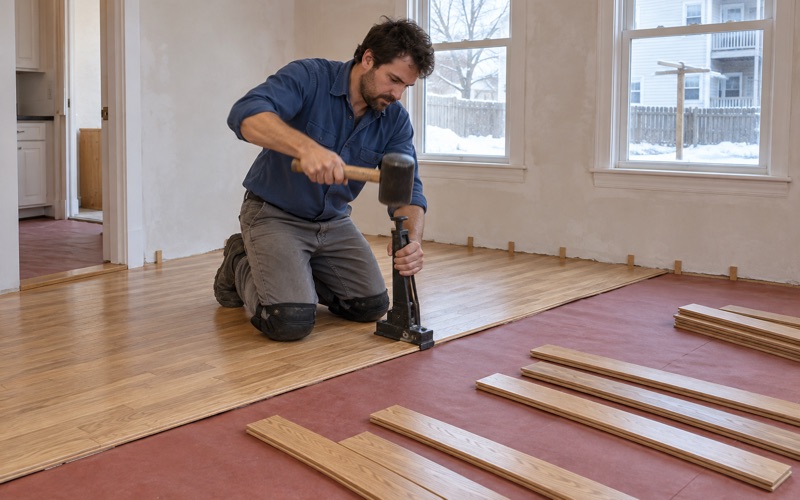
For solid hardwood in an older house, we look at the subfloor, the fastening and the expansion gap before any new boards go down, following the NWFA Installation Guidelines. White oak, red oak and maple are the usual choices for new installs, and we talk through Janka hardness and grade so the new floor wears as well as the old one did.
Finishes and Scheduling
Hardwax oil is worth considering in a house you plan to keep, since worn spots can be refreshed later without sanding the whole room. Whatever the finish, we give you a written schedule showing which rooms are out of use and for how long, so a project in North Woburn, East Woburn or Montvale fits around the rest of your week.
- 20+ Years on Wood Floors
- Free Written Estimates
- Stairs Priced Per Tread