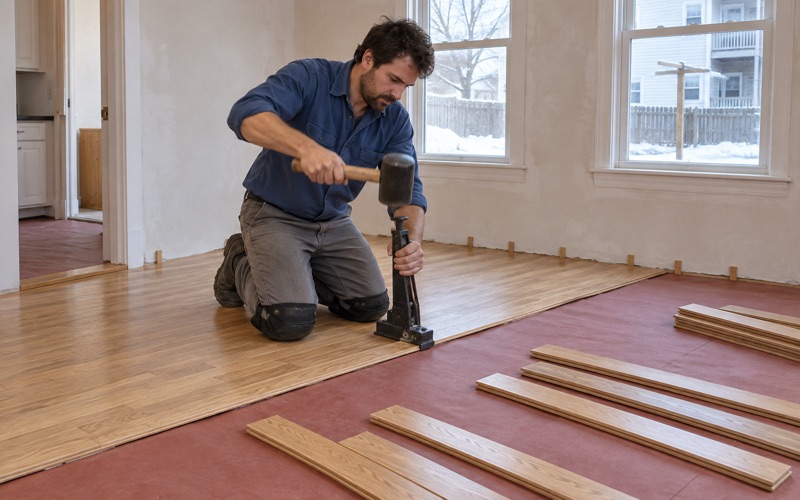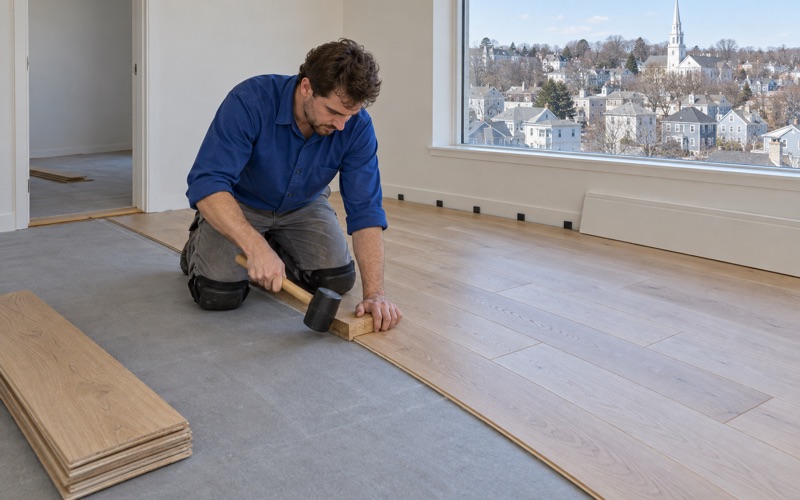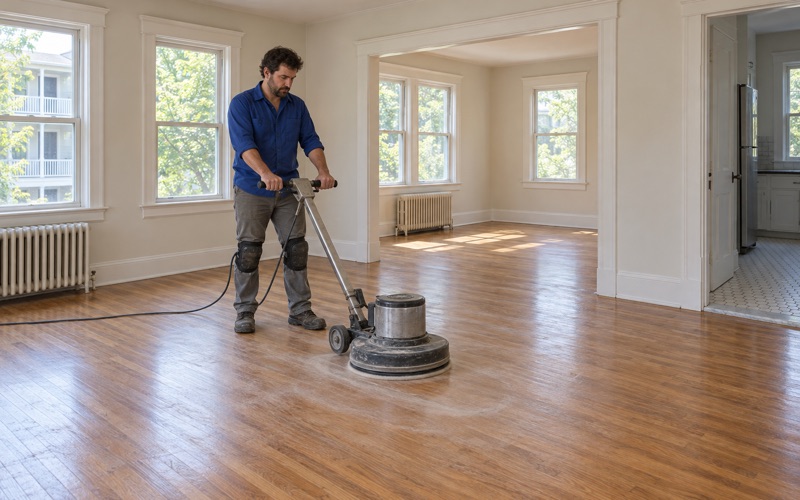
Malden Wood Flooring has handled wood flooring in Winthrop Town for homeowners and landlords across more than 20 years in the trade, and most of that work happens in houses that have already been sanded, patched and covered more than once. We refinish solid hardwood, weave in replacement boards, rebuild stair treads and install new floors, and every job starts with a look at what is actually underfoot.
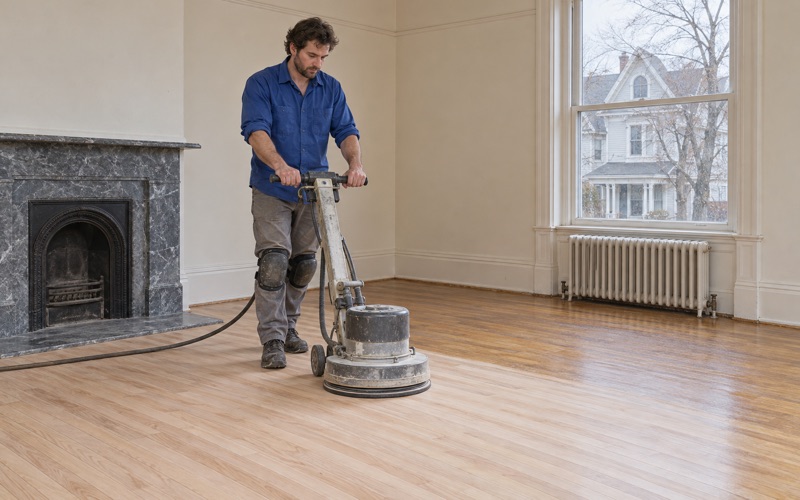
Before any machine comes off the truck, we identify the species, check how much wood is left above the tongue and groove, and note old repairs, water stains and pet urine stains that a sanding will not erase. That inspection decides whether a room gets a full sanding, a screen and recoat, or a few boards replaced first. It also decides the price, which is why we quote after seeing the floor.
The sections below explain how that plays out in this particular town: the converted summer cottages and bungalows, the late-Victorian and Craftsman houses built for year-round families, and the practical steps of planning a project here. Where a detail changes what we do on your floor, we say so plainly.
Floors in Winthrop’s Former Summer Cottages and Bungalows
Ocean Spray, Cottage Hill and Point Shirley
Winthrop began as a summer colony before it became a suburb. The Massachusetts Historical Commission’s 1981 reconnaissance survey of the town dates Ocean Spray, developed by Samuel Ingalls, to 1875-6, followed by Cottage Hill, originally called Great Head, in 1882 and Point Shirley in 1883. Those were among the first developments in town, and they set the pattern for much of what followed.
The same survey records modest summer cottages and bungalows along Winthrop Beach, at Cottage Hill and at Point Shirley, and notes that the mansard roof was used for small beach cottages. Between 1915 and 1940, it says, simple hip-roofed bungalows and cottages filled in Point Shirley. When we walk into one of these houses, we assume nothing about its floors until we have looked.
From Summer Houses to Year-Round Homes
By the 1890s, according to the survey, Winthrop’s summer residents were becoming year-round residents, and houses built for a warm season were adapted for every season. In practice that history often shows up as layers: a floor added over another, a room enlarged, a porch closed in, each with its own boards and its own level. We read those transitions before planning where a sanding stops and a reducer or threshold starts.
A converted cottage can carry several species and several eras in a few hundred square feet. We check each room for board direction, nail type and thickness, looking for cut nails and face nailing that tell us a floor is older, and flooring cleats or flooring staples that tell us it is newer. That is how a small house gets one consistent finish instead of three mismatched ones.
Weave-In Repairs Where Heat and Pipes Came Out
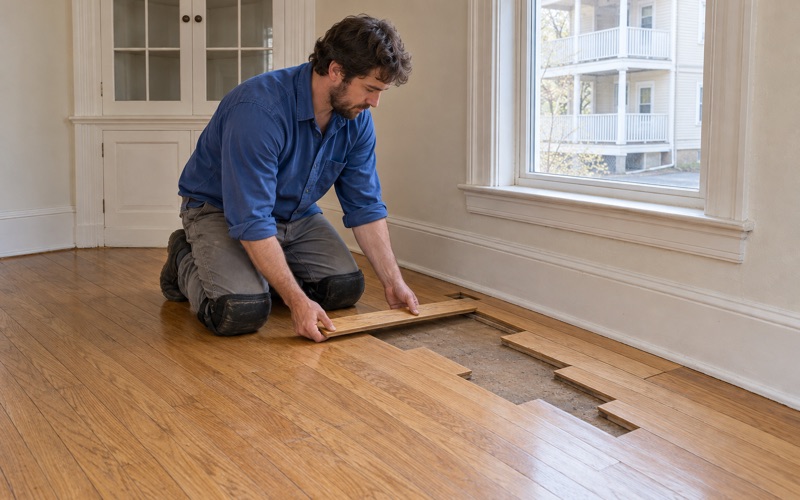
Many older houses in town have been through more than one heating system, and every steam radiator or pipe that came out left a hole or a discolored footprint behind. We patch those spots with matching boards woven into the existing floor, staggered like the surrounding courses, instead of filling them. A weave-in repair sands and finishes with the rest of the room and disappears once the sheen goes on.
We also look for the quieter damage these rooms collect over many decades: powderpost beetle holes, carpenter ants near an old leak, and board gapping that opens into winter gaps each heating season. Some of that needs board replacement before any sanding, and some only needs to be understood so the finish goes on at the right time of year. We tell you which before work begins.
Looking for wood-flooring closer to Lynn? See Wood-Flooring Services in Lynn.
Victorian and Craftsman Houses Across Town
Cottage Park and Court Park
The survey’s Late Industrial Period, 1870 to 1915, is when Winthrop really grew; by 1915 the population had reached nearly 24 times the 1870 figure. Most of the town’s residential construction dates from those years, including well-detailed year-round houses around the town center. Cottage Park and Court Park hold Queen Anne, Shingle Style and Colonial Revival houses, with Craftsman designs among them.
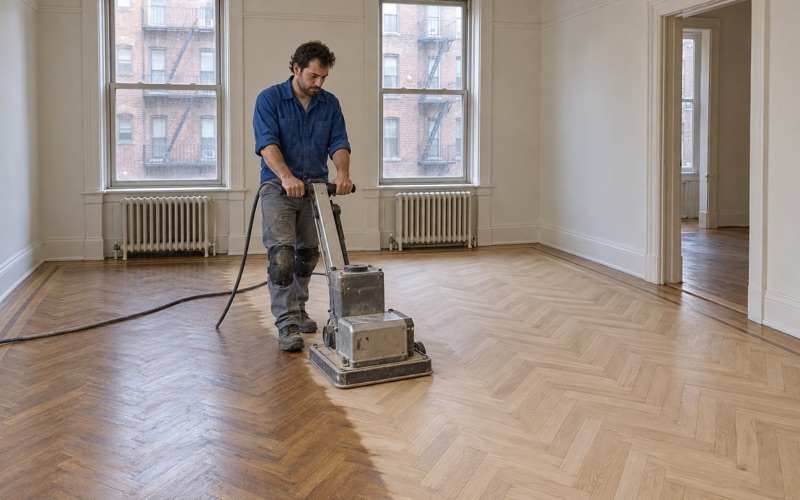
Larger rooms in these houses bring their own questions: long runs of solid hardwood, borders or parquet in a front parlor, and traffic lanes worn along a hallway. We plan the grit sequence so that a border and a field of boards finish at the same level, and we use an orbital sander along delicate inlay rather than forcing a drum sander into it.
Craftsman Homes in Winthrop Highlands
The survey notes that between 1915 and 1940, while Point Shirley filled with small bungalows, Winthrop Highlands kept adding more substantial Craftsman and Colonial Revival houses built for year-round residents. Those neighborhoods give us a different set of floors to work with, generally larger rooms and longer continuous runs than a beach cottage offers.
In houses of this period we often find red oak, white oak or maple, sometimes rift and quartersawn boards in the main rooms. Old finishes can include a shellac finish or an aged coat that has turned into the orange oak many owners want gone. We run stain samples on a sanded patch so you can see the result on your own boards, in your own light, before we commit a whole floor.
A Few Much Older Survivors
Winthrop also keeps a handful of houses from long before the cottage era. The Deane Winthrop House on Shirley Street dates to about 1675, a date confirmed by a 2002 tree-ring survey, and the 1981 survey counts it as probably the oldest surviving house in its study unit. The same report lists John Hancock’s summer house of 1756 and the Reed House of 1753.
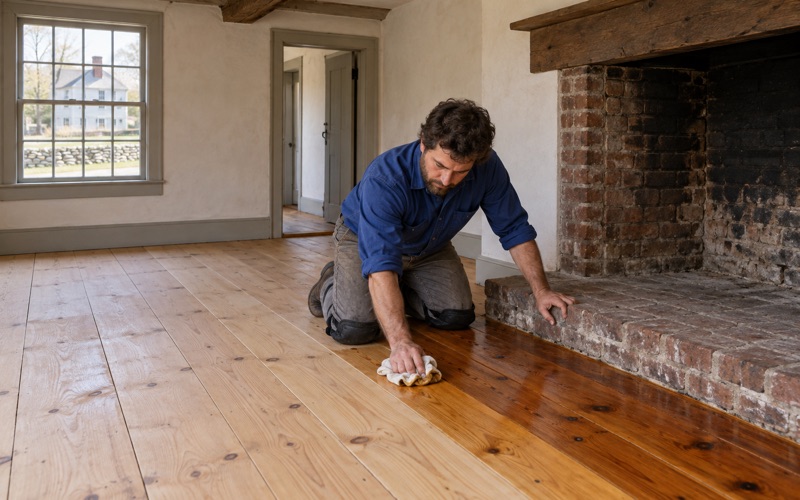
Floors in an early house call for more caution than anything else we touch. Old-growth pine and early oak boards may have been sanded several times already, so we measure what is left and often recommend a light pass with a buffer and a fresh coat instead of a full cut. Keeping the patina of an old floor is sometimes the better repair.
Refinishing Old Boards the Right Way
Checking Board Thickness Before Sanding
Old boards have less wood to give, and a drum sander does not know that. On pine and early oak floors we pull a floor register or check at a threshold to see the thickness above the tongue, count how many boards are cupped or crowning, and decide how aggressive the first grit can be. On an engineered floor we measure the engineered wear layer before promising a sanding at all.
If the numbers say a full sanding would expose tongues or nails, we say so and offer the alternatives: a screen and recoat, targeted board replacement, or a hardwax oil that renews the surface with minimal cutting. It is better to hear that on the first visit than to find out halfway across the living room.
Uncovering Oak Under Carpet and Linoleum
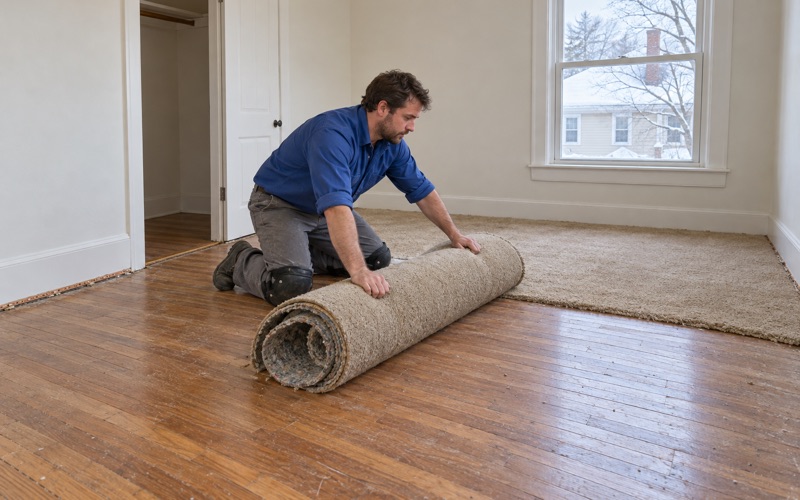
Plenty of older houses in town hide hardwood under wall-to-wall carpet, linoleum or paint. We remove the carpet pad, every staple, the tack strip and any adhesive, and we test old black mastic before deciding how to take it up, because some older adhesives need careful handling. Only a clean floor sands evenly, so this step is never skipped to save a day.
What comes up is not always what the owner hoped for. We show you the boards once they are exposed, flag any water stains or buckling, and give an honest read on whether they will refinish well or need repair first. Sometimes the answer is a few new boards woven in, and sometimes it is a new floor over a sound base.
Finishes, Sheen and Massachusetts VOC Limits
Massachusetts sets limits on volatile organic compounds in wood coatings that are stricter than the federal ones, and we choose finishes that fit them. That still leaves real choices: a waterborne polyurethane that stays clear, an oil-modified polyurethane with a warmer tone, or a hardwax oil that is simple to spot-repair. We match the sheen level to the room and how it is used.
For a deeper stain on open-grained oak we may use water popping so the color takes evenly. We sand with dustless sanding equipment and finish with a HEPA vacuum pass, which matters in a small house where the kitchen and bedrooms sit only a few steps from the work.
Planning a Floor Project in Winthrop
Build Year and Lead Checks
According to the ACS 2024 five-year estimates, 55.1 percent of Winthrop’s housing units were built in 1939 or earlier. Massachusetts runs its own lead-safe renovation rules for homes built before 1978, so we check a house’s build year and any painted surfaces before sanding starts. Painted floors, painted stair risers and old baseboard paint all get looked at first.
That check shapes how the room is prepared, how dust is contained and how the work is cleaned up. It adds a little time at the start and protects everyone living in the house, especially children. We explain what we found and what it changes before the first board is sanded.
Two-Families, Rentals and Scheduling
Winthrop has a large share of two-unit houses, and we plan around the people in them. In an owner-occupied two-family we work one floor at a time, so the household upstairs or downstairs keeps living in the house while the other unit’s floors are done. Furniture moves, dust control and cure times are planned around both units.
For landlords, we turn around rental floors in two- and three-family houses during the vacant window between tenants, so the unit is ready for the next lease. A quick-curing waterborne finish helps keep that window short, and we schedule the sanding, coats and cure so the floors are fully cured before move-in day.
Water Damage and Stairs
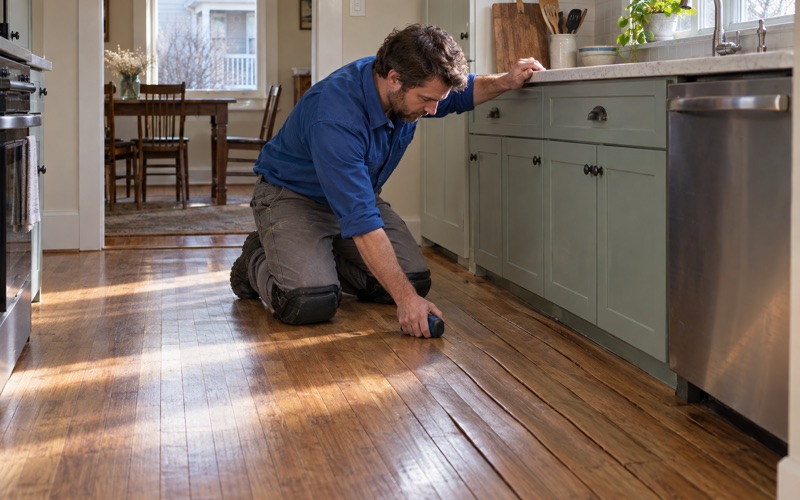
When water from a leak upstairs or a radiator reaches a floor, we trace the source, dry the area and read the boards with a moisture meter before replacing anything. Cupping often flattens once the wood dries, and boards replaced too early can crown or gap later. For an insurance claim, we document the damage room by room for the adjuster.
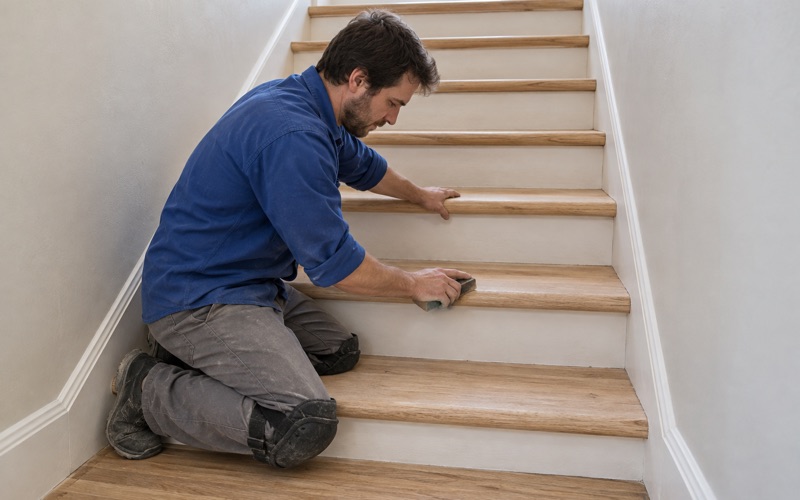
Stairs are quoted by the tread and riser rather than folded into a square-foot price, because each step is its own piece of work. We sand or replace stair treads, match the stair nosing, and finish risers to suit the floor below. Call us with your house’s age and the rooms you have in mind, and we will arrange a visit to look at the floors in person.
- 20+ Years on Wood Floors
- Free Written Estimates
- Stairs Priced Per Tread