Malden Wood Flooring has handled wood flooring in Watertown for more than 20 years, and much of that work happens in houses that were already old when their current owners bought them. We sand, refinish, repair and install hardwood in duplexes, two-families and single-family homes, and we treat every job as a floor with a long history under it.
A refinish in an older house starts with measurement rather than a machine. We check how much wood is left above the tongue, look for face nailing and earlier repairs, and read the moisture in the boards before any grit touches them. That order keeps a floor that has already been sanded several times from being sanded through.
Our crews also work around the people who live in the house. In an owner-occupied two-family we can finish one floor while the other household stays put, and in a rented unit we plan the sanding and curing around the gap between tenants so the apartment is ready when the next lease starts.
Southside Floors and the Survey Behind Them
Watertown’s older housing is well documented. The city’s own records and federal census estimates describe how much of it is prewar, and a recent survey describes how one neighborhood filled in over time.
What the Southside Survey Traces
The Watertown Historical Commission completed a historic properties survey of the Southside, and the city describes it as tracing the neighborhood’s development from farmsteads to a busy mixed-use neighborhood. The study was paid for with city funds together with a matching grant from the Massachusetts Historical Commission, which drew on federal money from the National Park Service.
According to coverage of the results, which the Commission presented on September 25, 2025, the survey includes inventory forms on seven geographic areas, eight individual buildings and two public parks. We read it as a record of how the neighborhood grew, which is useful context when we walk into one of its houses with a sander.
From Farmsteads to Duplexes and Two-Families
The same coverage says the Southside became more economically diverse over time with duplex and two-family residences. That fits the kind of house we are usually called to in the neighborhood: stacked units with their own entrances, a shared front stair, and two sets of floors wearing at different rates.
The pattern reaches well beyond one neighborhood. Census figures from the ACS 2024 5-year estimates (table B25024) put 34.7 percent of Watertown’s housing units in two-unit buildings, so a floor project here often means planning around a second household or a second lease.
Prewar Stock Across Watertown
The ACS 2024 5-year estimates (table B25034) count 7,636 of Watertown’s 17,206 housing units as built in 1939 or earlier, which is 44.4 percent of the city’s stock. That share is the practical backdrop for much of our work here, since a prewar floor has often been through several refinishes, a few repairs and at least one covering.
Those decades also matter for safety. Massachusetts runs its own lead-safe renovation rules for homes built before 1978, so we confirm the build year and check whether any painted surfaces, such as old baseboard, stair risers or a painted floor border, will be disturbed before sanding begins.
Looking for wood-flooring closer to Roxbury? See Wood-Flooring in Roxbury.
Housing Built for Arsenal and Hood Rubber Workers
Two large employers shaped this part of Watertown for most of the twentieth century, and the housing that grew up near them still carries a lot of its floors.
The Arsenal and the Rubber Works
The Watertown Arsenal operated from 1816 to 1995. The Hood Rubber Company, founded in 1896 by Frederic C. Hood and Arthur N. Hood, made Hood and B. F. Goodrich footwear in Watertown until the plant closed in 1969, and in the early 1900s many Armenians took their first jobs there.
Watertown News coverage of the survey describes one building constructed in 1920 as part of a swath of multifamily buildings made to house workers from the US Arsenal and Hood Rubber. That dated building is the clearest marker of when multifamily worker housing was going up in this part of the city.
What a 1920 Floor Has Been Through
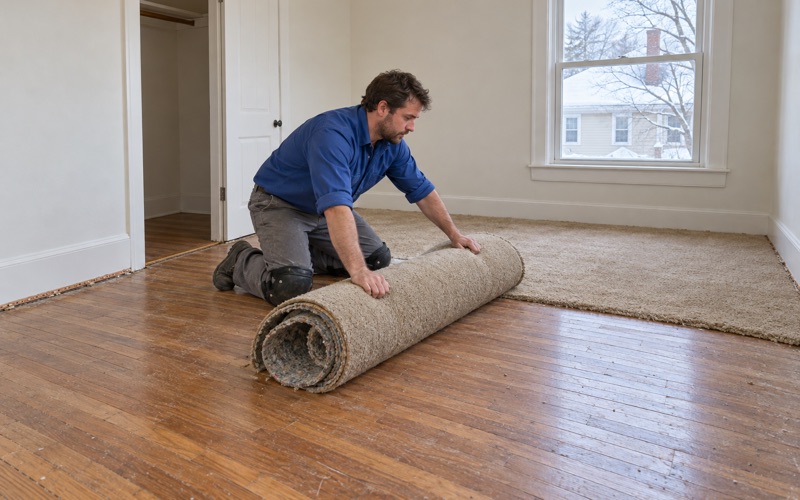
A floor laid around 1920 has spent a century under shoes, furniture and changing tastes. We commonly find old floors under wall-to-wall carpet, carpet pad and tack strip, under linoleum held down with black mastic, or painted along the edges where a rug once sat.
Whatever turns up, we clean off pad, staples, tack strip and adhesive before a sander goes near the wood. Black mastic gets particular care, because some older adhesives are hazardous to sand, so we identify what we are looking at before deciding how it comes off.
Board Thickness and Remaining Wood
Old solid hardwood and old-growth pine have only so much wood above the tongue and groove, and a century of refinishing uses it up. Before we promise a full sanding, we pull a heat register or check a threshold to count boards and measure thickness, and we look for exposed nail heads that signal a thin floor.
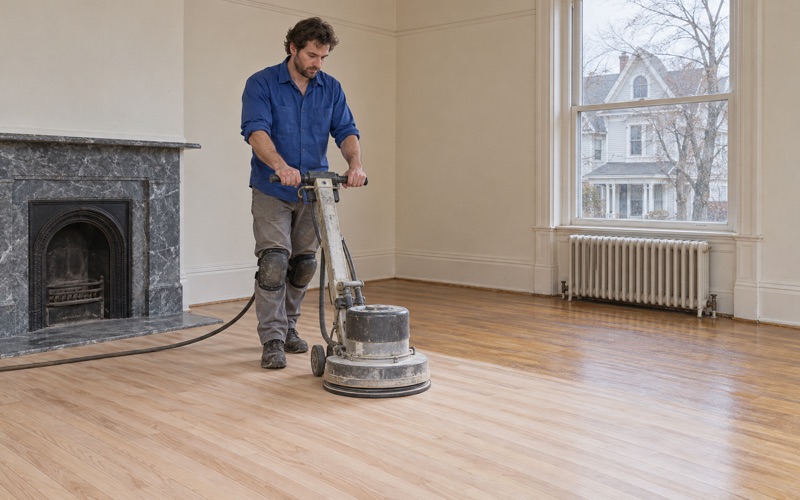
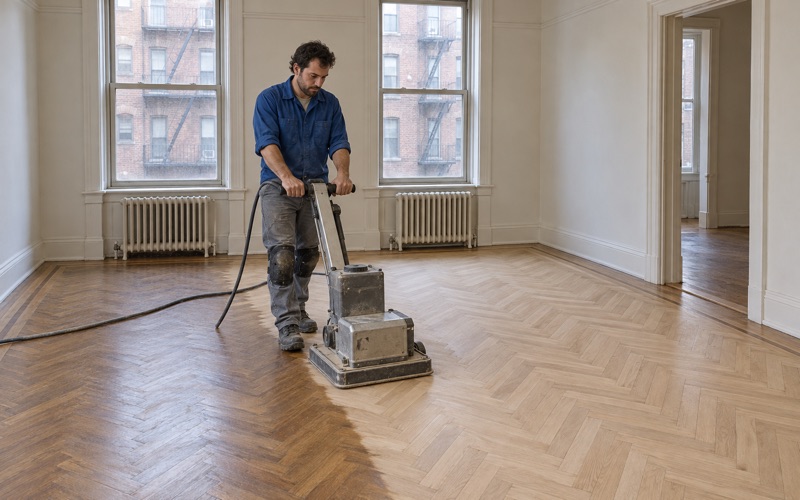
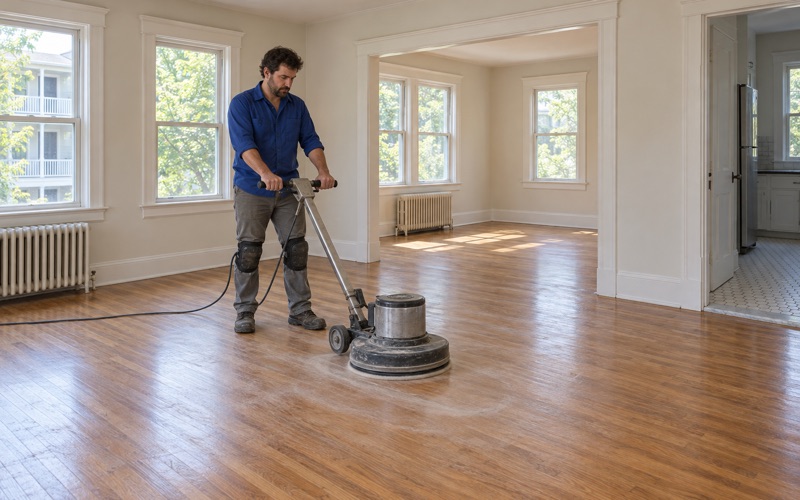
When there is enough wood, we run a drum sander through a measured grit sequence and finish the edges with an orbital sander. When there is not, a screen and recoat with a buffer can refresh the finish without cutting into the boards, and we say so plainly rather than sand a floor past saving.
Refinishing and Repairing Century-Old Duplex and Two-Family Floors
The work itself changes when a house holds two households and a hundred years of heating and plumbing changes. These are the repairs and choices that come up most in older two-unit buildings.
Radiator Holes and Board Replacement
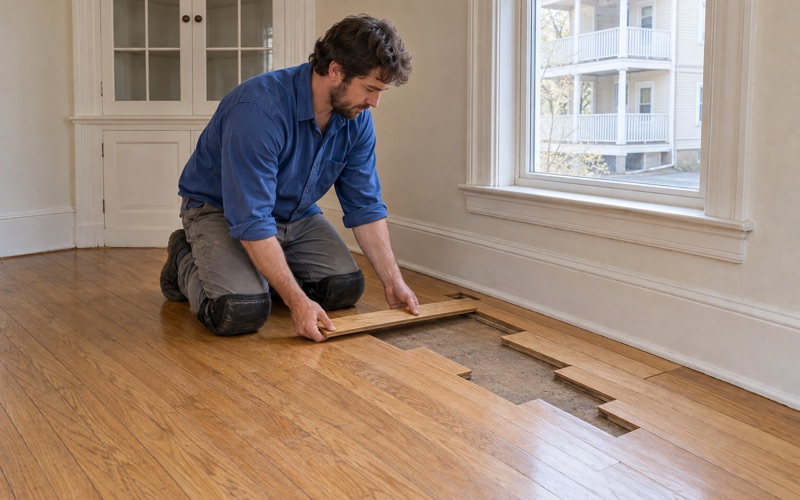
When a steam radiator or its pipes have been moved or taken out, the floor keeps the holes. We close those gaps with a weave-in repair, cutting out short boards and lacing in matching wood so the new pieces run with the old ones instead of sitting in a square patch.
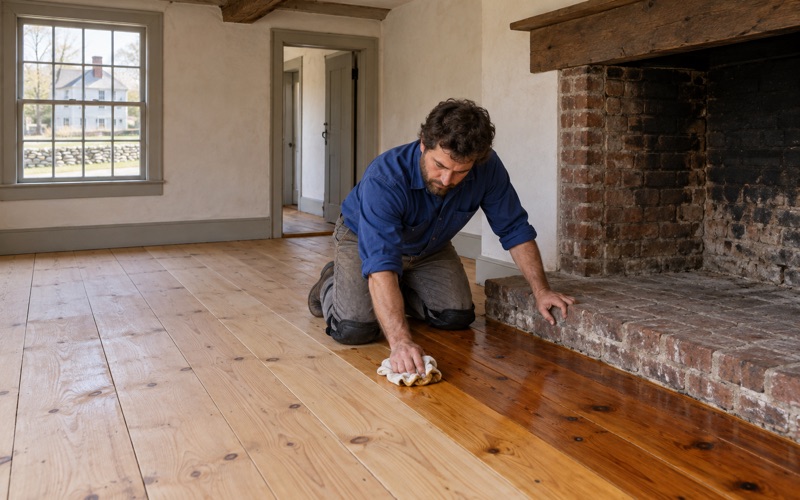
Matching matters in an old floor. We look at species, width and the color the wood has taken on over time, whether that is orange oak under an old amber finish or pine that has darkened, and we test stain samples on the new boards until the repair reads as part of the room.
Water Damage From the Unit Above
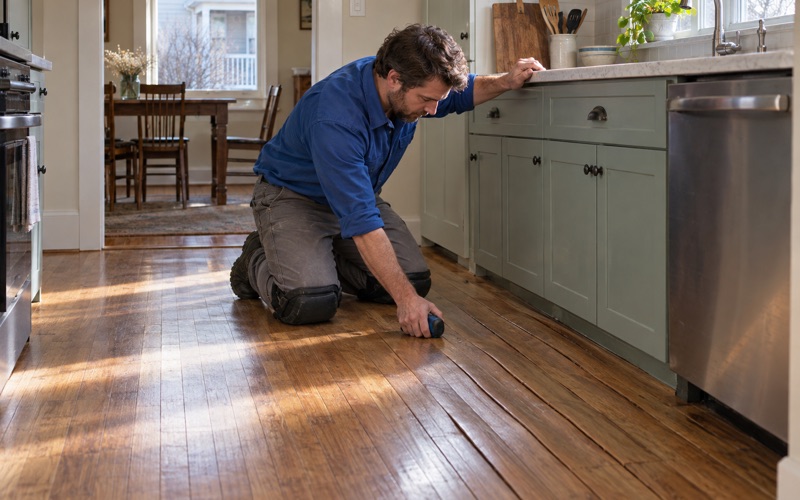
In a stacked two-family, water from an upstairs leak, a radiator valve or a flooded lower level can show up as cupping, crowning or water stains in a floor that was fine last month. We trace the source, dry the area and read the boards with a moisture meter before any board is replaced, because a floor put back wet will move again.
If an insurance claim is involved, we document the damage room by room for the adjuster, with moisture readings and photos of the affected boards. That record helps an owner and a second household sort out what happened without guesswork.
Finishes, Dust and Lead-Era Precautions
We choose finishes that fit the Massachusetts VOC limits for wood coatings, which are stricter than the federal ones, and we usually weigh a waterborne polyurethane against an oil-modified polyurethane depending on color and wear. We talk through sheen level before anything goes down, since a satin floor hides traffic lanes better than a gloss one.
Sanding runs with dustless sanding equipment and a HEPA vacuum, which matters in a house where the other unit shares the hallways, stairs and air. Combined with the build-year check, it helps keep the dust in the rooms we are working in.
Planning a Floor Project in Watertown
A good floor project in an older two-unit house comes down to sequencing, pricing and knowing what the building can take. Here is how we set one up.
One Floor at a Time in an Owner-Occupied Home
When the owner lives on one floor and family or a tenant lives on the other, we schedule the work floor by floor. The household that is not being worked on keeps using its kitchen, bedrooms and entrance, and we keep the shared stair clear except for the time we need to finish it.
Curing time is part of that plan. A waterborne finish can usually take light foot traffic sooner than an oil-modified one, so the choice of finish can shorten how long a floor is off limits, and we lay out the days before we start.
Rental Units Between Tenants
Renters occupy 52.3 percent of Watertown’s occupied units in the same census estimates. For a landlord, the useful window is the stretch between tenants, when the rooms are empty and a floor can be sanded, finished and cured without anyone moving furniture around it.
We plan that work to fit the vacancy, starting with the floors that take the longest and finishing with the rooms that only need a screen and recoat. Pet urine stains, winter gaps and worn traffic lanes turn up often in rented units, and we tell the owner which can be sanded out and which boards need replacing.
Stairs, Engineered Floors and New Installations
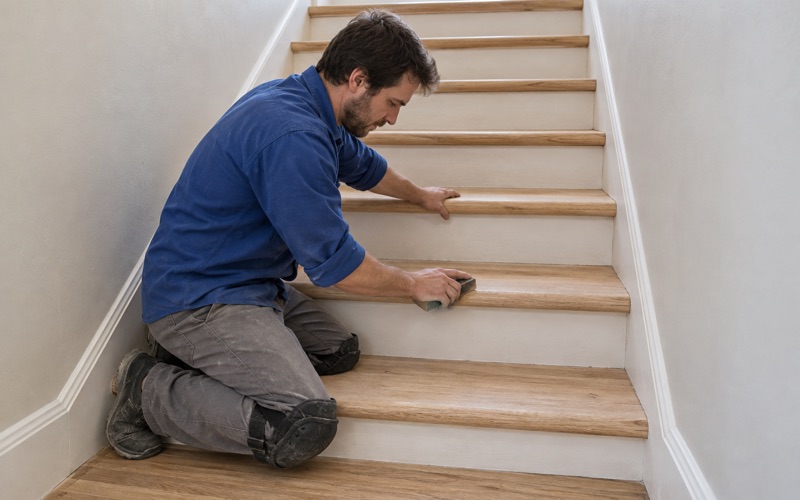
Stairs are quoted by the tread and riser, not folded into the square-foot price of the rooms, because a stair with worn nosing and painted risers is a separate job. That keeps a quote clear when a two-family’s front stair turns out to need more work than the floors above it.
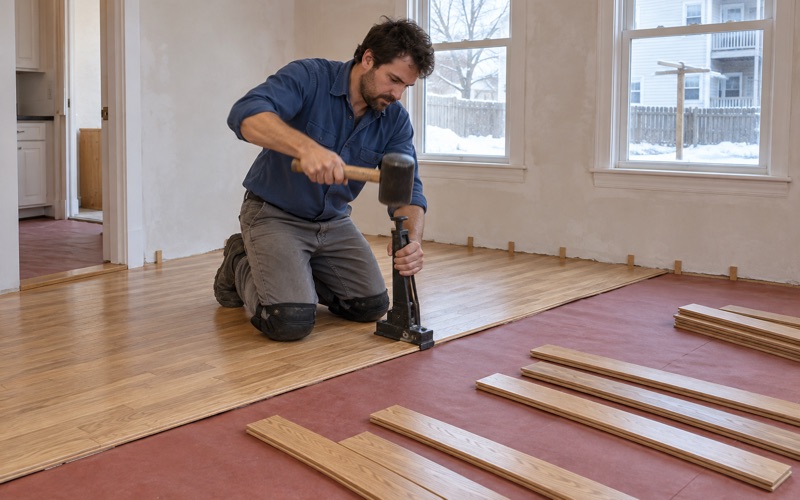
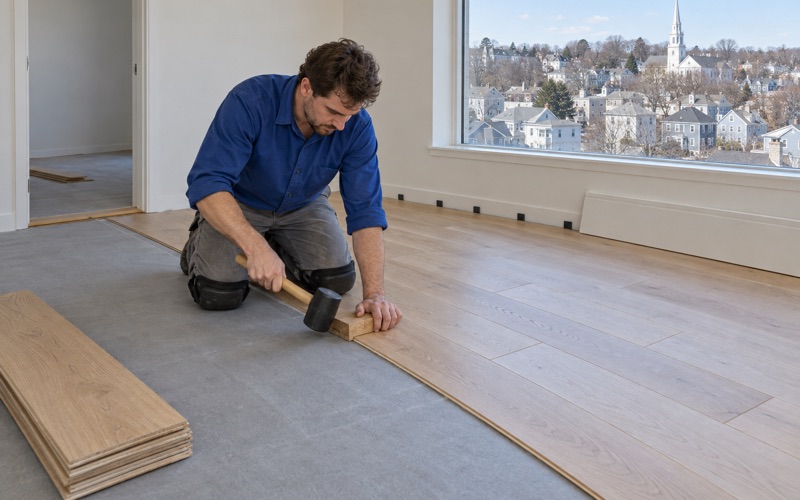
Newer rooms and additions sometimes carry engineered flooring instead of solid hardwood. We measure the engineered wear layer before we promise a sanding, and when a new floor goes in, we allow acclimation time, leave the expansion gap the NWFA Installation Guidelines call for, and match reducers and thresholds to the older rooms beside it.
- 20+ Years on Wood Floors
- Free Written Estimates
- Stairs Priced Per Tread