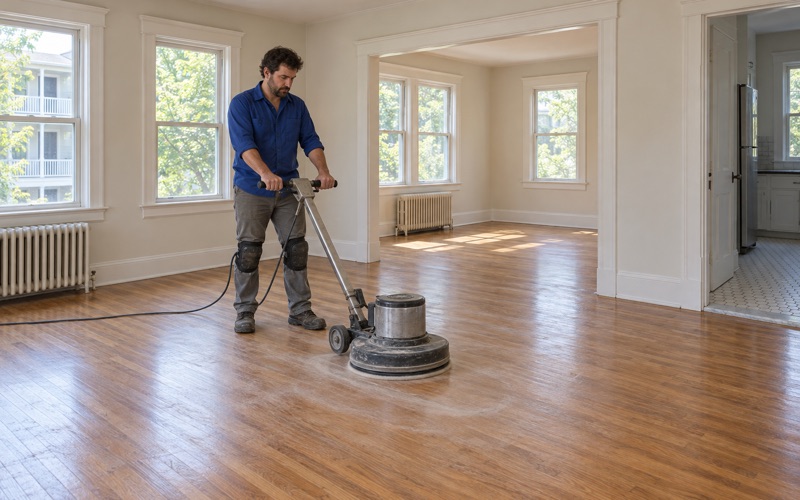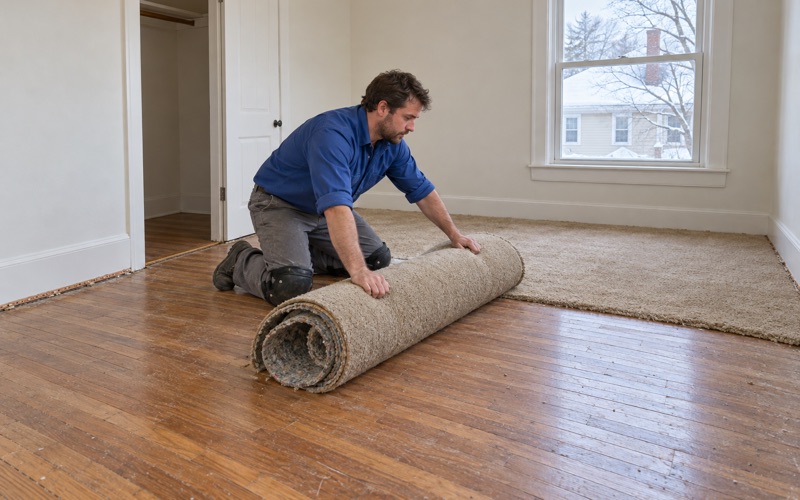
Malden Wood Flooring has spent more than 20 years on wood flooring in Stoneham and the towns around our Malden shop, and most of the floors we see here are not museum pieces. They are oak, maple and pine rooms worn into traffic lanes, hidden under carpet or marked by an old leak, and nearly all of them can be brought back with the right work.
That matters more in Stoneham than it might elsewhere. When a floor looks tired, it is easy to price out a full renovation, and some owners go further and weigh selling to someone who will start over. We would rather show you what sanding, board replacement and a new finish can do first, and give you a clear number to set against the bigger plan.
Our work here covers refinishing, repair, stairs, water damage and new installation. Every job starts with a walk through the rooms: we check the build year and any painted surfaces, measure how much wood is left on the boards, and read moisture wherever there has been water. The quote you get lists what we found, not a guess from a photo.
Floors in Stoneham’s Post-War Houses
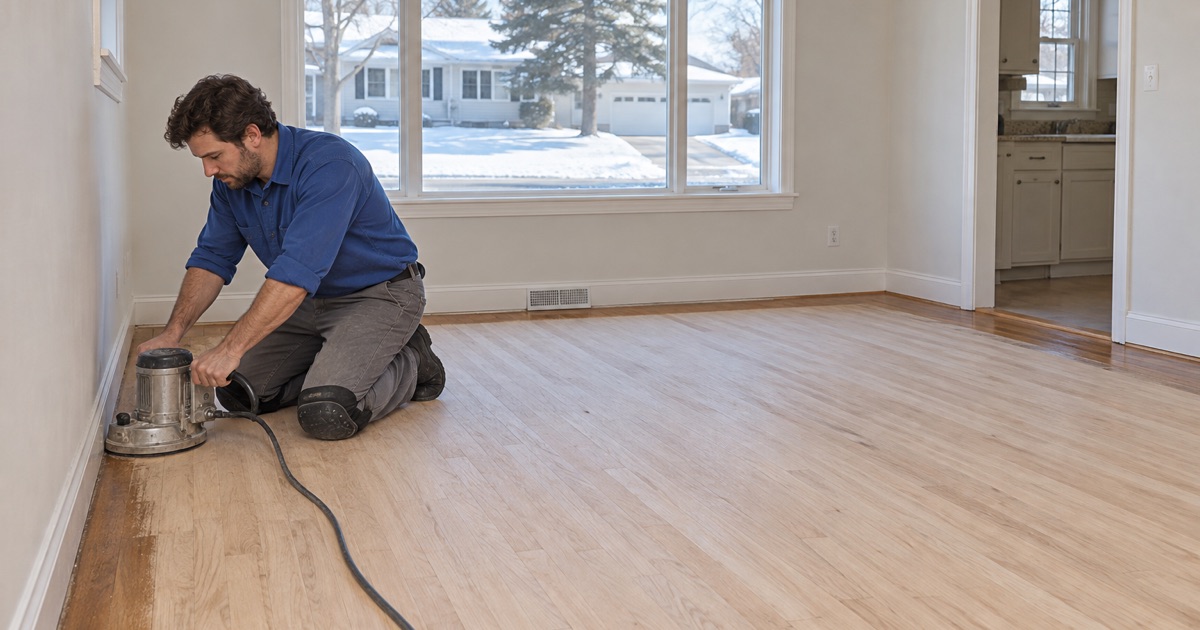
Stoneham’s housing is younger than many people assume. Census figures show 52.6 percent of the town’s homes were built between 1950 and 1989, while only about a quarter, 24.6 percent, predate 1940. That puts most of our Stoneham jobs in single-family houses from the middle decades of the century, rather than in the old-growth pine rooms common in some older cities nearby.
What Is Usually Under the Carpet
We never assume what a Stoneham floor is until we lift a corner. In houses of this age we often find solid hardwood strip under wall-to-wall carpet, but we also find plywood subfloor, linoleum laid over boards, or an addition where a different species meets the original rooms. The honest answer comes from pulling a vent cover or a threshold and looking.
When there is oak under the carpet, we strip the carpet pad, pull every staple and length of tack strip, and scrape off any adhesive before a sander touches it. Leftover staples tear sanding paper and gouge the surface, so this cleanup is where a good refinish really starts, and we price it as its own line.
Lead Checks on Pre-1978 Rooms
Much of the town’s housing predates 1978, the year that matters under the Massachusetts Lead Law. Before we sand, we note the build year and check painted baseboard, shoe molding and any floor that was painted over at some point, because Massachusetts runs its own lead-safe renovation rules and painted dust is the wrong thing to discover halfway through a job.
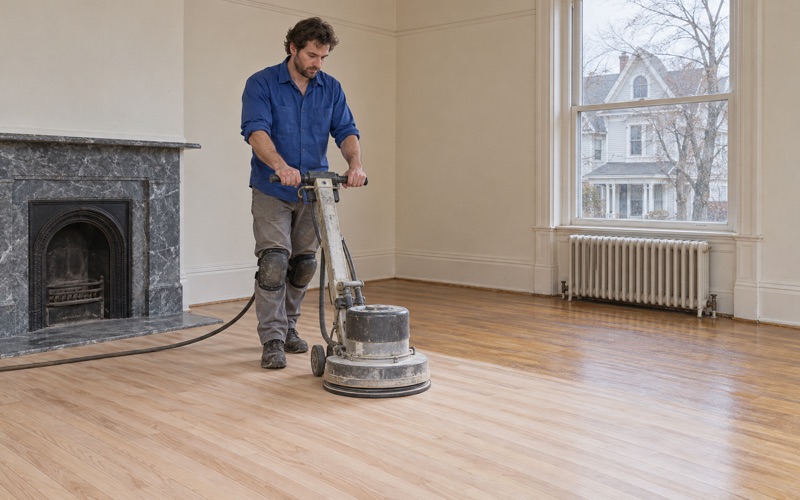
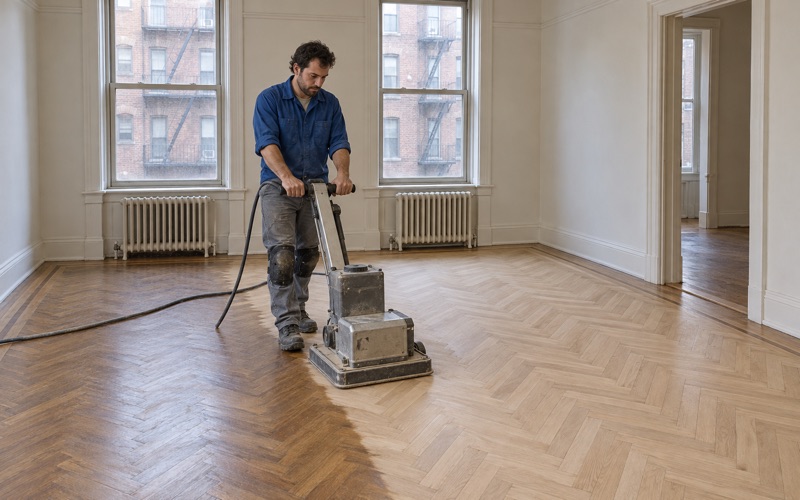
Our sanding runs through a dustless setup with a HEPA vacuum attached, which keeps fine dust out of the rest of the house on any job. Where old paint is involved, the lead-safe steps come first and the floor work follows, so the schedule accounts for them from the start instead of stalling in the middle.
Engineered Floors From Later Remodels
Houses from the 1980s, and rooms redone since, often carry engineered flooring or prefinished boards instead of site-finished strip. Before we promise a sanding, we measure the engineered wear layer at a vent or a threshold. A thick wear layer can take a full sand; a thin one may only take a screen and recoat, and we tell you which before anything is scheduled.
Looking for wood-flooring closer to Charlestown? See Charlestown Wood-Flooring.
Refinish, Repair or Tear Out: Stoneham’s Teardown Years
Stoneham has seen real teardown pressure. The town’s 2024 Historic Preservation Plan, led by the Stoneham Historical Commission and finalized on September 27, 2024, records that more than 35 single-family homes have been demolished since 2017, and that most were replaced with a higher-priced single-family home. The Commission has stated its concern about the increasing pace of those losses.
Stoneham is also the one town around Melrose without a demolition delay of any kind, according to reporting in the Melrose Messenger in November 2025. We take no side on what the town should do about that. We raise it because an owner deciding whether a house is worth keeping deserves a real figure for what saving its floors will cost.
What a Refinish Actually Fixes
A worn floor is often one of the things that makes a house feel ready for a gut. Gray traffic lanes, pet urine stains, water stains beside an old steam radiator and winter gaps between boards all read as failure. Most of them are surface or repair problems, and a full sand through a proper grit sequence plus a fresh finish changes how every room feels.
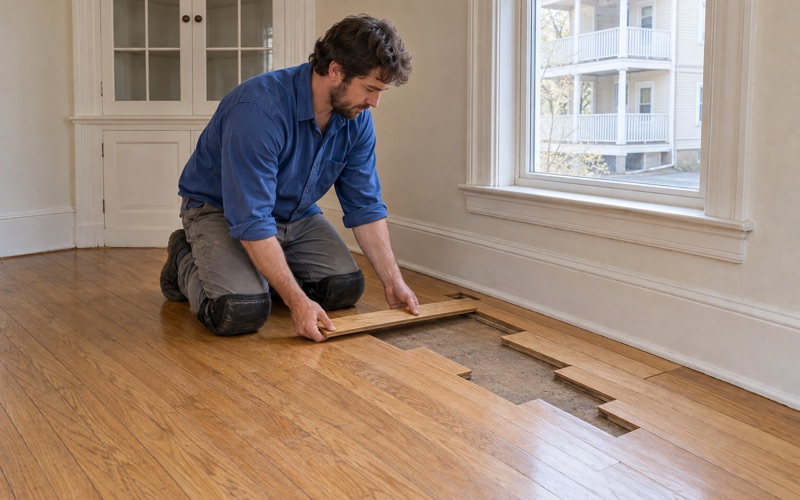
Where a radiator came out and left pipe holes, we patch with matching boards woven into the floor rather than filling them. Where urine has turned wood black, we cut out those boards and lace in replacements. The finished floor reads as one continuous surface, which is what anyone walking into the room notices.
When Replacement Makes More Sense
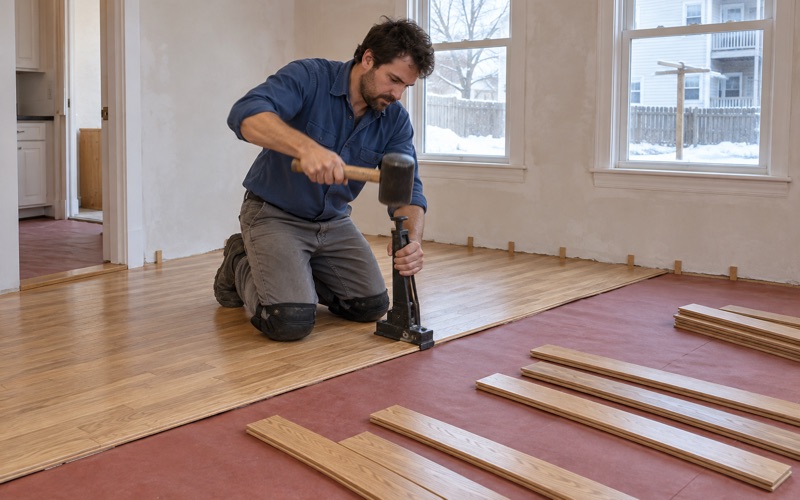
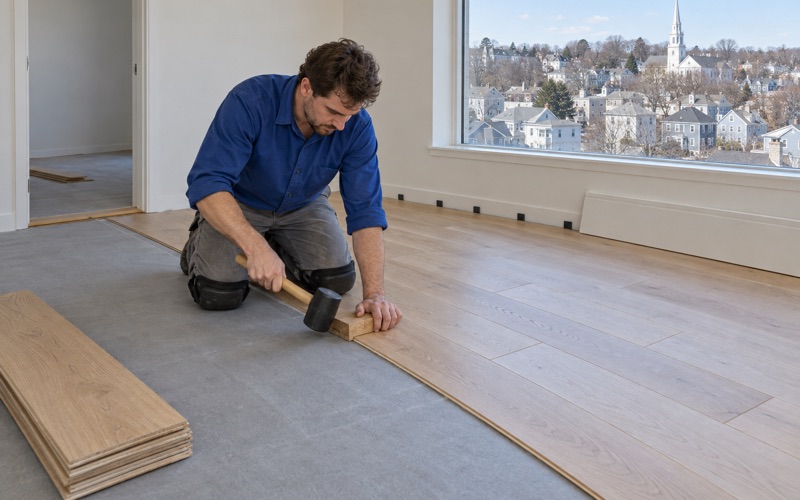
Some floors are not worth saving. Boards sanded too many times, cupping from long-term moisture, powderpost beetle damage, or engineered flooring with nothing left in its wear layer can all point to new wood. In those cases we say so and quote new solid hardwood or engineered flooring, acclimated first and installed over a checked subfloor with an expansion gap at the walls.
The point is to make the decision on evidence. We check how much wood remains above the tongue and groove, read moisture, and look at the subfloor wherever we can reach it. You get a refinish number and, where it applies, a replacement number, side by side, so the choice is yours and not a guess.
Owners, Condos and Floors Near the Fells
Stoneham is an owner’s town. Of its occupied homes, 71.0 percent are owner-occupied, and most of those owners live in detached single-family houses. That shapes our scheduling here: we are usually working around the family who lives in the house, so we phase the job zone by zone and keep the kitchen and at least one bedroom usable.
Living in the House During the Work
A typical sequence clears furniture from one zone, sands and finishes it, and moves everything back before the next zone starts. Waterborne polyurethane dries faster and smells milder than oil-modified polyurethane, which matters when people are sleeping down the hall. We choose finishes that fit the Massachusetts VOC limits for wood coatings, which are stricter than the federal ones.
The town also has a smaller number of owner-occupied two-family houses. In those, we can work one floor at a time, so the household upstairs or downstairs keeps living at home while the other level is sanded, coated and cured. The schedule is set with both households before the first room is cleared.
Condo Floors in Mid-Size Buildings
Not every Stoneham owner lives in a detached house. Census data counts 787 owner households in buildings of twenty to forty-nine units, most likely condominium units. Floor work there runs through the association as well as the owner, since condominiums are governed under M.G.L. c.183A and each building’s documents may carry their own rules on flooring, hours and access.
We ask for the association’s flooring rules before we quote, because they can shape underlayment choice, work hours and how materials move through common halls. We do not guess at acoustic requirements; the building’s documents decide what goes under a new floor. Refinishing existing hardwood usually avoids most of that, since nothing new is being installed.
The Fells, Spot Pond and Seasonal Movement
Stoneham sits against the Middlesex Fells Reservation, with Spot Pond and the Stone Zoo close by, and the town falls in the National Weather Service’s Southeast Middlesex forecast zone. Like any New England floor, wood here shrinks in dry winter heat and swells in humid summers, so gaps that show in February often close by July.
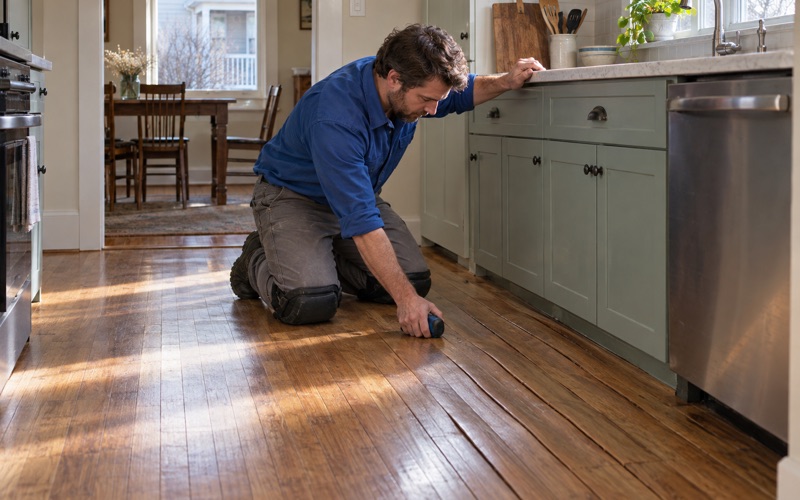
We read that movement before we fill or replace anything. Winter gaps are normal and usually close on their own. Crowning after a humid stretch, or cupping near an exterior door, points to a moisture source worth finding first. A moisture meter reading tells us which of those we are dealing with before any board comes up.
Planning a Floor Job in Stoneham
A Stoneham floor job starts with a visit. We walk every room in scope, lift a corner where carpet is involved, measure board thickness or wear layer, and check for moisture where there has been water. From that we write a quote that separates sanding, repairs, stairs and finish, so you can see which parts drive the cost.
Stairs, Thresholds and Trim
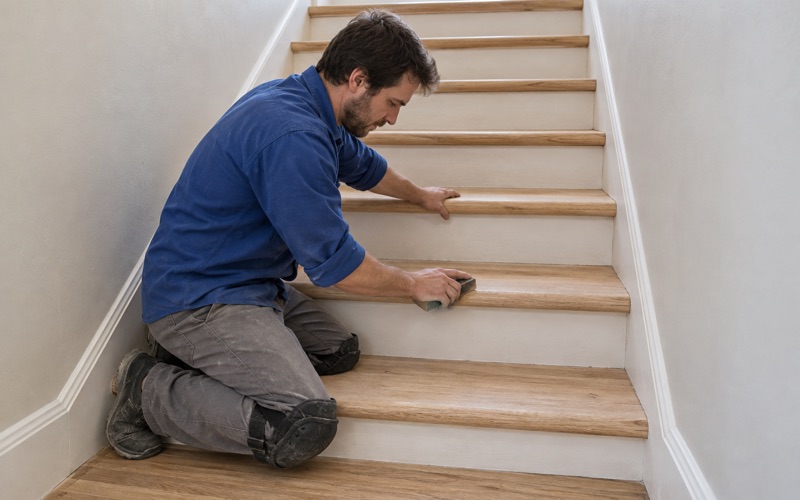
Stairs are quoted by the tread and riser, not folded into a square-foot price, because each one is hand work. The same visit covers stair nosing, reducers at the kitchen, thresholds between rooms, and whether the quarter round and baseboard come off or stay. Small transitions like these decide whether a refinished floor looks finished.
If carpet is coming off the stairs too, we check the treads underneath before promising a refinish. Stair treads under carpet are sometimes a lower grade or pieced together, and replacing a few with new solid treads can be the better value than sanding boards that were never meant to show.
Water Damage and Insurance Claims
If the project began with a leak, we trace the source, dry the area and take moisture meter readings before any board is replaced. Replacing wood over a wet subfloor only moves the problem. For claims, we document the damaged floors room by room, so your adjuster has photos, measurements and readings in one place.
A flooded lower level, a failed sump pump or a burst line under a radiator each call for a different drying approach, and below grade rooms often need a different flooring product altogether. We lay out those options once the readings are in, not before.
Choosing Color and Sheen
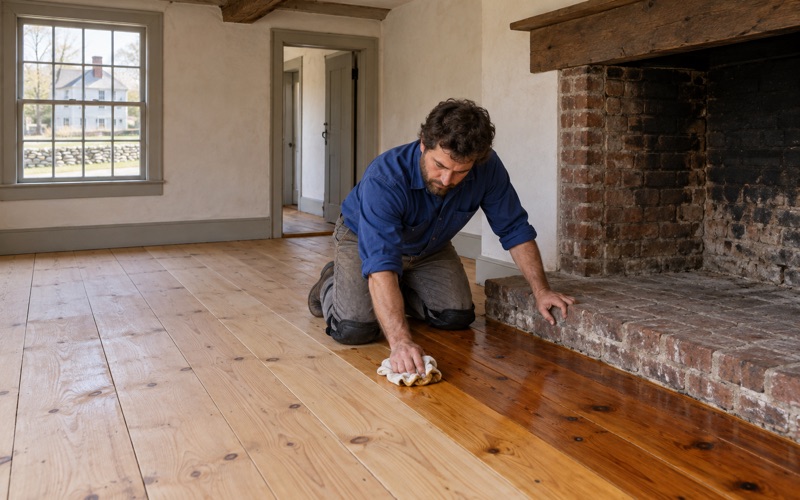
Older oil-based finishes often turn oak amber or orange over the years. A full sand removes that and gives you a choice: a clear waterborne finish that keeps red oak or white oak close to natural, a stain, or hardwax oil for a softer look. We lay stain samples on your own sanded boards, because a sample card rarely matches your floor.
Sheen level matters as much as color. Satin hides scuffs and dust in a busy family house better than gloss, and matte hides even more. Maple can blotch under dark stain, so we usually steer it toward clear finishes, while water popping helps red oak take stain more evenly.
A Fair Look Before Any Big Decision
Stoneham was incorporated in 1725, prospered as a shoe-manufacturing center, and still runs an open town meeting. Most of the houses we work in come from a later chapter, and their floors deserve a fair look before anyone decides they have to go. Call Malden Wood Flooring to schedule a walk-through and get a refinish-or-replace number in writing.
- 20+ Years on Wood Floors
- Free Written Estimates
- Stairs Priced Per Tread