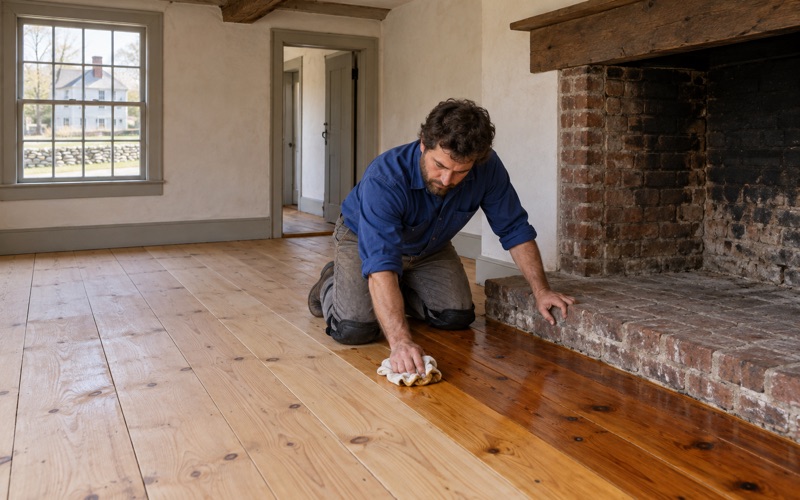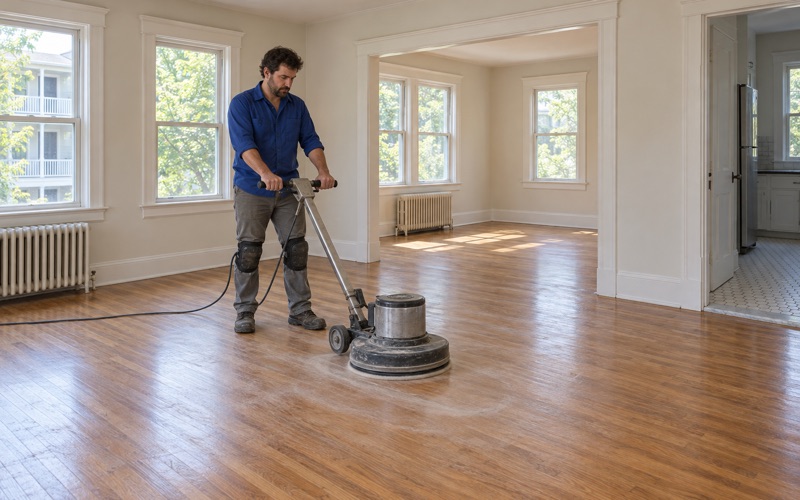
Malden Wood Flooring brings more than 20 years in the trade to wood flooring in South End condominiums and apartments, from full sand-and-refinish jobs to board replacement, stair work and water damage repair. Most of what we do here happens inside one unit of a larger building. So the plan starts with the rooms, the stairwell and the people on the other side of the walls.
Before a drum sander comes off the truck, we look at what the floor actually is. That means checking whether it is solid hardwood or engineered, how much wood is left above the tongue and groove, what finish is on it now, and whether anything painted needs a lead check first. A short walkthrough answers most of those questions.
We write the quote around what we find: square footage for open floor, stairs priced by the step, and patches counted on their own. Before we start, you will know which rooms get a full sanding, which get a screen and recoat, and how long each one stays off-limits while the finish cures.
Floors in South End Rowhouses Built 1850 to 1880
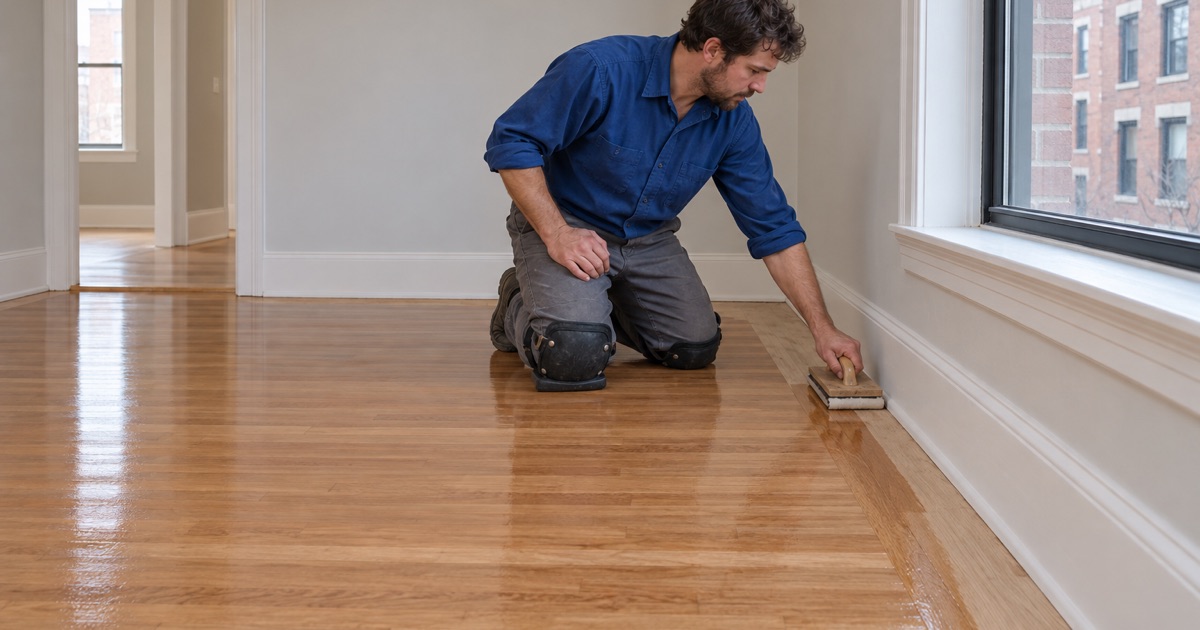
The South End sits on filled marshland from Boston’s South Bay, and construction there began on January 7, 1849. Its townhouses went up from 1850 to 1880, and the neighborhood is described as the largest intact Victorian row-house district in the country, covering over 300 acres. That age is the first thing we plan around on any floor here.
Old Floors With Limited Wood Left
In ZIP 02118, Census estimates put 7,535 of 15,828 housing units, or 47.6 percent, in buildings built 1939 or earlier. A floor in a building that old may already have been sanded several times, and each pass removes wood that never comes back. We check board thickness and count boards at a register or threshold before we promise a full sanding.
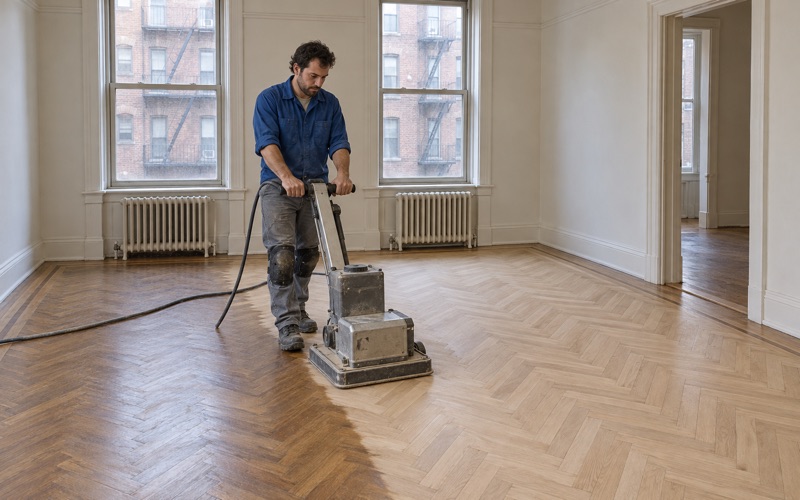
When the wood above the tongue is thin, we lighten the cut, shorten the grit sequence, or recommend a screen and recoat instead. When there is enough, we sand the floor flat and take out the traffic lanes. Either way the decision rests on a measurement rather than a guess about what the boards can take.
Lead Checks Before Sanding
Massachusetts runs its own lead-safe renovation rules for homes built before 1978, and nearly half of the units in this ZIP predate 1940. We confirm the build year and look for painted trim, painted borders or old coatings before any sanding begins. Where paint is present, the job is set up to follow the Massachusetts Lead Law from the first day.
Dustless sanding with HEPA vacuum extraction keeps fine dust down while we work, which matters in a unit that shares a front hall and stairs with neighbors. We clean at the end of each day rather than leaving it all for the final visit. Containment comes down only after the last coat is on.
Hidden Wood Under Carpet and Linoleum
In an older unit, carpet, linoleum or paint may have gone over the wood at some point in the last century. We do not assume what sits underneath until we lift a corner and look. When oak or pine turns up, we pull the carpet pad, staples, tack strip and any adhesive or black mastic before the first pass, because debris left behind tears sandpaper and gouges boards.
Old pine and early oak often show cut nails, face nailing and board gapping that a newer floor would not. We set any proud nails, note the gaps, and decide with you whether to fill them or leave them as part of the floor’s age. Nothing gets filled that would crack out again next winter.
Looking for wood-flooring closer to Woburn? See Wood-Flooring in Woburn.
What the South End Landmark District Reviews
The South End was listed on the National Register of Historic Places in 1973 and designated a Boston Landmark District in 1983. The district’s Standards and Criteria, revised April 27, 1999, describe a cohesive district of 19th-century Victorian red brick rowhouses. They also say the commission must approve all exterior alterations.
Facades, Front Yards and Visible Roofs
According to those standards, street-facing facades, front yards and roof portions visible from public streets are the only parts subject to review. Rear walls and side walls that do not directly face a public street or avenue are not reviewed. The list of reviewed parts is entirely exterior, and interior floors are not on it.
What we watch is the outside of the job: where equipment is staged, how dust bags and old flooring leave the building, and whether anything on the front of the house could be scuffed on the way in. We keep our work to the interior, protect the entry and the stoop, and carry everything out through the route the building prefers.
Condominium Buildings Treated as One
For condominium buildings, the standards say the entire building shall be considered and treated uniformly. That is an exterior rule, but it reflects how many South End buildings work day to day: several owners sharing one structure. We schedule entry, parking and noise with that in mind, and we ask whether your association sets its own hours for contractors.
A hall floor or common stairway may belong to the association rather than to you, so we confirm who owns which surfaces before quoting them. Your own unit’s floors are your call. Where a shared stair and a private landing meet, we mark the line with you so the finish stops in the right place.
One Unit in a Divided Rowhouse
By the close of the 19th century, the South End was becoming a tenement district, with rooming houses in former single-family townhouses. Later, many of those buildings became condominiums and apartments. In ZIP 02118, 2,202 of 4,713 owner households, or 46.7 percent, live in buildings of three to nine units, a Census figure used here as a proxy for the neighborhood.
Working Around Neighbors Above and Below
A floor job in a three- to nine-unit building means other households are home while we work. We set a start and finish time, run the drum sander and orbital sander during the hours that suit the building, and keep the stairwell clear. Units above and below still hear it, so we tell you in advance which days are loud and which are quiet.
For owners who live in the unit, we can split the work room by room so a bedroom or kitchen stays usable while other rooms cure. When an owner lives on one floor of a building and rents another, we schedule one floor at a time so the household never has to move out.
Rental Floors Between Tenants
About 38.8 percent of occupied homes in the South End are owner-occupied, according to the city’s Planning Department figures for 2025, and the rest are rented. For landlords, we fit floor work into the vacant window between one lease and the next. Sanding, stain and final coats are dry before the new tenant carries in a single box.
We keep that window tight by matching the finish to the calendar. A waterborne polyurethane takes light foot traffic sooner than an oil-modified one, and we give you the date the floor can take furniture rather than a range. If the gap between tenants is short, we tell you what fits and what should wait.
Stairs Priced by the Tread and Riser
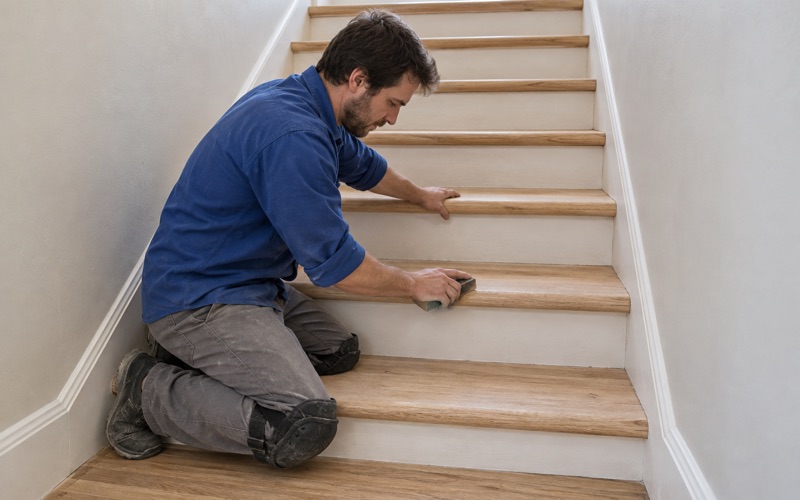
A divided rowhouse often includes stairs, either inside a duplex unit or in a common hall. We quote stairs by the tread and riser rather than folding them into a square-foot price. Each step is sanded by hand or with a small orbital sander, and stair nosing and risers take their own time.
Patches Where Radiators Came Out
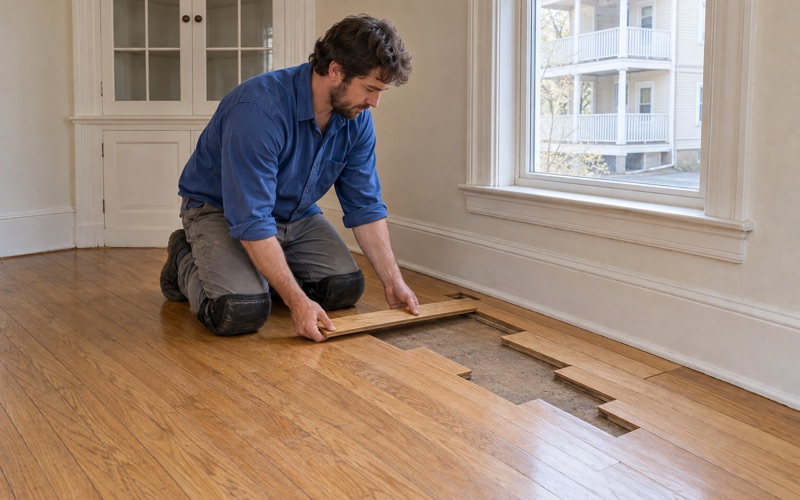
Where an old steam radiator or its pipes were removed during a renovation, the floor is often left with holes or a mismatched square of newer wood. We weave in matching boards cut to the existing layout instead of filling the gap. Once the whole room is sanded and finished together, the repair reads as part of the original floor.
Planning a Floor Project in the South End
The housing here spans a wide range of ages. About 22.7 percent of units in ZIP 02118 were built in 2000 or later, while nearly half predate 1940. The neighborhood also has eleven residential parks, among them Union Park, Worcester Square and Chester Square, and the buildings around them range from original rowhouses to much newer construction.
Engineered Floors in Newer Units
A newer unit may have engineered flooring rather than solid hardwood. We measure the engineered wear layer before promising a sanding, because a thin top layer may only tolerate a screen and recoat. If there is not enough wood to sand, we say so and lay out repair or replacement options instead.
Water Damage From a Unit Above
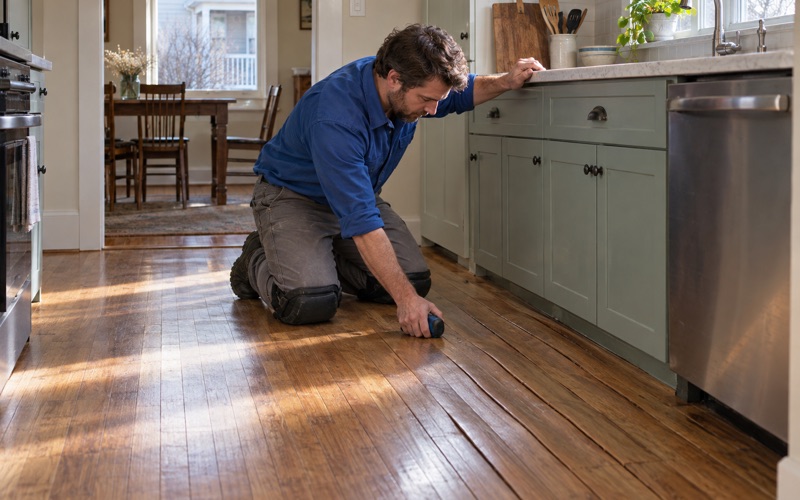
In a stacked building, a leak from a unit above, a radiator valve or a failed supply line can reach the floor below. We trace the source, dry the area and read the boards with a moisture meter before replacing anything, because boards laid over a wet subfloor can cup or buckle later.
We also document the damage room by room for your insurance adjuster, with photos and meter readings tied to each area. That record helps when the claim covers more than one unit. Water stains that did not reach the wood core can sometimes be sanded out rather than replaced.
Seasons, Heat and Winter Gaps
The South End falls in National Weather Service forecast zone MAZ015, Suffolk. Heated winter air dries wood floors and summer humidity swells them, so winter gaps that open between boards in January often close again by summer. We let new boards acclimate, keep an expansion gap at the walls, and tell you which gaps are seasonal and which point to a problem.
Choosing a Finish and Stain
Massachusetts limits VOC content in wood coatings more strictly than federal rules do, and we choose finishes that fit those limits. Waterborne polyurethane dries clear, oil-modified polyurethane ambers over time, and hardwax oil gives a low sheen level that is easy to spot repair. We lay stain samples on your own floor before committing, since red oak and white oak take color differently.
We also talk through sheen, because a satin finish hides everyday scuffs better than gloss in a busy hallway. Water popping before stain opens the grain for a deeper, more even color on oak. Once you approve a sample, that board is the reference for the whole floor.
- 20+ Years on Wood Floors
- Free Written Estimates
- Stairs Priced Per Tread