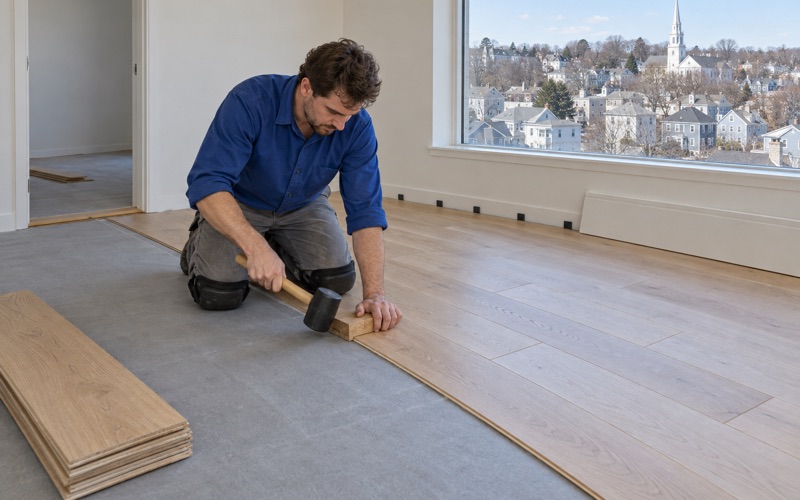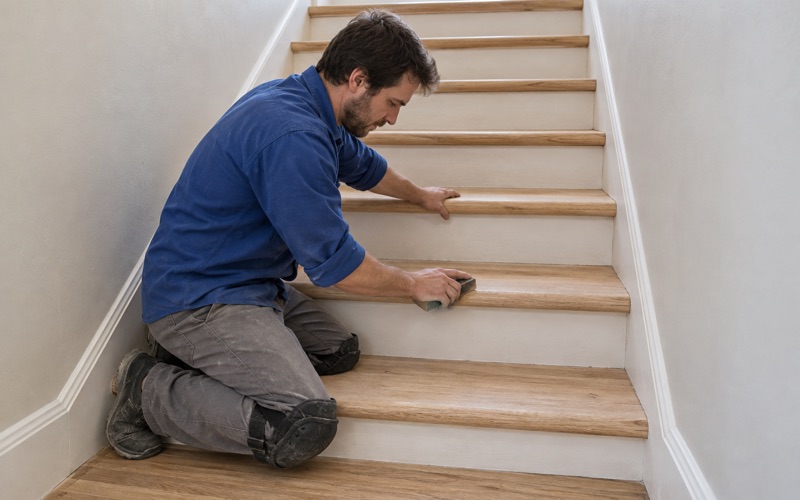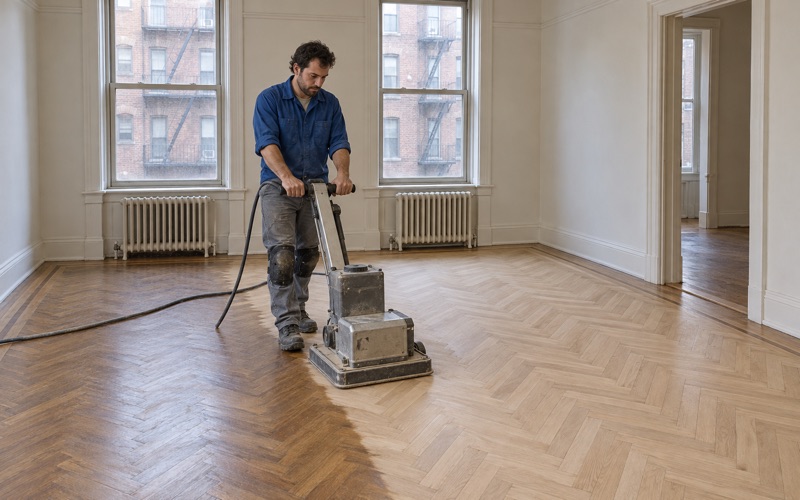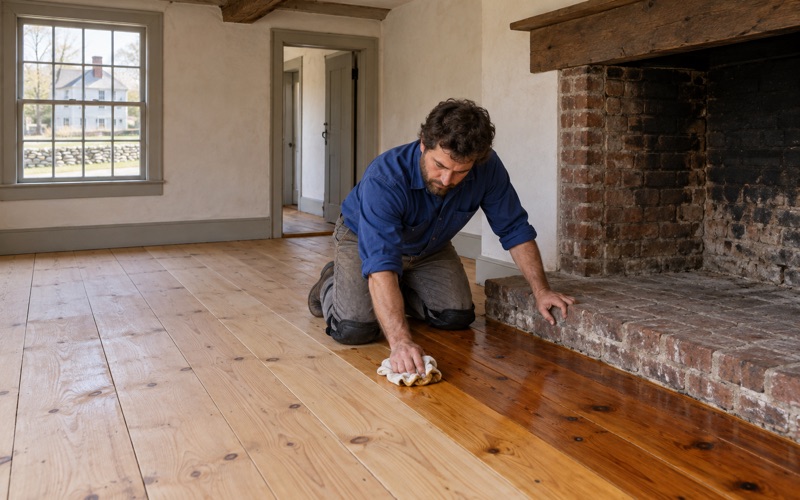
Malden Wood Flooring has spent more than 20 years on wood-flooring in Somerville, and most of the floors we see here belong to people who own one level of a stacked house and live on it. We refinish, repair and install solid hardwood and engineered floors, and we plan every job around the fact that another household shares the walls.
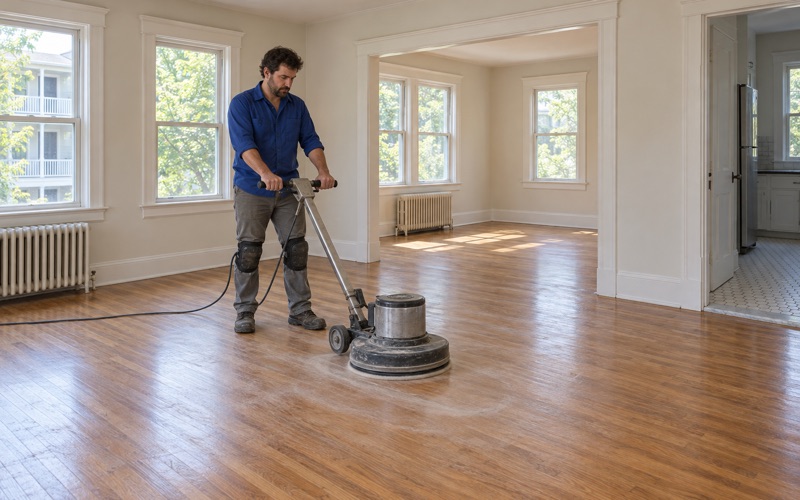
That changes the schedule more than it changes the sanding. A drum sander, a buffer and a HEPA vacuum sound the same in any house, but in a two-family the people upstairs still need the front hall, and the household downstairs still needs quiet evenings. We work one floor at a time so the rest of the building keeps living in it.
Before any quote, we check the build year, look for painted surfaces and pull a floor register or threshold to see how much wood is left on the boards. Old pine and early oak can only be sanded so many times, and we would rather tell you that at the walkthrough than halfway through the grit sequence.
Floors in Somerville’s Owner-Occupied Two-Families and Three-Deckers
Somerville is a city of stacked houses. Census figures show 55.2 percent of its homes sit in two- to four-unit buildings, and more owners live in a two-unit building (4,619 households) than in a detached house (3,007). For a floor contractor, that means the typical customer here owns one level of a shared building rather than a whole house.
What the Census counts, and what it does not
Another 10,189 homes are in three-or-four-unit buildings, which is the form most three-deckers take. The Census does not count three-deckers by name, so we treat that figure as a proxy rather than a tally. In many of these buildings the layout repeats from level to level: a front parlor, a dining room, a long hall and a kitchen at the back.
Repeating layouts help us quote. Once we have walked one floor of a building, we usually have a good idea where the traffic lanes run, where the radiators sat and which rooms were carpeted in a later decade. Your floor still gets its own walkthrough, because owners on different levels rarely made the same choices over the years.
Old boards in old buildings
The age of the housing matters as much as its shape. Of Somerville’s homes, 59.0 percent were built before 1940, which often means solid tongue and groove oak or pine over a board subfloor, with cut nails and face nailing in the older rooms. Some of those floors have been sanded more than once already, and each pass took wood with it.
We check board thickness at a register or threshold before promising a full sanding. When the tongue is close to showing, a screen and recoat or a lighter pass with an orbital sander may be the better call. Old-growth pine and early red oak are worth saving, and saving them starts with not taking too much off the top.
Carpet, linoleum and what is underneath
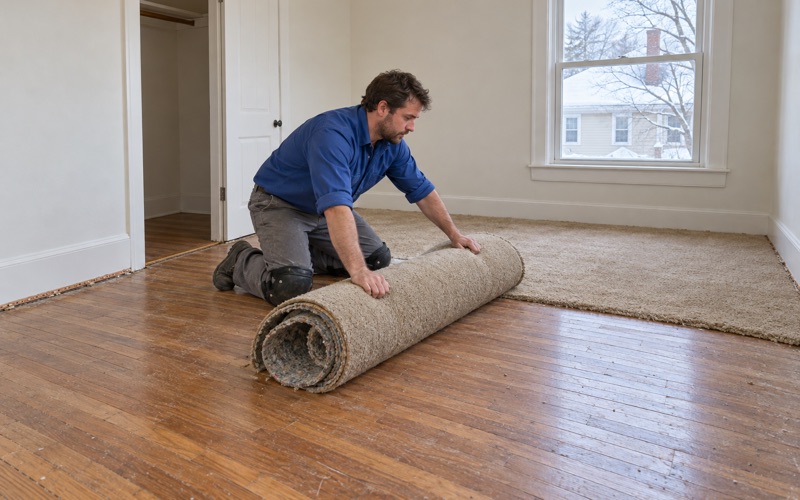
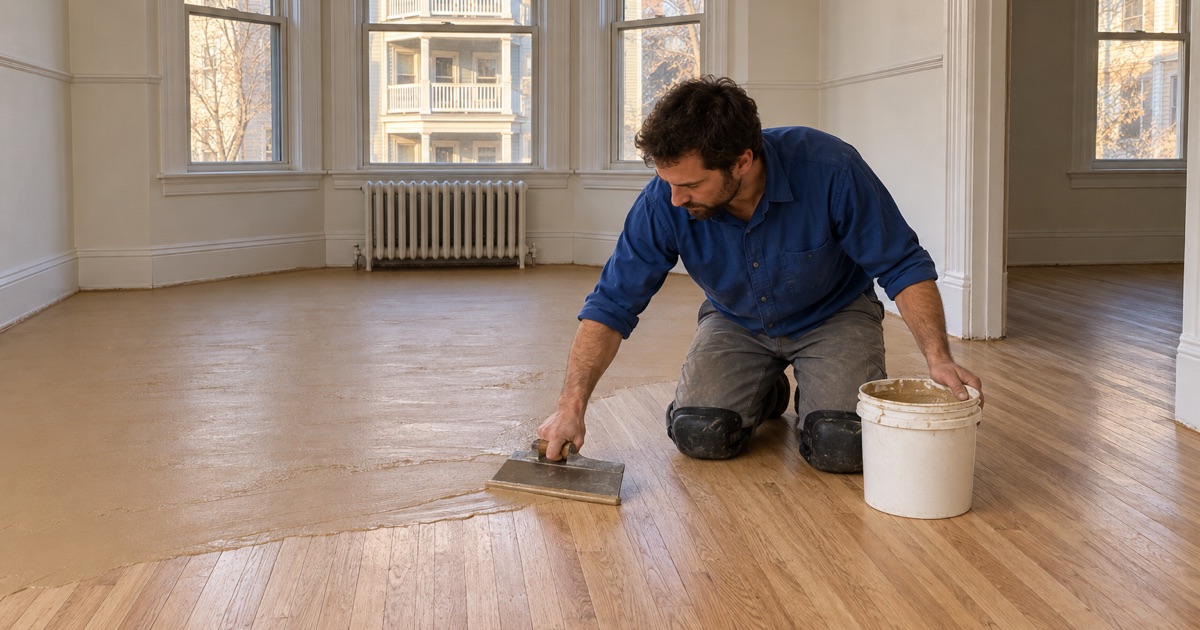
Plenty of stacked-house floors were covered up at some point. We pull the carpet, carpet pad, tack strip and staples, lift old linoleum, and clean off the adhesive before any sander touches the wood. Black mastic under old tile gets its own look before we decide how to handle it, because some older adhesives call for extra care.
Orange oak from an aging shellac finish or an old oil-based coat is common under those coverings. After sanding and water popping, we lay stain samples on your own boards, so you can see how red oak or white oak will take a color before the whole room is committed to it.
Looking for wood-flooring closer to Revere? See Revere Wood-Flooring.
Working Around Neighbors Above and Below
Refinishing one floor of a three-decker means sanding with a household overhead, another underfoot and a shared front stair between them. We plan the job so both neighbors know the days, the hours and the route in and out, and so your own household knows which rooms are off-limits and for how long.
Dust, noise and the shared hall
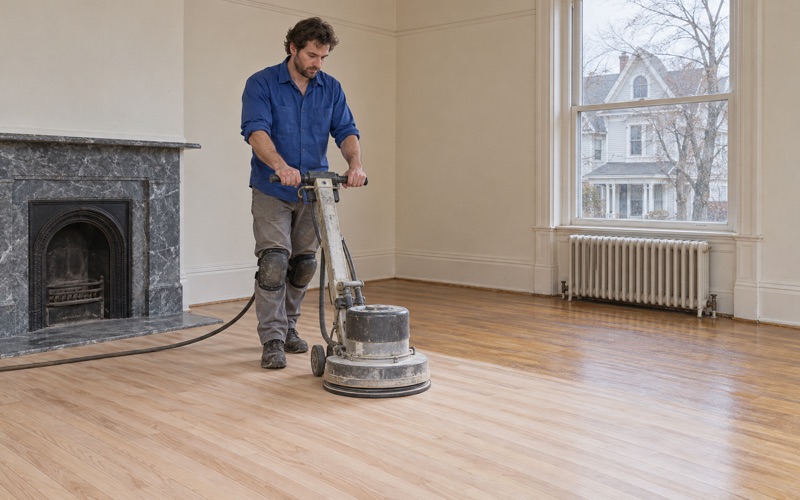
We run dustless sanding with HEPA vacuum extraction on the drum sander and edger, and we seal the doorways that open onto the common stair. The machines are loud, so we keep the heaviest sanding to working hours and let the neighbors know when the drum sander starts each day and when it stops.
The shared hall and stairs are usually the only way in for everyone in the building. We protect the treads, keep the landings clear and carry equipment up and down at times that do not block anyone leaving for work in the morning or coming home at the end of the day.
One floor at a time
If you own a two-family and live on one level, we can schedule your unit and the other unit separately, so the household upstairs or downstairs keeps living in the house the whole time. Stairs are handled the same careful way: we quote stair treads, stair risers and stair nosing by the piece, not folded into a square-foot price.
When you own both floors, doing them in sequence also lets us match stain and sheen level across the building. We keep the grit sequence, the stain samples and the finish notes from the first floor, so the second one comes out looking like it belongs to the same house rather than a different job.
Finish choice when others share the air
Cure time and odor matter more when another household shares the hall. Waterborne polyurethane dries faster and smells less than oil-modified polyurethane, and hardwax oil suits owners who want a low, matte look. Every finish we use fits the Massachusetts VOC limits for wood coatings, which are stricter than the federal ones.
We tell you how long to keep furniture and rugs off the new finish, and we tell the neighbors when the smell should fade. That small bit of notice tends to do more for the peace of a shared building than any product choice we could make on our own.
Old Houses, Lead Rules and Somerville’s 75-Year Review
The large majority of Somerville homes were built well before 1978, and Massachusetts runs its own lead-safe renovation rules for homes of that age. That is why we confirm the build year and look for painted surfaces before any sanding starts, rather than finding out partway through the first room.
Painted floors and painted trim
Painted borders, painted stair treads and layers of paint on baseboard and quarter round come up often in older stacked houses. Those surfaces get checked before we sand, and the plan for the room follows from what we find, including how dust is contained and how the floor is cleaned when we finish.
That check is part of the quote, not a surprise added later. If a room needs a different approach, you hear about it before the first day, along with what it does to the schedule for your household and for the neighbors sharing the building with you.
What the Demolition Review covers
The Somerville Historic Preservation Commission administers the city’s Demolition Review Ordinance, which applies to buildings over 75 years old. In local historic districts, the commission also reviews exterior changes that are visible from a public way. The city publishes a list of its local historic districts by address, and it is worth checking yours before a larger project.
That review is aimed at demolition and at the outside of a building, while our work stays inside the house. Floor work often rides along with bigger plans, though, so if your project also touches porches, windows or an addition, raise it with the city early. Our part stays the same: floors, stairs and trim.
Radiator scars and old repairs
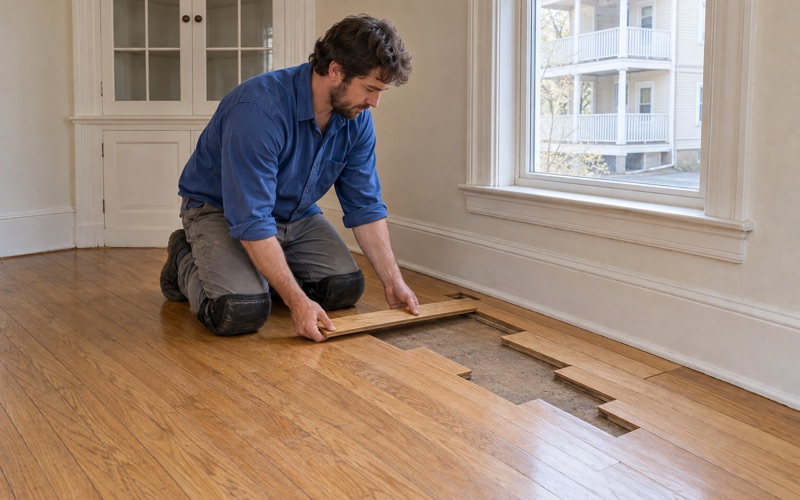
Many Somerville two-families still show where steam radiators and their pipes once came through the floor. We patch those holes with matching boards woven into the floor rather than filling them, so the radiator removal patch follows the grain and blends in once the whole floor is finished.
The same weave-in repair handles board replacement after pet urine stains, deep water stains or old powderpost beetle damage. We cut back to sound wood, lace in boards of the same species and width, and sand the patch and the surrounding field together so they finish as one continuous floor.
Wood Floor Work from Union Square to Davis Square
Somerville covers 4.12 square miles, and at 19,671 people per square mile it is the most densely populated municipality in New England. That density shows up on most of our jobs as tight parking, narrow stairs and neighbors close at hand, whether the house is near Union Square or a few blocks from Davis Square.
Winter Hill, Spring Hill and the older streets
Older houses on Winter Hill, Spring Hill and Prospect Hill can hold eastern white pine in the back rooms and oak in the front ones. Seasonal winter gaps between boards are normal in rooms heated by steam, and we explain which board gapping closes up again in summer and which points to a real problem.
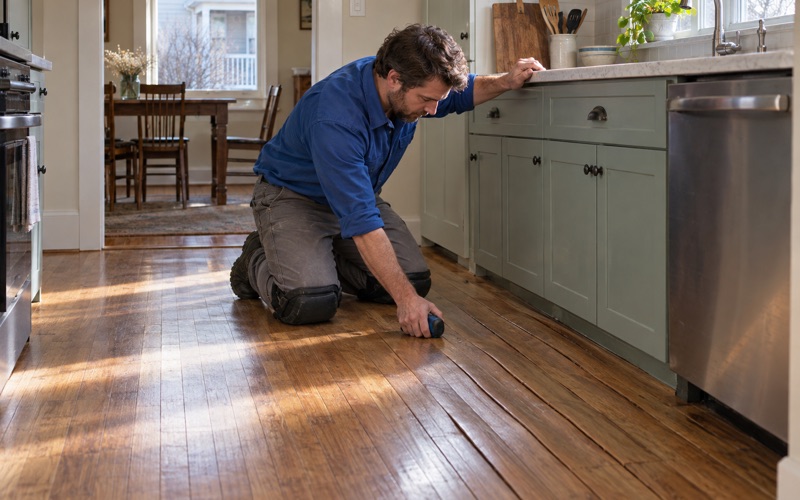
Cupping, crowning and buckling tell a different story. When boards lift or dish, we find the source with a moisture meter first, whether it is a leak from the unit upstairs, a radiator valve or water from a flooded lower level, and we dry the floor before any board is replaced.
Water damage between units
In a stacked house, a leak on one floor can become a stained ceiling and a cupped floor on the next. We trace the water, dry and read the boards, and document the damage room by room for the adjuster, which helps when more than one owner in the building is involved in the claim.
Newer units and engineered floors
Not every Somerville home is old. The 2010 to 2019 decade added 3,062 homes, the most of any decade since 1940, and newer units are more likely to carry prefinished or engineered flooring. We measure the engineered wear layer before promising a sanding, because a thin one may only allow a screen and recoat.
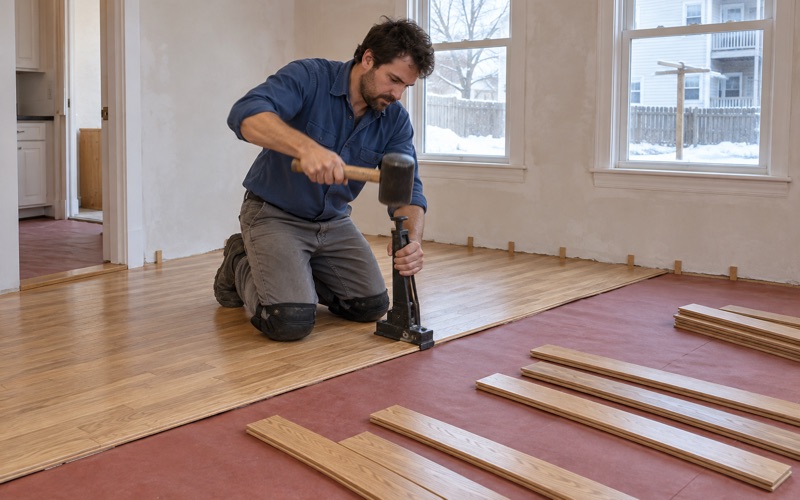
For a new installation, we allow for acclimation, check the subfloor and leave the right expansion gap at the walls, whether the floor is solid hardwood, parquet or a herringbone entry. Reducers, thresholds and quarter round are fitted so the new floor meets the old one cleanly at each doorway.
- 20+ Years on Wood Floors
- Free Written Estimates
- Stairs Priced Per Tread