
Malden Wood Flooring offers screen and recoat hardwood floors service in Malden, MA and in surrounding cities including Everett, Melrose, Chelsea, Medford and Somerville. A screen and recoat, sometimes called a buff and coat, renews a dull or lightly scratched finish without sanding down to bare wood, and in more than 20 years of floor work we have found it is one of the most underused ways to protect a hardwood floor.
The idea is simple: lightly abrade the existing finish with a buffer and a fine screen, clean away every trace of dust, and apply a fresh coat of polyurethane. The floor looks renewed, the wood underneath is protected, and you avoid the time, dust and cost of a full sanding.
The catch is that it only works on the right floor. We check the finish, test adhesion and look for bare spots before recommending one, so you are not paying for a coat that will peel.
When a Screen and Recoat Is the Right Choice
Dull, Lightly Scratched Finish
If your floor has lost its sheen and shows fine scratches in the finish but no bare wood, it is a good candidate. Those scratches are in the protective coating, not the wood, so a light buff and new coat restores the look.
Floors With Little Wood to Spare
Old floors that have been sanded many times, thin old pine, and engineered floors with a thin wear layer benefit most from a recoat. It adds protection without removing wood, which keeps those floors going for years longer than another sanding would.
Before Selling or Between Tenants
A recoat is a quick, affordable way to freshen floors before listing a house or between tenants in a rental. It is fast enough to fit a short vacancy and makes floors look cared for in photos and at showings.
When It Will Not Work
Worn-Through Traffic Lanes
Where the finish has worn through to bare wood, usually in a gray path through the hallway or kitchen, a recoat cannot fix it. The bare wood has absorbed dirt, and new finish over it looks uneven. The floor needs a full sanding.
Deep Scratches, Stains and Damage
Dents, gouges, pet stains and water marks that reach the wood will still show under a new coat. Boards that are cupped, loose or damaged need repair first, and often a full refinish.
Waxed or Contaminated Floors
Wax, oil soaps, some polishes and silicone-based cleaners leave residue that keeps new finish from bonding. We test adhesion in an inconspicuous spot first. If the floor fails, we either remove the contamination or recommend a full sanding.
How We Screen and Recoat
Cleaning and Adhesion Test
We clean the floor thoroughly, then test a small area to confirm that the new finish will bond to the old. This step decides whether the job goes ahead as a recoat.
Buffing With a Fine Screen
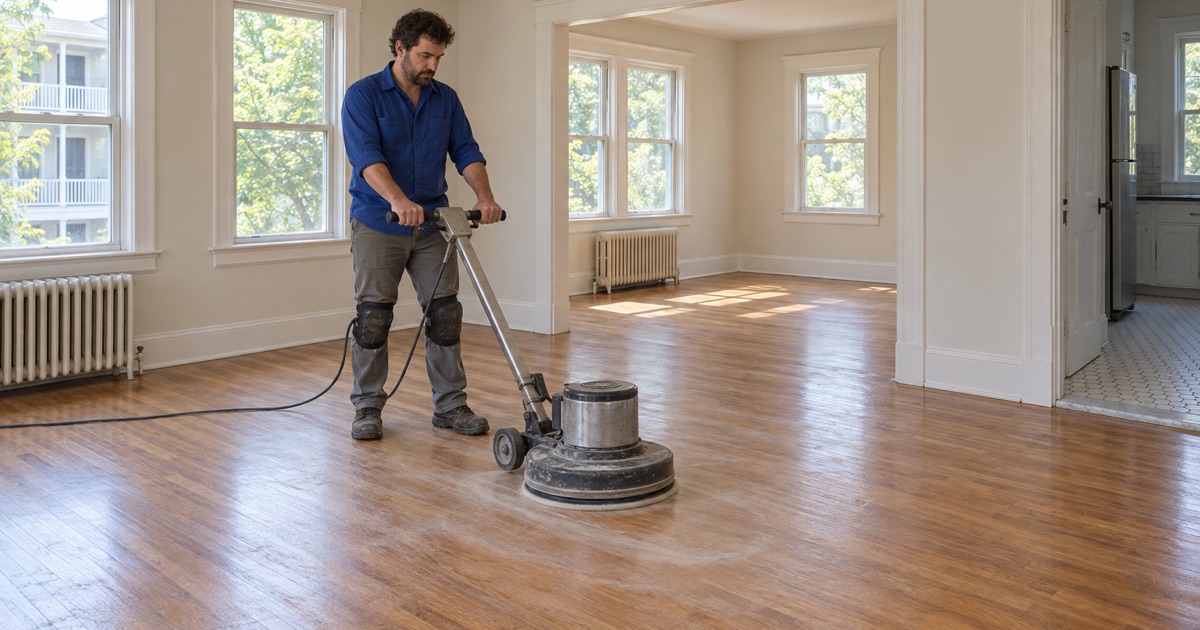
A buffer with a fine abrasive screen or pad lightly scuffs the whole floor, creating a surface the new coat can grip. Edges and corners are hand abraded. No bare wood is exposed.
Dust Removal and New Coat
We HEPA vacuum and tack the floor to remove every particle of dust, then apply a fresh coat of polyurethane, typically waterborne for faster drying and lower odor. The finish meets the Massachusetts VOC limits for wood coatings.
Recoating Different Floors
Prefinished and Engineered Floors
Many factory finishes are hard and slick, and some need special preparation or a bonding product before they accept a new coat. We identify the product where we can and test before committing. On engineered floors with a thin wear layer, a recoat is often the only safe maintenance option.
Site-Finished Oak and Pine
Oak and pine floors finished on site with polyurethane usually recoat well, as long as no wax or oil soap has been used. It is a good way to keep a refinished floor looking new for years.
Matching Sheen
A recoat is a chance to change sheen. If your floor was glossy and you want a more forgiving satin or matte look, the new coat can do that. We show samples before applying.
Making a Recoat Last
Care in the First Weeks
A new coat is dry to the touch long before it is fully cured. For the first days, walk on it in socks, keep pets’ claws off it where you can, and put furniture back with felt pads rather than dragging it. Rugs should wait until the finish has cured, because a rug laid too soon can mark it.
Cleaning Without Building Residue
The fastest way to lose the option of another recoat is to use products that leave residue. Oil soaps, wax, polishes and steam mops all cause problems. A microfiber mop, a lightly damp pad and a cleaner made for polyurethane finishes keep the floor ready for the next coat.
Planning the Next Recoat
Keep an eye on the busiest paths: the kitchen, the front hall and in front of the couch. When those areas start to look dull and scratched but the finish is still intact, it is time for the next recoat. Waiting until bare wood shows turns a one-day recoat into a full sanding.
Many owners put it on the calendar every few years for the busiest rooms. That small, regular step is how a refinished floor stays looking new for a long time without losing wood to another sanding.
- 20+ Years on Wood Floors
- Free Written Estimates
- Stairs Priced Per Tread