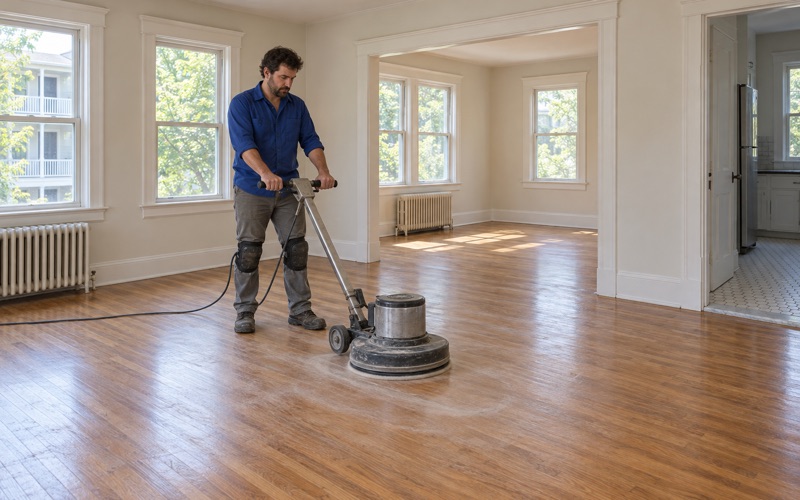
Malden Wood Flooring brings more than 20 years of sanding, repair and installation to wood flooring in Saugus, and most of our work here happens in houses where the owner lives on the floors we are refinishing. We plan each job around the household, the age of the boards and what the rooms need to look like when the furniture goes back.
A typical call starts with one of three things: worn finish in the rooms people use every day, carpet an owner wants gone, or boards damaged by water or pets. We look at the floor in person, check what it is made of and how much wood is left, and then tell you plainly whether sanding, repair or replacement makes sense.
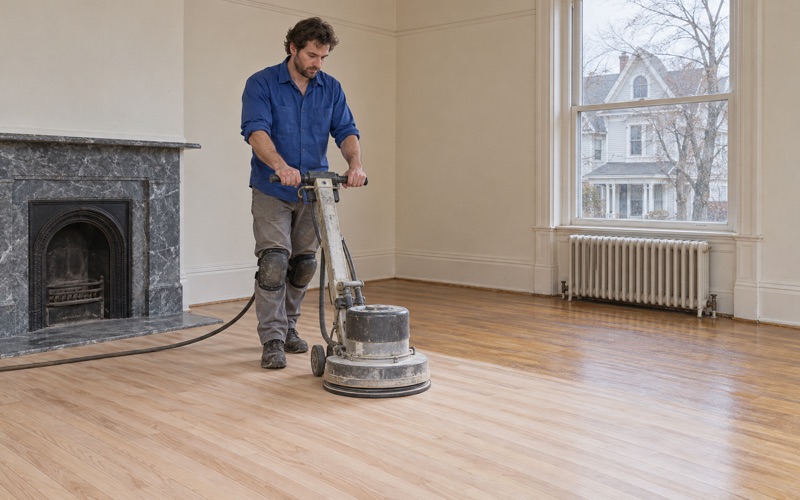
We keep the work contained and the choices clear. Sanding runs dustless with HEPA vacuums attached, and every quote spells out what each room needs, whether that is a screen and recoat, a full sanding, board repairs or new hardwood laid where nothing can be saved.
Wood Floors in Saugus’s Postwar Single-Family Houses
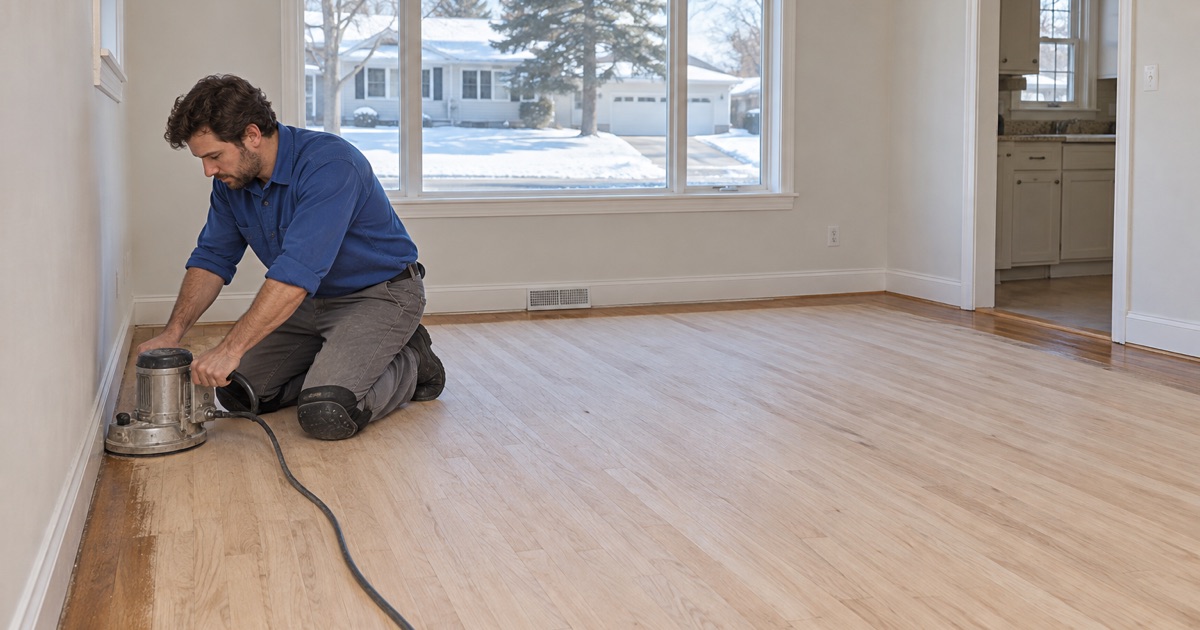
Saugus is a town of single-family homes, and that shapes floor work here more than anything else. Most jobs are in a detached house with one owner making the decisions, rooms connected across one or two levels, and hardwood that has seen decades of family traffic, sometimes under carpet and sometimes refinished once or twice already.
Detached Houses, Owned by the People Who Live in Them
American Community Survey figures show 7,476 of the town’s 11,402 housing units, or 65.6 percent, are single-family detached houses. The 2016 Housing Production Plan the town prepared with MAPC put the single-family share of the housing stock at about 75 percent and described Saugus as a town of mainly homeownership.
Ownership runs deep in those houses. Of 7,836 owner households, 6,673, or 85.2 percent, live in a detached house, and 71.5 percent of all occupied units in town are owner-occupied. For us that means most Saugus clients are refinishing a floor they plan to live on for years, so we talk through durability and future recoats, not just the first coat.
Floors From the 1950s Through the 1980s
Saugus grew after World War II, and the survey shows it: 1,373 units date to the 1950s, 1,652 to the 1960s, 1,220 to the 1970s and 1,645 to the 1980s. Together those four decades supplied 5,890 units, or 51.7 percent of the housing standing in town today.
Floors of that age have usually been through a few owners and at least one change of taste. We often find orange oak from an aging amber finish, traffic lanes worn through at doorways, and pet urine stains that have turned gray or black in the grain. Light marks sand out; deep stains usually mean a board replacement woven into the surrounding floor.
Keeping the House Livable During the Work
A single-family house has no second unit to retreat to, so we stage the job. Where the layout allows, we sand and finish one level or one group of rooms at a time, leaving a kitchen, a bedroom and a path to the door usable while the finish cures in the rest of the house.
Finish coats need time to cure before rugs and heavy furniture return, and we give you that timeline in writing up front. We move furniture room by room, protect the rooms we are not working in, and seal off doorways so sanding dust stays where the HEPA vacuum can collect it.
Looking for wood-flooring closer to Stoneham? See Wood-Flooring Services in Stoneham.
Refinishing Floors in a Single-Family Saugus Home
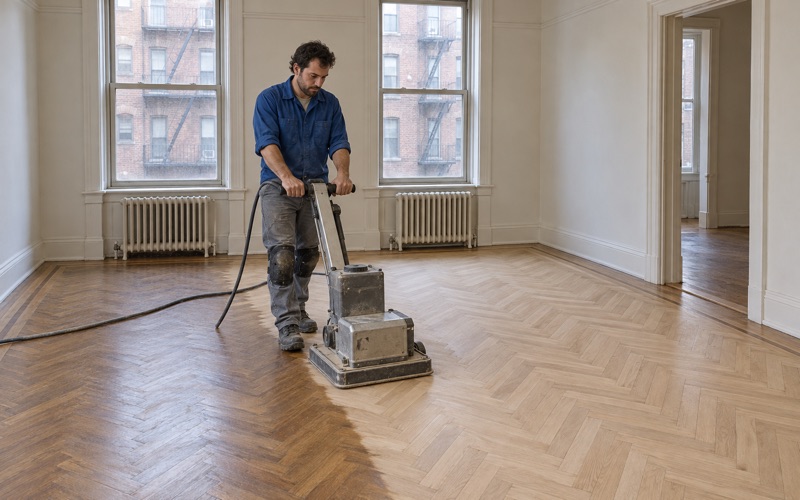
Refinishing is most of what we do in Saugus. A full sanding takes the floor back to bare wood and starts the finish over, while a screen and recoat scuffs the existing finish with a buffer and adds a fresh coat. Which one fits depends on how deep the wear goes and what is already on the boards.
Reading the Floor Before Any Sanding
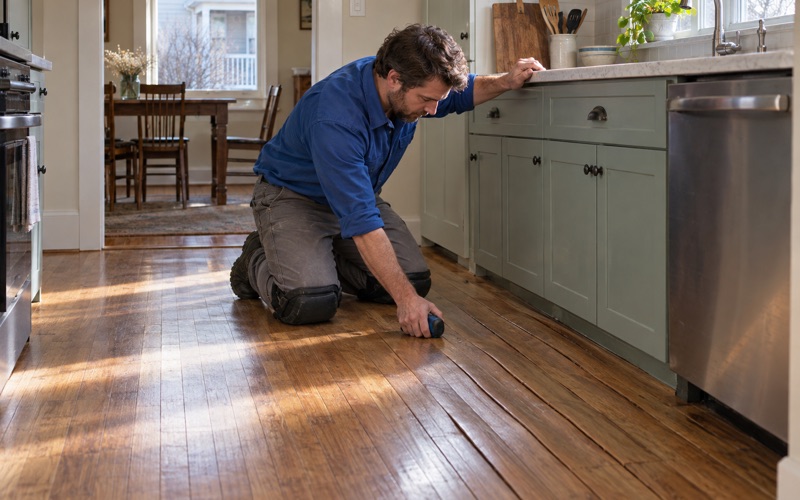
We look for cupping, crowning and board gapping first, since each points to a different cause. Winter gaps that close again in summer are normal seasonal movement, while cupping usually means moisture from below that has to be found before sanding. We use a moisture meter rather than guessing, and we check the subfloor wherever a board feels soft.
Engineered floors, sometimes found in kitchens and additions, get their own check. We measure the engineered wear layer before promising a sanding, because a thin veneer may allow only a light pass or none at all. When sanding is off the table, a screen and recoat or a board replacement is often the better answer.
Lead Checks in Houses Built Before 1978
Survey data places 71.9 percent of Saugus housing units before 1980, which puts most of the town’s houses inside the window the Massachusetts Lead Law addresses. Massachusetts runs its own lead-safe renovation rules for homes built before 1978, so we confirm the build year and check painted surfaces such as baseboard, thresholds and stair risers before a drum sander starts nearby.
When paint is involved, we plan containment and cleanup around it rather than sanding through and hoping. That can change the order of work, the protection on doorways and the way debris leaves the house, and we explain those steps in the quote so the price reflects them.
Choosing a Finish and a Sheen
Massachusetts limits the VOC content of wood coatings more strictly than federal rules do, and we choose products that fit those limits. Waterborne polyurethane dries clear and cures with less odor, oil-modified polyurethane gives a warmer tone, and hardwax oil suits owners who prefer spot repairs over periodic recoats.
We lay out stain samples on your own sanded boards before anything is committed. Owners planning a darker stain often benefit from water popping, which opens the grain so the color takes more evenly, and busy households with dogs usually do better with a satin or matte sheen level that hides everyday scratches.
Older Floors in Cliftondale and East Saugus
Saugus is older than its postwar streets suggest. The Saugus Iron Works, founded in 1646 as Hammersmith, is known as the first integrated iron works in North America, and the town had about 5,000 residents in 1900. Older village centers such as Cliftondale and East Saugus hold houses from long before the postwar expansion.
Pre-1940 Houses and Their Floors
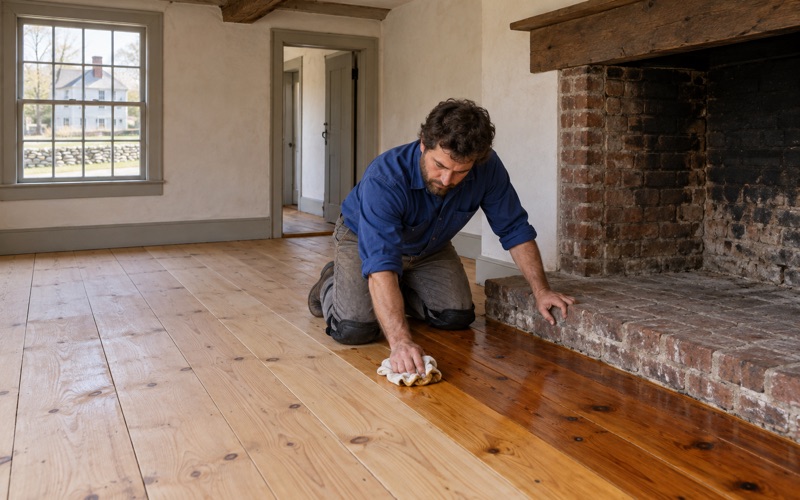
The survey counts 3,349 units built in 1939 or earlier, 29.4 percent of the town’s stock. Floors in houses that old may be eastern white pine or early oak, often face nailed with cut nails, and many have been sanded more than once. Some carry a shellac finish or paint along the edges where rugs once sat.
Old boards have less wood left above the tongue and groove, so we lift a floor register or check an edge to see the remaining thickness, and we count the boards needing repair before we quote a refinish. If there is not enough wood left for a full sanding, we say so and suggest a lighter approach.
Radiator Patches and Board Repairs
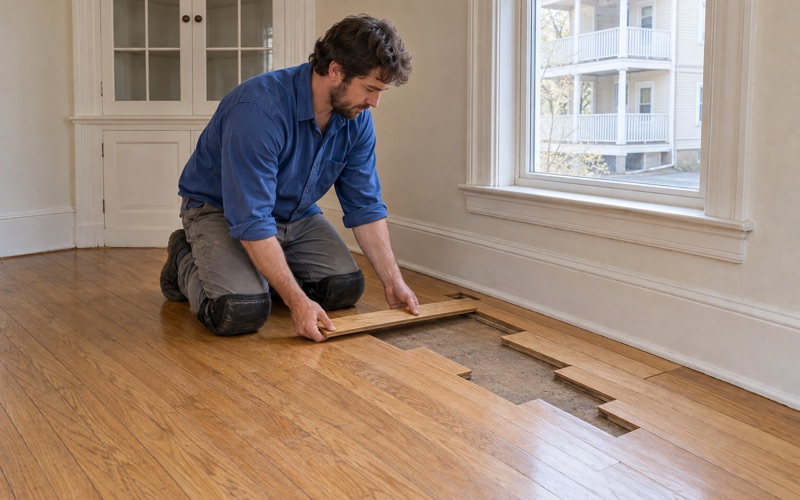
When an older house has had a steam radiator or a run of pipe removed, it usually leaves holes and a mismatched strip in the floor. We patch those with matching boards woven into the surrounding floor rather than filling them, and we treat sections lost to powderpost beetle or carpenter ants the same way.
Patching is also how we handle a floor with scattered damage from old pet stains or a past leak. Instead of replacing a whole room, we cut out the affected boards, weave in new pieces staggered to follow the existing layout, and sand the whole floor together so the repair disappears under one finish.
Stairs, Treads and Risers
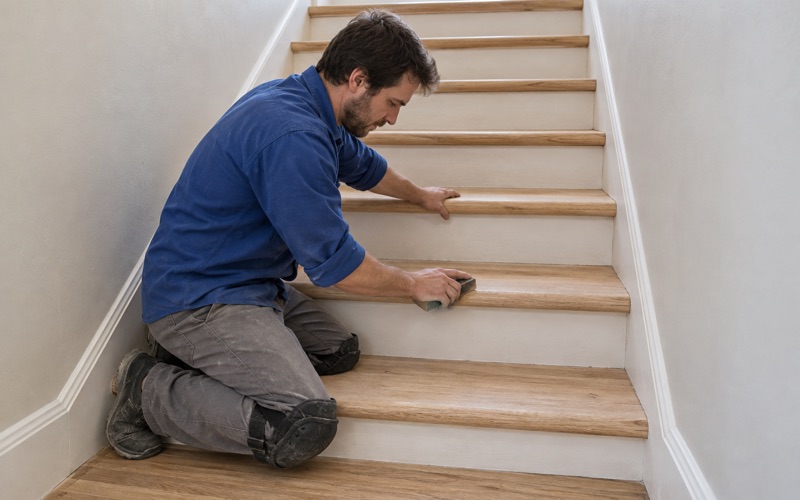
Stairs take more handwork than any room in the house. We price them by the tread and riser rather than folding them into a square-foot rate, so you can see what the staircase costs on its own, with worn stair nosing, loose treads and painted risers each listed as separate items.
Some staircases have hardwood treads under carpet or paint, and others have treads too worn to sand again. We tell you which you have after a close look, and new stair treads can be stained to match the refinished floors they meet at the landing.
Replacing Carpet and Planning a Floor Job in Saugus
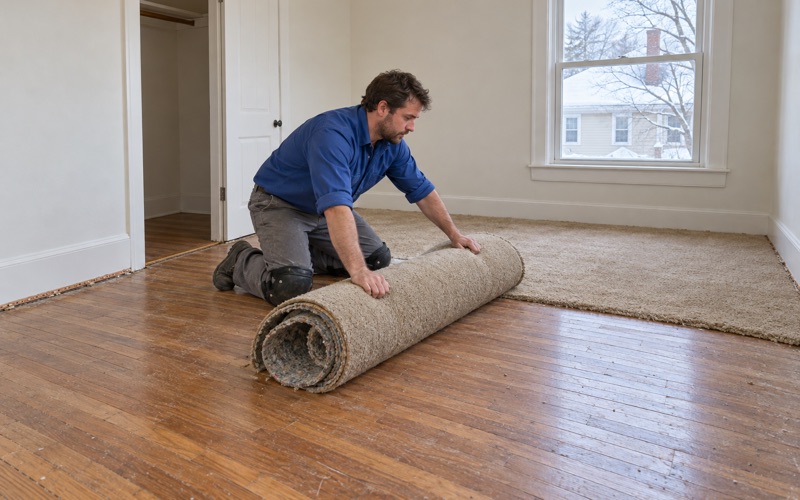
Carpet-to-hardwood is a common request in mid-century houses, where many owners find wood under wall-to-wall carpet. Sometimes the hardwood underneath is in good shape; sometimes it is patched, stained or missing in a room, and the job becomes part refinish and part installation.
What Comes Up With the Carpet
Before any sanding, we pull the carpet pad, staples and tack strip and clean off any adhesive left on the boards. Linoleum and older glued coverings can leave black mastic behind, which we assess before deciding how to remove it. Only a clean floor sands evenly through the grit sequence, and skipping that step shows in the finish.
Once the floor is bare, we can tell you what you actually have. Oak that has been under carpet for decades may need little more than a sanding, while tack strip holes along the walls, water stains near doors and gaps where walls once stood need patching first.
Adding New Solid or Engineered Hardwood
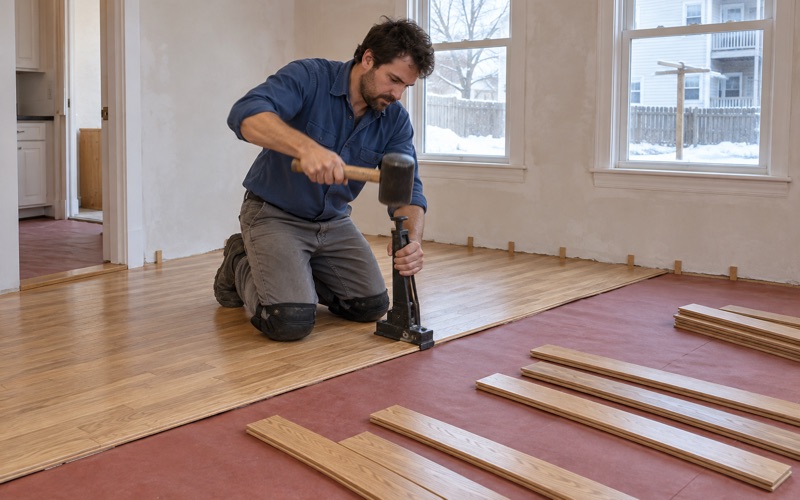
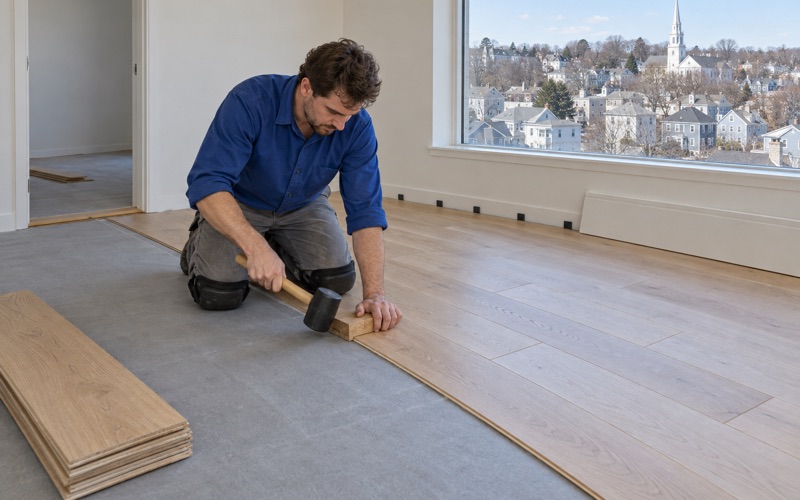
Where a room has no wood to save, we install new flooring to match or to start fresh. Solid hardwood in red oak, white oak or maple can be site-finished to blend with neighboring rooms, while prefinished boards shorten the time a room is out of use. Boards acclimate in the house, and we leave an expansion gap at the walls under baseboard and quarter round.
Below grade rooms and floors over radiant heat call for different choices, usually engineered flooring over the right underlayment and vapor retarder. We follow the NWFA Installation Guidelines for these conditions and check subfloor moisture before any boards go down, so a finished lower-level room does not end up cupping.
Water Damage, Insurance and Scheduling
When a leak upstairs, a radiator or water in a lower level soaks a floor, we trace the source, dry the area and take moisture meter readings before replacing any boards, since buckling floors can keep moving until the wood dries. For insurance claims, we document the damage room by room so your adjuster has a clear record.
Saugus sits in National Weather Service forecast zone MAZ007, and we watch humid stretches when planning finish coats, since drying slows in damp weather. Once we have seen the floor, we set a schedule, list what each room needs and hand you a written quote you can compare line by line.
- 20+ Years on Wood Floors
- Free Written Estimates
- Stairs Priced Per Tread