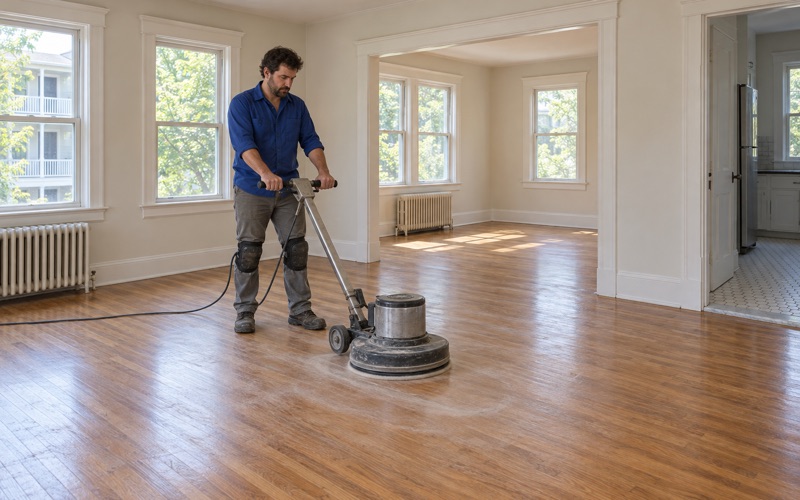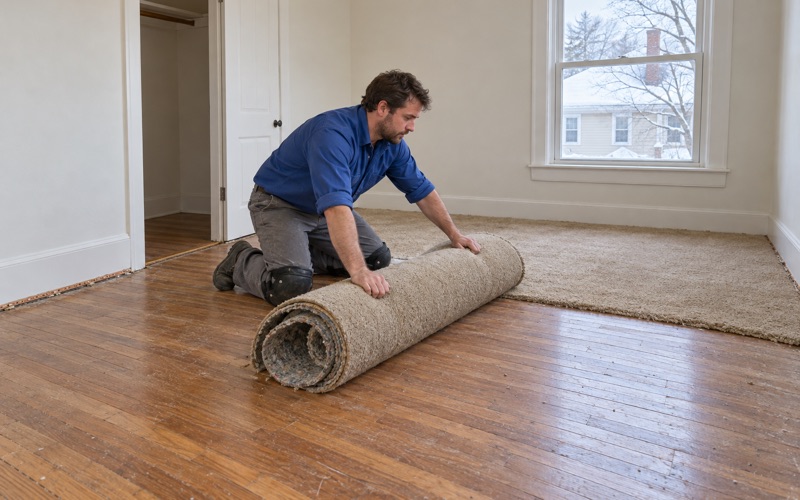
Malden Wood Flooring has done wood flooring in Revere for more than 20 years, and a large share of that work happens in apartments nobody is living in yet. When a lease ends and the rooms are empty, a landlord has a short stretch of days to sand out traffic lanes, replace damaged boards and lay down fresh finish before the next tenant arrives. We build our crew schedule around that stretch rather than asking the owner to fit around ours.
The same crew works the other side of the market as well. Some owners live on one floor of a two-family while the flat above or below turns over, and some condo owners in newer buildings want an engineered floor refreshed rather than torn out. Each of those jobs asks a different question of the wood, so we look at the floor in person before we put a price on it.
In practice that means measuring an engineered wear layer, checking how much solid wood is left above the tongue on an older strip floor, and confirming the build year before a sander touches anything painted. The sections below walk through how that plays out on Revere floors, from the empty rental unit to the flat an owner calls home.
Refinishing Floors in a Vacant Revere Rental
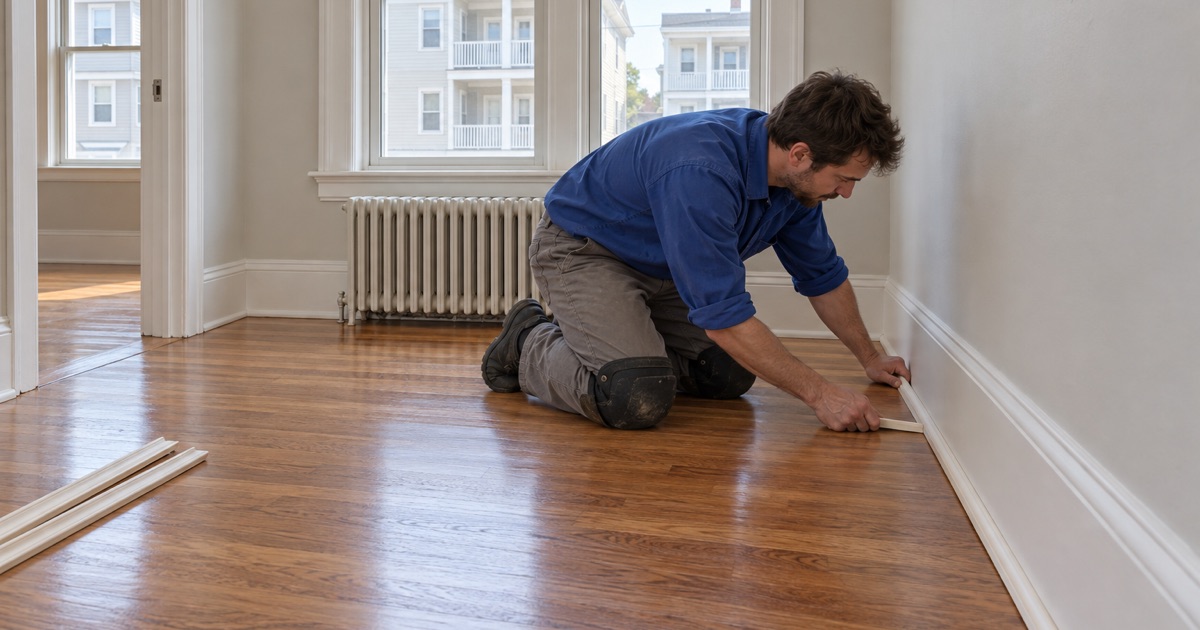
Revere is a renter-majority city. The 2024 five-year American Community Survey counts 12,075 of its 22,178 occupied households as renters, or 54.4 percent. For a floor contractor, that means much of the work arrives with a move-out date and a move-in date already attached, and the calendar matters as much as the grit sequence does.
The Certificate of Fitness and the Empty Unit
By city ordinance, every vacant dwelling unit in Revere must be inspected, approved for human occupancy and issued a Certificate of Fitness by the Board of Health before a new tenant can move in. The Health Inspections Division also states that rental units must be completely vacant for the inspection, which is scheduled with the Housing Inspector.
That vacancy rule is what creates the between-tenants window in the first place. The furniture, boxes and rugs are gone, so every room is open floor from wall to wall, which is the best condition a refinisher can ask for. The city lists the certificate fee at $75.00 and says an owner who rents without one may be fined $20 per day for each day the tenant has lived there.
What We Promise Around the Inspection
We do not speak for the Board of Health, and what its inspection looks at is set by the city and the state sanitary code, not by us. We will never tell a landlord that sanding a floor decides how a Certificate of Fitness visit turns out. If you are unsure what the Housing Inspector expects, call the Board of Health first.
Our promise is narrower and easier to keep: the floor work is done, the finish has dried enough to walk on, the dust is HEPA vacuumed, and the unit is empty and clean by the date you have booked. Give us that date at the first call and we plan every step backward from it, so the floor never becomes the reason a move-in slips.
Sequencing a Turnover
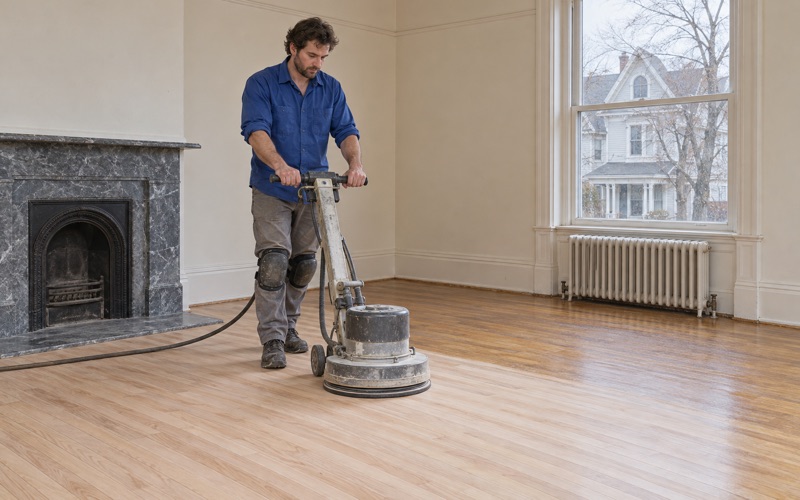
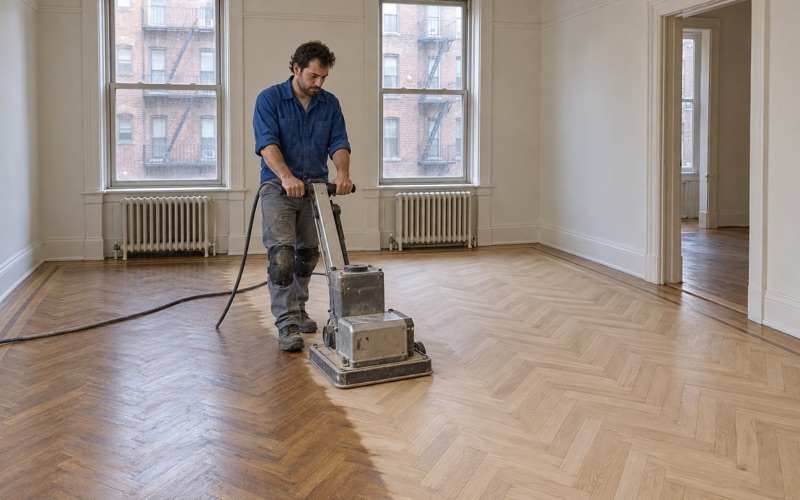
Most turnovers start with a walk-through the day the keys come back. We look for traffic lanes at the entry, pet urine stains near the radiators, water stains under a window and board gapping at a kitchen doorway. From there the choice is between a full sanding and a screen and recoat, which scuffs the existing finish with a buffer and adds a fresh coat without cutting into the wood.
Waterborne polyurethane usually suits a rental turnover because it dries quickly and carries a lighter odor, and the products we use are chosen to fit the Massachusetts VOC limits for wood coatings in 310 CMR 7.25, which are stricter than the federal ones. Oil-modified polyurethane is still an option for an owner who prefers its amber tone and has the extra days to wait.
Looking for wood-flooring closer to Saugus? See Wood-Flooring in Saugus.
Floors in Revere’s Two- and Three-Family Houses
Small multifamily buildings are the heart of Revere’s rental housing. The census counts 2,760 renter households in two-unit buildings and 1,893 more in buildings of three or four units, 4,653 in all. Another 2,442 owner households live in two-unit buildings, and a two-family with an owner household can mean an owner on one floor and a rented flat on the other.
Age, and What Waits Under the Carpet
Revere’s housing is older than its recent growth suggests: 25.8 percent of its homes were built before 1940 and 44.8 percent before 1960. Older flats often hide wood under carpet pad, tack strip, linoleum or paint. We pull all of it, remove the staples and tack strip, and clean off the adhesive before the first pass with a drum sander, because leftover glue gums the paper and gouges the boards.
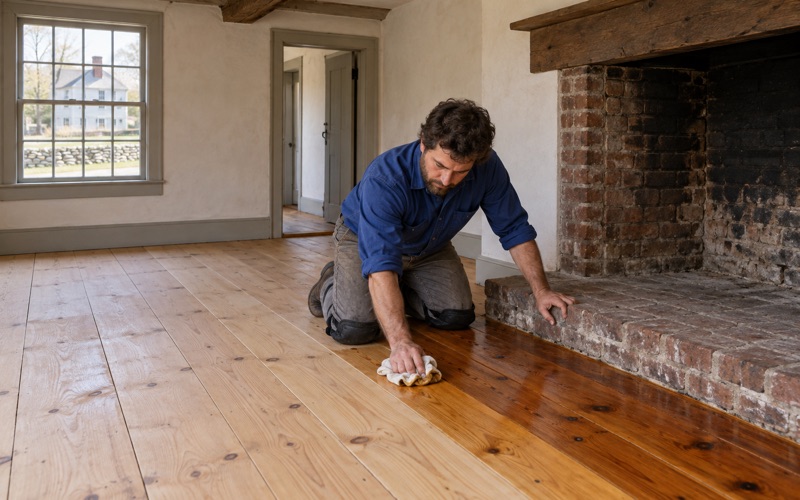
What comes up can be red oak, white oak or eastern white pine. Before sanding any of them we check the board thickness and how many times the floor has already been sanded, usually at a floor register or a threshold. Boards that have been through several refinishes have less wood left above the tongue and groove, and a floor near that limit needs a lighter hand and fewer passes.
Lead-Safe Work Before Sanding
Most of Revere’s housing is old enough for this to matter. Some 65.4 percent of its units were built before 1980, and Massachusetts applies its own lead-safe renovation rules to homes built before 1978, alongside the Massachusetts Lead Law. We check the build year and look for painted baseboard, quarter round, thresholds and stair risers before any sanding starts.
For a landlord, that check belongs at the start of the turnover schedule, not the middle. Paint on a baseboard or a stair nosing changes how a room is prepared and contained, and finding it on the first day costs far less time than discovering it halfway through the sanding, with the inspection date already on the calendar.
One Floor at a Time When the Owner Lives Upstairs
When the owner lives in the building, we schedule the work one floor at a time so the household keeps its own kitchen, bath and bedrooms. The vacant flat gets its full sanding and finish while the occupied floor stays untouched, and the owner’s own floor follows later, room by room if that suits the family better.
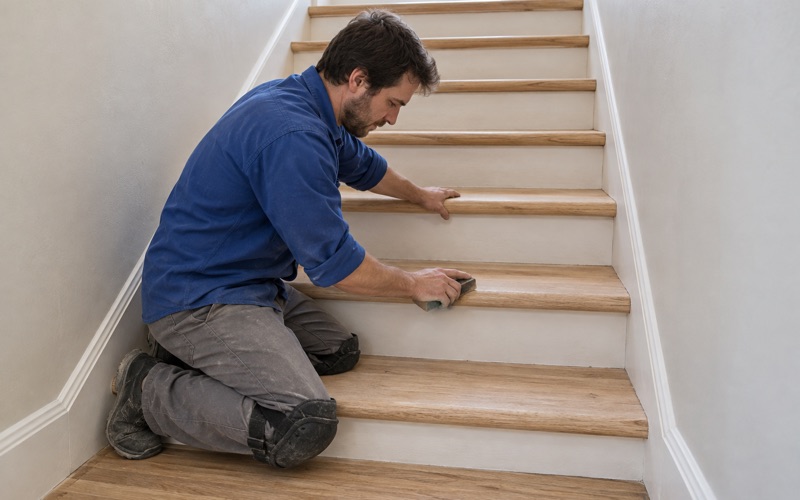
The stairs between floors are quoted by the tread and riser, not folded into a square-foot price. A shared front stair in a two-family carries every trip in and out for both households, and pricing it on its own keeps the rental floor and the staircase from being lumped into a single number that nobody can check against the work.
Wood and Engineered Floors in Revere’s Newer Buildings
Revere has also grown fast. Its 2020 population of 62,186 was up 20.2 percent from 2010, and 2,868 homes, or 11.9 percent of its housing stock, were built in 2010 or later. Another 4,875 units sit in buildings of fifty or more units, home to 3,587 renter households and 753 owner households, so the city’s floors are not all old strip oak.
Measuring the Engineered Wear Layer
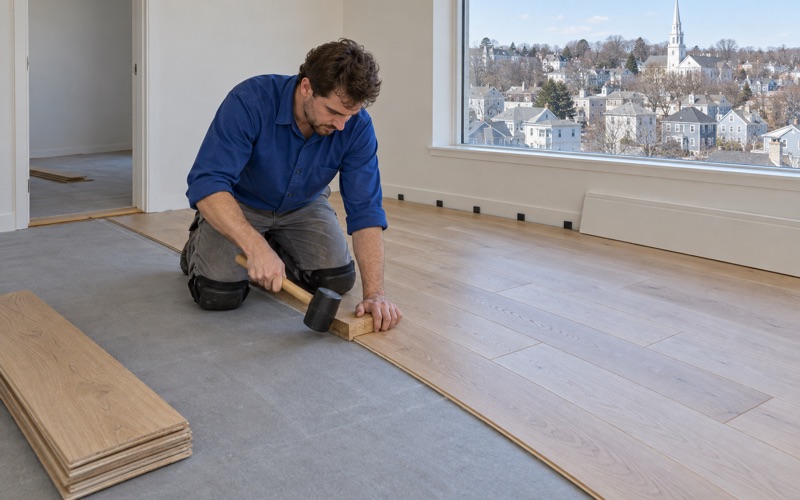
A newer unit may have engineered flooring rather than solid hardwood, and an engineered board can only be sanded as deep as its wear layer allows. Before we promise a sanding in a newer Revere condo or apartment, we measure the engineered wear layer at a floor vent, a reducer or a transition. If there is not enough wood to sand, we say so up front.
Prefinished floors bring their own limits. Their factory finish and beveled edges do not sand the way a site-finished floor does, so repair usually means pulling the damaged boards and replacing them with matching stock rather than refinishing an entire room. Where the wear layer is thin, a screen and recoat can refresh the sheen without touching the wood underneath.
Water Damage in Stacked Units
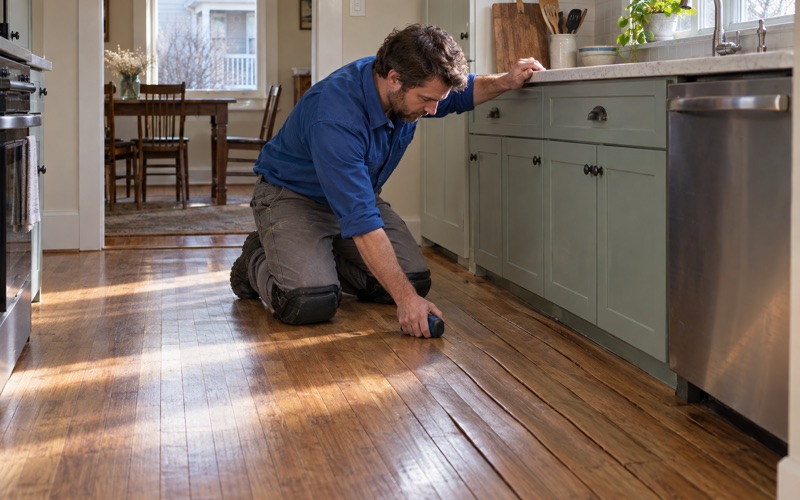
In a building with units stacked one over another, a leak upstairs can reach the floor below it. We trace the water to its source, dry the area and read the boards and the subfloor with a moisture meter before replacing anything. Cupping and crowning often settle as the wood dries out, and a board replaced too early can buckle once the rest of the floor moves.
For owners filing an insurance claim, we document water-damaged floors room by room for the adjuster, with moisture readings and photographs, so the scope of the damage is on paper before any board comes up. That record also helps a condo association sort out which unit’s floor and which subfloor the claim actually covers.
Planning a Floor Job in Revere
Revere is compact, about 5.70 square miles of land, and the MBTA Blue Line ends at Wonderland with stops at Revere Beach and Beachmont. We work across the city, from Point of Pines and Oak Island to Shirley Avenue, West Revere and the streets off Broadway, a few blocks from what is described as the oldest public beach in the United States.
Heat, Seasons and Board Movement
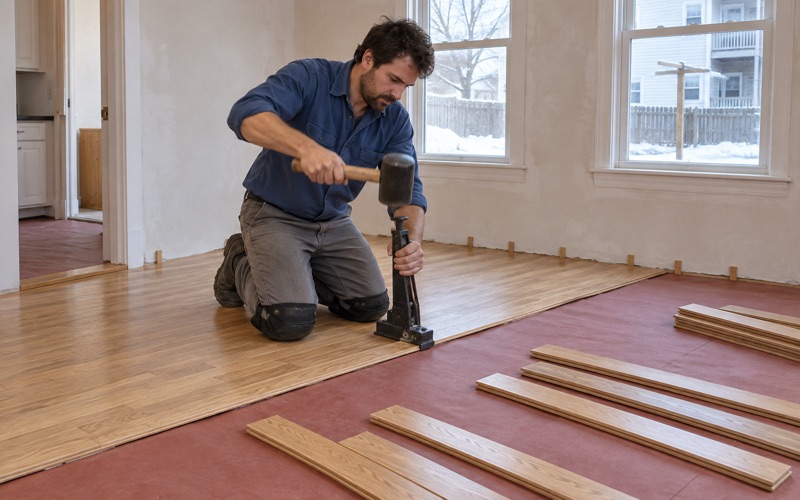
Revere falls in the National Weather Service forecast zone MAZ015, named Suffolk, and its floors see heated winters and warm, humid summers. Winter gaps open between boards when a steam radiator dries the air and close again as summer comes on. We plan repairs around that movement and let new boards acclimate in the room before they are nailed down.
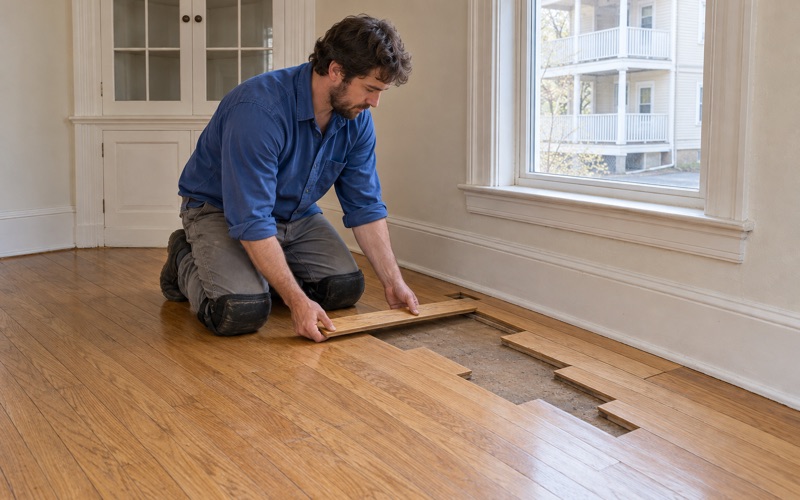
Where an old radiator or pipe has come out, we patch the hole with matching boards woven into the floor, not wood filler. A weave-in repair staggers the new board ends into the existing field so the patch does not read as a square block, and on older floors we match the width and species of the boards around it.
What to Tell Us When You Call
For a rental turnover, tell us the move-out date, the inspection date if it is already booked, and whether the unit has painted trim or stairs. For an owner-occupied two-family, tell us which floor is empty and which is lived in. For a newer condo, a product name or a photo of a board end helps us judge the wear layer before we visit.
We quote every job after seeing it: square footage, stairs by the tread and riser, repairs by the board, and finish by product and sheen level. If you want stain samples, we lay them on the sanded floor itself, because red oak and white oak take the same color differently and a sample board from a store rarely tells the truth about yours.
- 20+ Years on Wood Floors
- Free Written Estimates
- Stairs Priced Per Tread