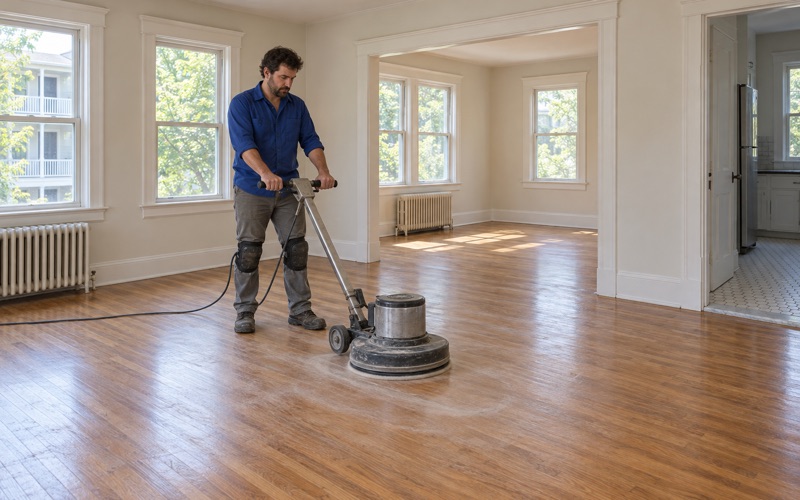
Malden Wood Flooring has handled wood flooring in Reading for more than 20 years, and much of what we sand in town is oak laid in houses built after the war. We refinish it, repair it, strip old coverings off it and install new floors where the old boards cannot be saved. Nearly all of it happens in houses where the owners are still living, so the schedule matters as much as the sanding.
A typical call starts with one question: can the floor be sanded again, or is it time for a screen and recoat? We answer it by lifting a floor register or a threshold to read the board thickness, then checking the finish, the traffic lanes and any water stains before we quote. Stairs, patches and board replacement are priced separately, so the number you get matches the job you asked for.
We also check the house’s build year and any painted trim before a drum sander is plugged in, and we choose finishes that meet the Massachusetts VOC limits for wood coatings. The sections below cover the floors we meet most often here: postwar oak, owner-occupied houses, the newer downtown buildings and the town’s older Victorian houses.
Floors in Reading’s 1950s and 1960s Houses
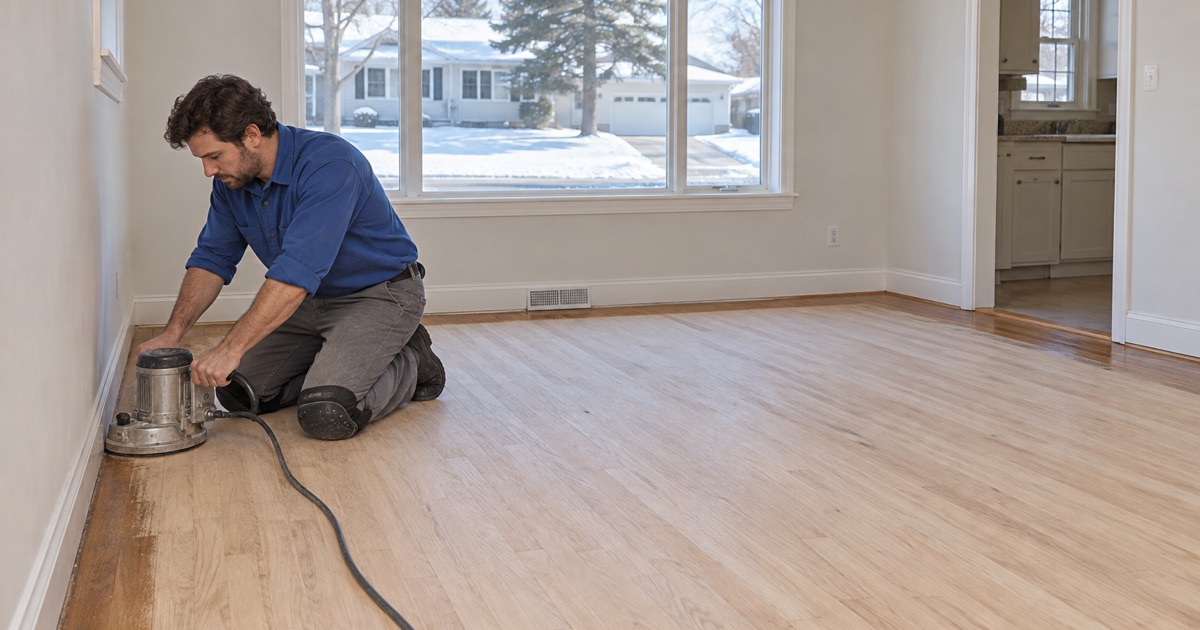
Reading’s housing is younger than its 1644 incorporation would suggest. Census estimates count 2,788 homes built in the 1950s and 1960s, or 28.0 percent of the town’s housing, while only 26.9 percent predate 1940. That puts much of our work here in postwar houses rather than Victorian ones.
Oak Under the Carpet
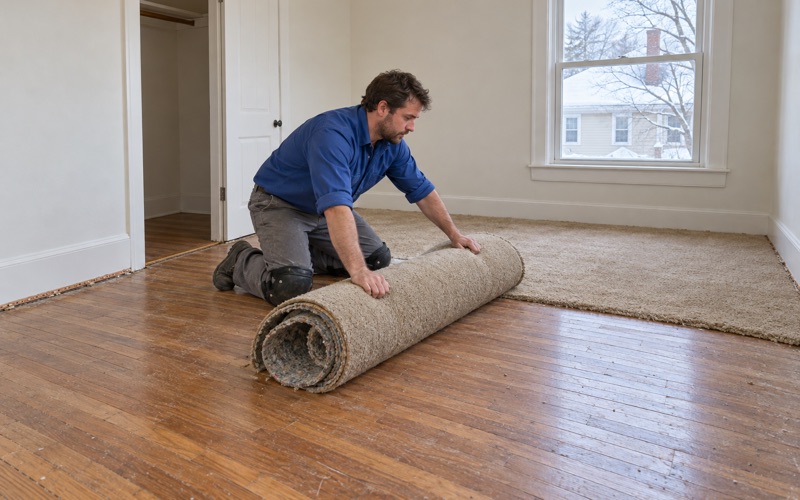
Many postwar houses went under wall-to-wall carpet at some point, and pulling it up often turns up red oak strip flooring in fair shape. Before any sanding we remove the carpet pad, every staple and the tack strip along the walls, then scrape off adhesive left by the pad or by old linoleum. A staple left in the floor tears the sanding belt and gouges the board beside it.
Some rooms reveal the amber tone people call orange oak, the look of an older oil-based finish aging over red oak. Sanding to bare wood removes it, and we lay out stain samples on the fresh floor so you can choose a color under your own light. Black mastic under old tile is a separate job, and we treat it with caution rather than sanding through it.
Thickness, Traffic Lanes and Gaps
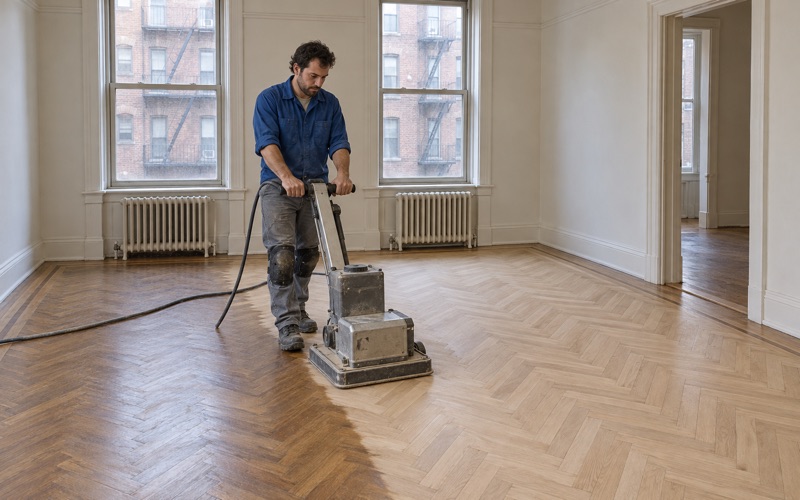
Oak from this era was usually sold as solid tongue and groove strip, and a floor that has been sanded once or twice often still carries enough wood for another pass. We confirm that rather than assume it, checking the thickness above the tongue at a register or threshold. If the finish is worn but the wood is sound, a screen and recoat with a buffer may be all the floor needs.
Traffic lanes from the kitchen to the back door, pet urine stains near a slider and board gapping across a hallway are the common complaints. Winter gaps that close again in humid months are normal seasonal movement; gaps that stay open all year point to something else. Deep urine stains usually mean board replacement, woven into the existing floor so the repair does not read as a patch.
Lead Checks Before Sanding
Census estimates put 74.7 percent of Reading’s homes before 1980, and the Massachusetts Lead Law and the state’s own lead-safe renovation rules apply to homes built before 1978. That reaches far beyond the town’s Victorian streets. We check the build year and look at painted baseboards, shoe molding and stair risers before sanding starts, because a floor job disturbs the paint around it.
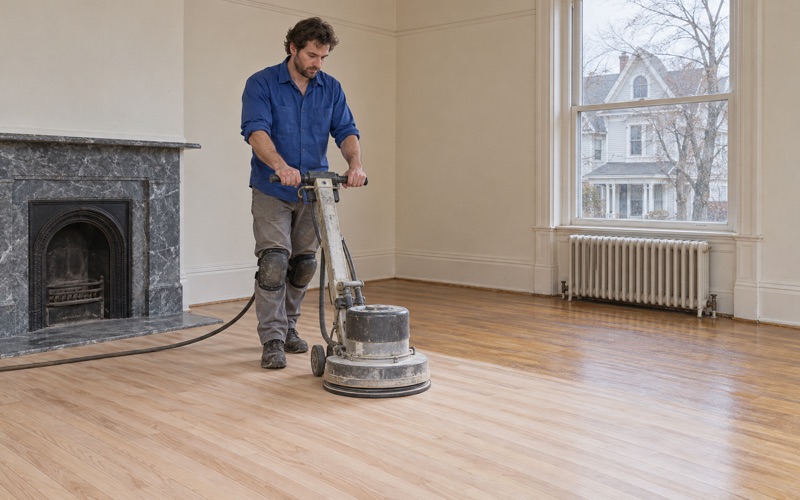
Where paint is involved we contain the room, keep dust down with dustless sanding and a HEPA vacuum, and clean up before the family walks back in. On a floor with no painted surfaces nearby, the check takes a few minutes and the job goes ahead as planned.
Looking for wood-flooring closer to Dorchester? See Dorchester Wood-Flooring.
Refinishing in an Owner-Occupied Town
Reading is mostly a town of owners in detached houses. Of 9,740 occupied homes, 8,028, or 82.4 percent, are owner-occupied, and 71.2 percent of all housing units are single-family detached. That shapes how we plan a job here: the people paying for the floor are usually the people who will live on it the next day.
One Floor at a Time
Few families want to move out for a refinish, so we split the house by floor. Bedrooms upstairs are sanded and finished while the household lives on the first floor, then we switch, which keeps a kitchen, a bathroom and a bed in use throughout. In the smaller share of Reading homes that are two-families, the same approach keeps the other unit occupied.
Each finish coat needs dry time before the next one goes on and before furniture comes back. We give you those windows up front, room by room, so you can plan meals, pets and school mornings around closed doors rather than guesses.
Choosing a Finish
Massachusetts limits the VOC content of wood coatings more tightly than federal rules do, and every product we apply fits those limits. Waterborne polyurethane dries fast, stays clear and keeps white oak and maple close to their natural color. Oil-modified polyurethane warms red oak toward amber and takes longer to cure, which matters in a house where people are sleeping one floor away.
Hardwax oil suits owners who would rather touch up a worn spot than recoat the room. We also talk through sheen level, because a satin or matte finish hides the fine scratches that a busy kitchen and hallway collect. Water popping before staining helps darker colors take evenly on a freshly sanded floor.
Stairs and Transitions
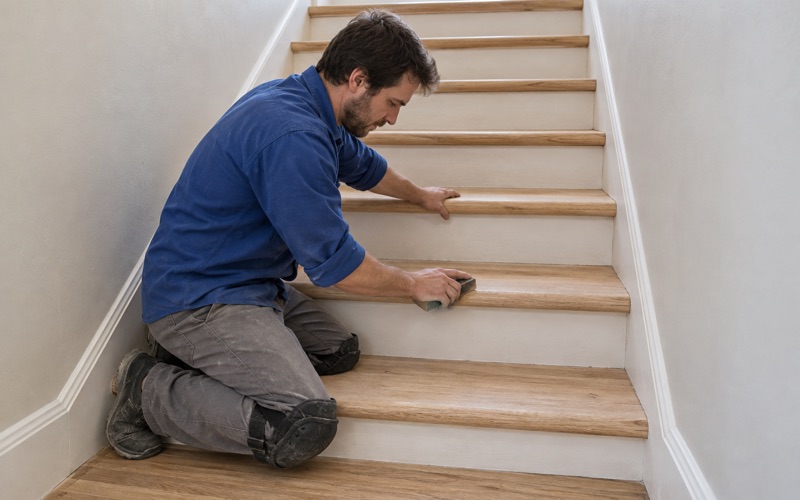
Stairs in these houses are often oak treads over painted risers, with worn stair nosing at the top step. We quote them by the tread and riser rather than folding them into a square-foot price, since hand sanding a staircase takes as long as a small room. Painted risers get the same lead check as the trim on the floors below.
Where a new floor meets tile or carpet we fit a reducer or threshold, and we replace the quarter round and baseboard trim that comes off during the work. Those details decide whether a refinished room actually looks finished.
Newer Floors in Downtown Reading’s 40R Buildings
The newest housing in Reading sits downtown, in the Downtown Smart Growth District the town created under Chapter 40R. The town lists approved projects that include 55 units at 20-24 Gould Street, 50 units at 136 Haven Street, 53 units at 30 Haven Street and 31 units at 475 Main Street. Census estimates also count 962 homes built in Reading from 2010 to 2019.
Measuring the Wear Layer
Newer condos and apartments often have engineered flooring or prefinished boards rather than site-finished solid hardwood. An engineered floor can be sanded only as deep as its wear layer, so we measure that layer before promising a refinish. When it is too thin, a screen and recoat or targeted board replacement is the honest answer.
Owners in multi-unit buildings also answer to their association, which may set rules on work hours, elevator use and the underlayment beneath a new floor. We ask for those rules before we schedule, not after the materials arrive.
Leaks From the Unit Above
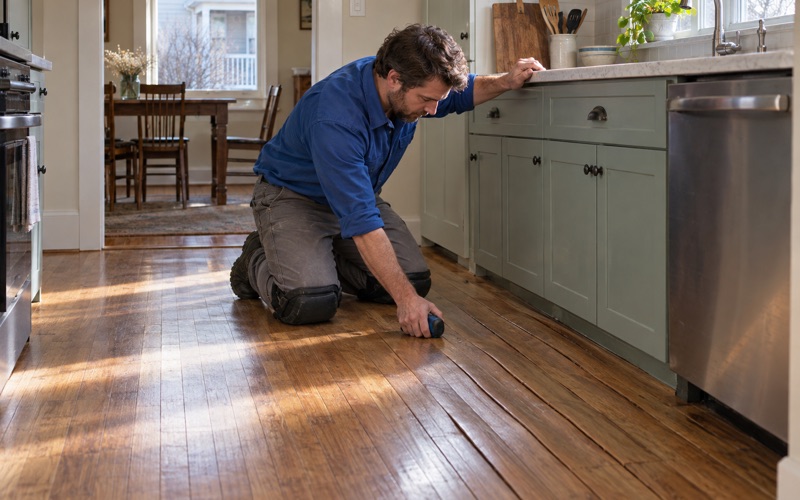
Water from a unit upstairs is a problem any stacked building can have. We trace where the water traveled, dry the area and read the boards and subfloor with a moisture meter before replacing anything, because a floor replaced while still wet will cup or buckle again.
Cupping, crowning and buckling each tell a different story about where moisture came from and how long it stayed. We document the damage room by room with readings and photos for the adjuster, which helps when two owners and an association are sorting out whose policy pays.
Between Tenants
Renters occupy 1,712 of Reading’s occupied homes, or 17.6 percent. For owners who lease out a condo or a unit in a two-family, we work in the vacant window between tenants: sanding, board replacement and a finish that has cured before the next move-in date.
A floor in a rental has to stand up to moving day. We lean toward harder-wearing finishes and a sheen that hides scuffs, and we flag any stairs or painted trim that would need attention before the next lease starts.
Summer Avenue and Planning a Floor Job in Reading
Reading’s older houses are a minority, but they are distinct. The Summer Avenue Historic District was established in 2015 as the town’s second local historic district, after West Street, and the Reading Historic District Commission administers both. Houses in the district include 227 Woburn Street from 1888 and 211 Summer Avenue from 1892, designed by architect Horace G. Wadlin with a two-story octagonal tower.
Old Pine and Early Oak
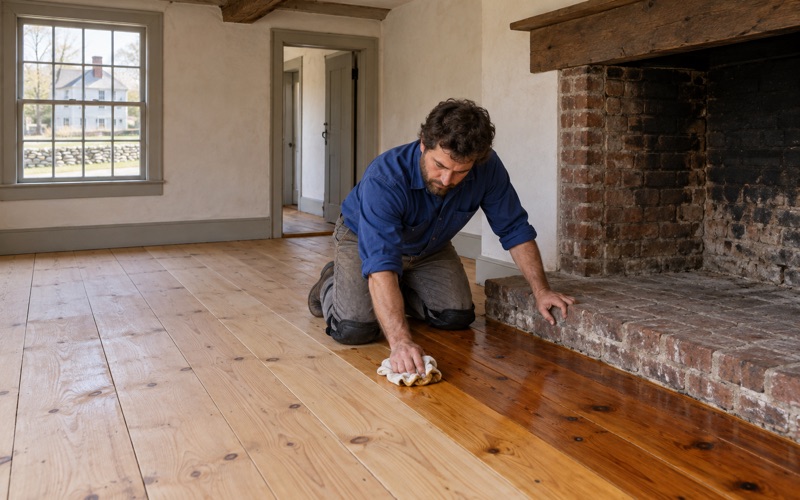
Houses of this age may carry eastern white pine or early oak laid with cut nails and face nailing. Old boards have usually been sanded before, sometimes several times, so we count boards and check thickness before a machine touches them. Where there is little wood left, we use a lighter touch with an orbital sander, or we recommend a recoat instead of a full sanding.
Some older floors still wear a shellac finish, which behaves differently from polyurethane and has to be identified before we pick a topcoat. If the house sits in the district, questions about what the commission reviews go to that office; our work stays on the floors inside.
Radiator Patches
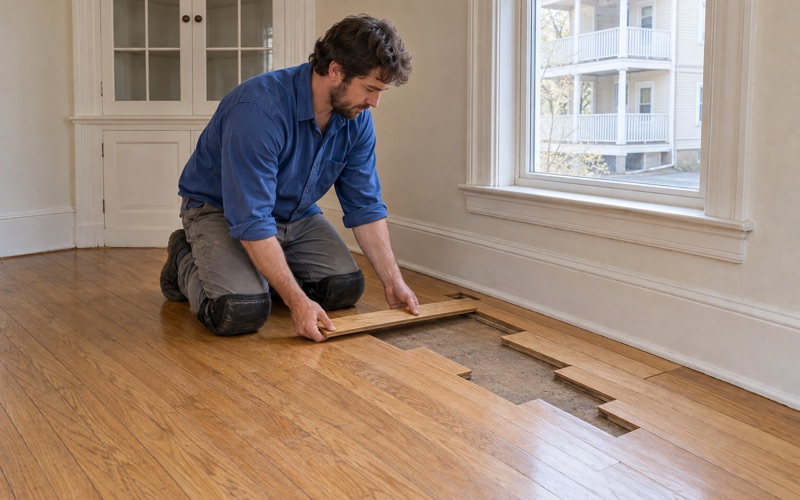
Older houses in Reading may have had steam radiators or old pipe runs removed, leaving holes in the floor. We patch them by weaving in matching boards, lacing new pieces into the existing rows, rather than filling the gap with putty or a square plug. Once sanded and finished with the room, the radiator removal patch should be hard to find.
The same weave-in repair handles boards lost to a powderpost beetle or carpenter ants, once the cause has been dealt with, and spots where a wall came out during a renovation.
Planning the Job
Reading’s houses run from the Parker Tavern, built in 1694 and the town’s oldest surviving building, to 43 homes built since 2020, and the floors vary just as widely. Whether the job is near Reading station and the downtown blocks or on a street of postwar houses, we ask about pets, stairs, furniture that has to move and any recent water, then walk the rooms before giving a price.
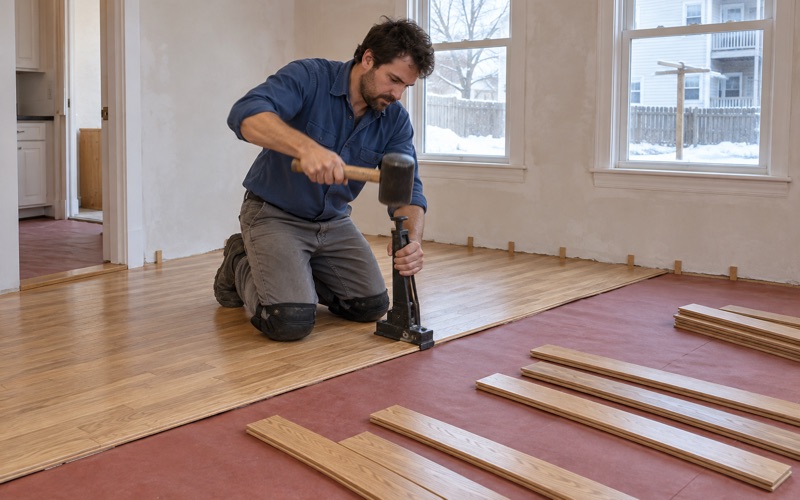
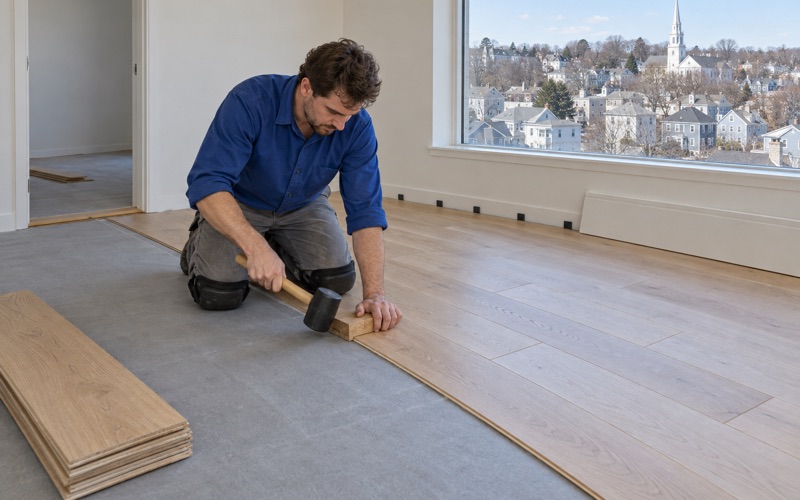
New solid hardwood needs acclimation before installation and a gap at the walls for seasonal movement. We check the subfloor, set the expansion gap and follow the NWFA Installation Guidelines, so a new floor handles humid summers and dry heating seasons without cupping or opening wide gaps.
- 20+ Years on Wood Floors
- Free Written Estimates
- Stairs Priced Per Tread