
Malden Wood Flooring repairs, refinishes and installs parquet flooring in Malden, MA, serving surrounding cities including Everett, Melrose, Chelsea, Medford and Somerville. We have more than 20 years of experience with patterned wood floors, from worn block parquet in older apartment buildings to new herringbone laid board by board.
Parquet asks more of a flooring crew than strip flooring does. The grain changes direction every few inches, so sanding has to be gentler and more careful. Old parquet is often glued down with black mastic that must not be disturbed. And new patterns have to be laid out exactly, because a mistake at the center of the room grows into a crooked pattern at the walls.
We work on both old and new parquet: resetting loose blocks, replacing missing pieces, refinishing worn floors and installing new herringbone, chevron and block patterns.
Refinishing Old Parquet
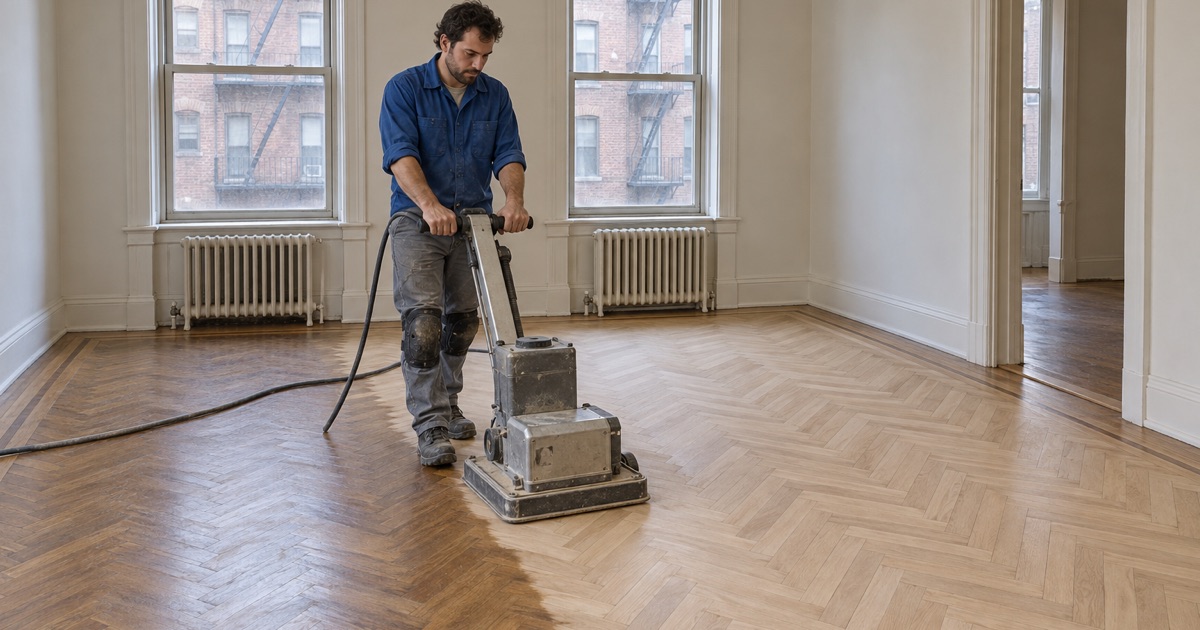
Sanding Across Changing Grain
A drum sander run straight down a parquet floor cuts across the grain on half the blocks, leaving scratches that show once the finish goes on. We use a lighter approach: fewer aggressive passes, then careful work with an orbital sander through a finer grit sequence so every block ends smooth.
How Much Wood Is Left
Parquet blocks are often thinner than solid strip boards, and older floors may have been sanded already. We check the thickness at an edge or a vent and adjust the sanding to protect what is left. Where blocks have worn too thin, we replace them before refinishing.
Finishes for Patterned Floors
A clear waterborne finish shows off the contrast in parquet grain, while an oil-modified finish warms the color. Heavy stains can make the pattern look muddy, so we usually recommend a natural finish or a light tone, tested first on a sample area.
Black Mastic and Older Buildings
What Black Mastic Is
Much older parquet was set in black mastic, a thick asphalt-based adhesive that can contain asbestos. While it stays intact under the floor, it is generally left in place. It becomes a hazard when it is sanded, ground or scraped into dust.
You can often see it at the edge of a lifted block or along a threshold: a black, tar-like layer that may be hard and brittle or still slightly tacky. Seeing it tells us how to plan the job, which is why we look before anything is lifted or sanded.
Working Around the Mastic
We plan every repair so the mastic stays undisturbed. Loose blocks are lifted and reset without scraping the old adhesive beneath them, and sanding stays in the wood. When a job would require removing the mastic, we recommend testing and a licensed abatement contractor before we start.
Parquet in Apartments and Condos
Older apartment and condo buildings often have parquet throughout. Refinishing there means planning around neighbors, working hours, shared hallways and odor. We use dust-collecting equipment and low-odor finishes, and we check the association’s rules before scheduling.
Repairing Parquet
Resetting Loose Blocks
Loose parquet blocks rock, click or pop out. We lift them, clean the backs, and reset them with a compatible adhesive so they sit flush with their neighbors. Resetting loose blocks before sanding keeps them from tearing out under the sander.
Replacing Damaged Pieces
Water, pet stains and burns ruin individual blocks. We match species and size from new or reclaimed parquet, or borrow pieces from a closet, and set the replacements into the pattern. Once sanded and finished with the rest, the repair blends in.
Water Damage in Parquet
Parquet swells and lifts when water gets under it, often breaking the old adhesive bond. We dry the floor and measure it with a moisture meter before resetting or replacing blocks, since resetting onto a wet base only lets them lift again.
New Herringbone, Chevron and Block Floors
Laying Out the Pattern
Patterned floors start from a center line snapped down the room. We dry-lay the first rows, check the angles, and adjust so the pattern lands evenly at the walls and doorways. Borders are planned before the field is fastened.
Materials and Installation
New herringbone and chevron floors can be solid or engineered, prefinished or site-finished. Solid boards are nailed or glued depending on the subfloor; engineered boards can go over concrete. Site-finished patterns are sanded flat after installation for a smooth surface.
Borders and Feature Details
A border of straight boards around a herringbone field frames the pattern and makes fitting at the walls cleaner. We can add contrasting species in the border or at thresholds for a more custom floor.
Keeping Parquet Looking Good
Screen and Recoat for Patterned Floors
Parquet benefits from a screen and recoat before the finish wears through, because every sanding costs wood that thin blocks cannot spare. A light buff and a fresh coat restore sheen and protect the grain, and the job is usually done in a day.
We test adhesion first, especially on older floors that may have been waxed. Wax and some cleaners stop a new coat from bonding, and a recoat over them can peel.
Humidity and Seasonal Movement
Every block in a parquet floor moves with the seasons, and because the grain points in different directions, that movement shows up as small gaps or slight lifting at the edges of blocks. Keeping indoor humidity steady through the heating season helps, and so does sweeping grit away before it scratches the finish.
Rugs, Furniture and Daily Care
Felt pads under furniture, mats at doorways and a damp mop rather than a wet one go a long way. Avoid oil soaps and wax products, which build up in the joints between blocks and make a future recoat harder.
- 20+ Years on Wood Floors
- Free Written Estimates
- Stairs Priced Per Tread