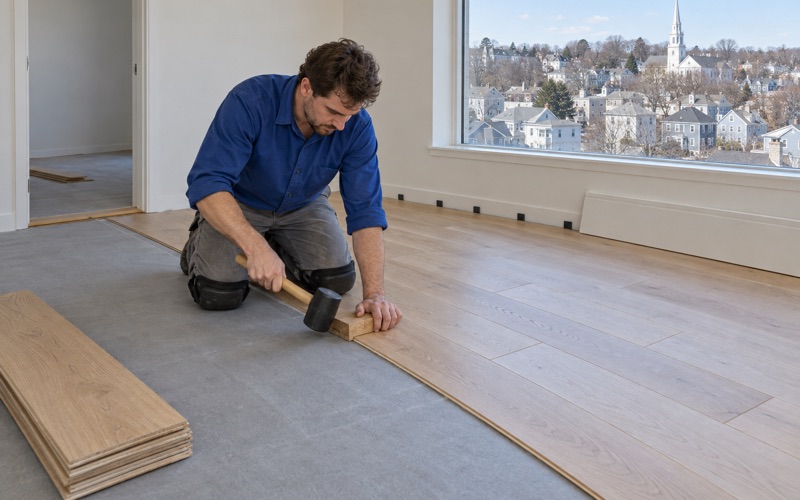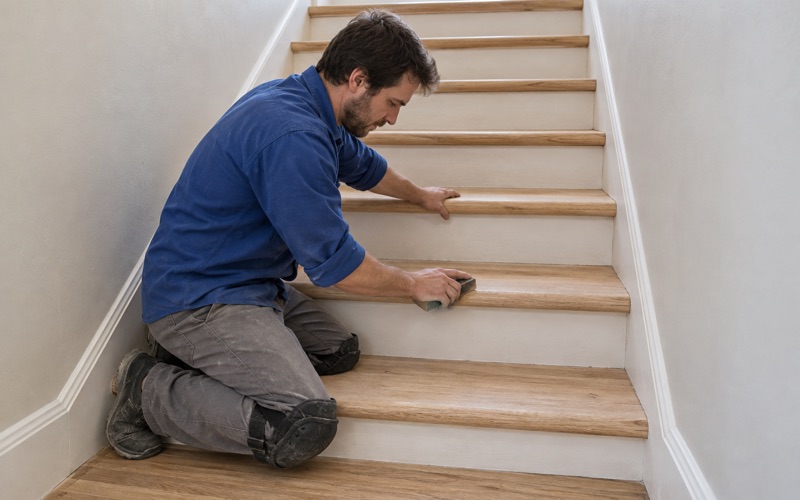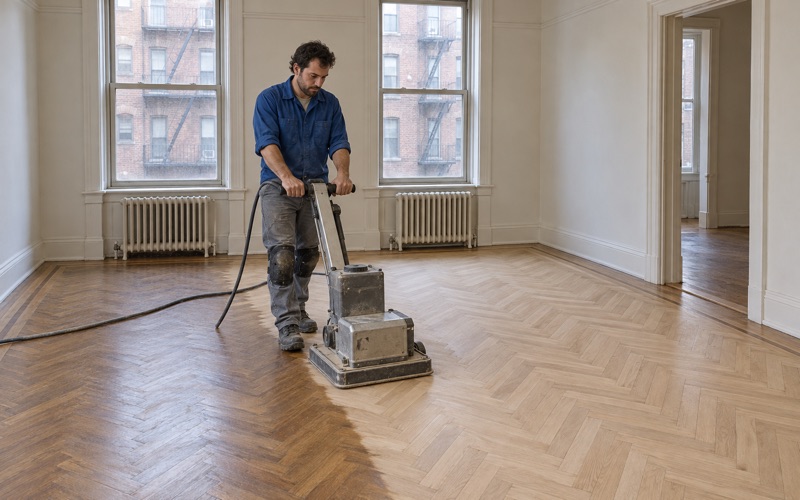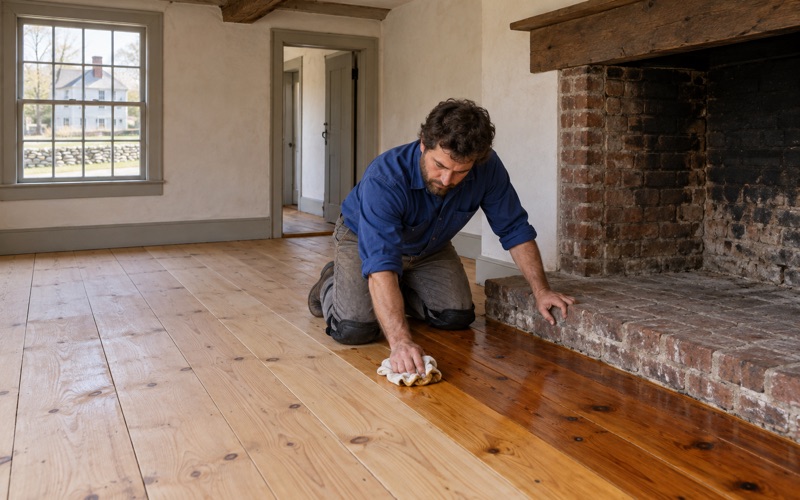
Malden Wood Flooring has spent more than 20 years sanding, repairing and laying wood flooring in North End apartments and condos, and the work here is shaped by small units, stacked neighbors and short gaps between one lease and the next. We refinish worn oak and pine, weave in boards where old radiators came out, recoat floors that only need a refresh, and install new solid hardwood or engineered flooring when an old floor is past saving.
Most of our calls from this part of Boston come from landlords, property managers and condo owners who rent their units out. Their questions are practical: can the floor be finished before the next tenant arrives, how much wood is left on the boards, and what happens to the dust in a building where neighbors share a stairwell and a wall.
Below we cover how we approach floors in walk-up buildings, what changes about refinishing a small unit between tenants, how the city’s rental rules sit alongside a floor project, and how we get crews and equipment onto the neighborhood’s streets without disrupting the people who live there.
Floors in North End Walk-Up Apartments
A Neighborhood Rebuilt in Brick
The North End is Boston’s oldest residential community, inhabited since the 1630s, but most of the buildings we work in are younger than that history suggests. Beginning in the 1880s, residents replaced the dilapidated wooden housing with four- and five-story brick apartment buildings, and most of those buildings still stand today.
The census numbers reflect that building stock. In ZIP 02113, which we use as a stand-in for the neighborhood, 67.8 percent of housing units were built in 1939 or earlier, and 62.1 percent sit in buildings of three to nine units. For a floor crew, that means old wood, shared stairwells and buildings small enough that one owner often controls several doors.
What Turns Up Under Old Apartment Floors
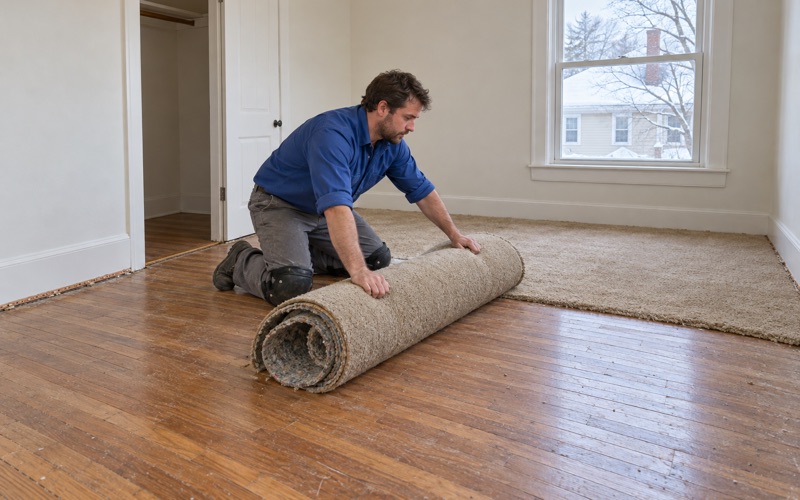
Floors in century-old apartments have usually lived through several owners’ ideas of an upgrade. We pull up carpet, carpet pad, tack strip and linoleum, and sometimes find black mastic or paint on top of the boards. We don’t guess at the species until the surface is clear; it may be red oak, maple, old pine, or a patchwork of repairs from different decades.
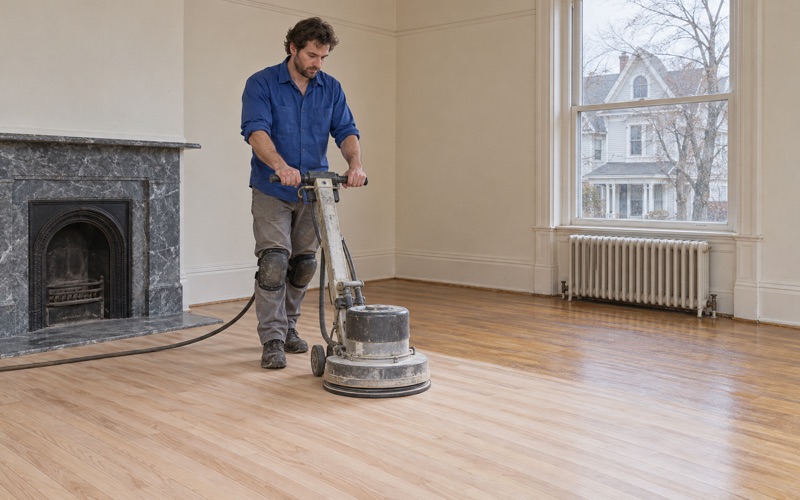
Once the boards are exposed and cleaned of staples and adhesive, we check their thickness and look for signs of earlier sandings. Old pine and early oak often have less wood above the tongue and groove than an owner expects, and promising a full drum sander refinish on a floor that cannot take one is how a floor gets ruined.
Tenements Converted to Condos
After the 1970s, developers converted many North End tenements into larger apartments and condominiums. In those units we often find a mix: original boards in one room, prefinished or engineered flooring where walls were moved, and reducers or thresholds bridging floors that sit at different heights.
Where a floor is engineered, we measure the engineered wear layer before we quote a sanding. Some wear layers can handle one or two sandings; others are too thin for anything beyond a screen and recoat. Where old and new floors meet, we plan the transitions so the rooms read as one apartment instead of three renovations.
Looking for wood-flooring closer to Winchester? See Winchester Wood-Flooring.
Refinishing Between Tenants in Small Units
Why Turnover Sets the Calendar
This is a renters’ neighborhood. According to the Boston Planning Department’s 2025 figures, 74.3 percent of occupied homes in the North End are rented, and 34.7 percent of residents were not living in the same home a year earlier. The population skews young as well, with 55.3 percent of residents aged 20 to 34.
For an owner, that level of movement makes the empty stretch between leases the natural time to deal with a floor. Sanding, finishing and cure time all go faster and cleaner in a vacant apartment than around a tenant’s bed and bookshelves, so we plan refinishing to fit inside that window and hand the unit back on the date the owner needs.
Studios and One-Bedrooms
Half of the neighborhood’s housing units, 49.9 percent, are studios or one-bedrooms. Small units change how we work. Less square footage means a sanding can move quickly, but there is nowhere inside the apartment to stage furniture or let a finish cure undisturbed while someone is still living there.
In a studio, the traffic lanes run from the door to the kitchen and bath, and the wear concentrates there. We look at whether the whole floor truly needs sanding or whether a screen and recoat can restore an even sheen level across the room, which saves wood on an old floor and time on a short turnover.
Repairs That Come With Rental Wear
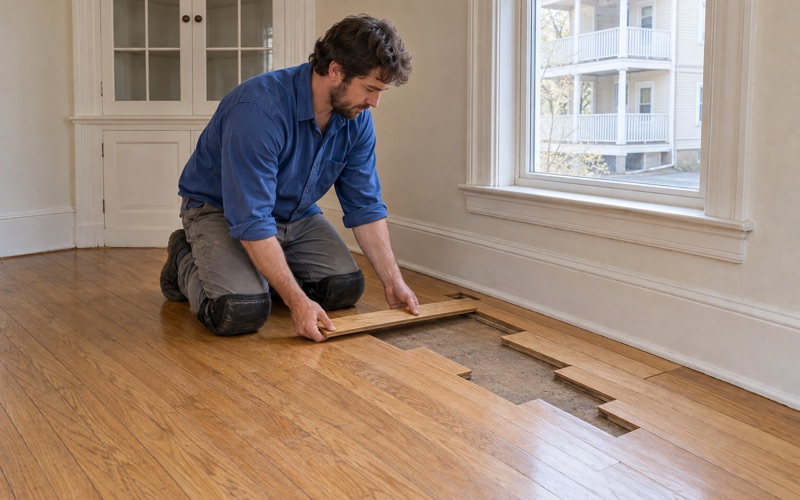
Units that change hands often pick up the same damage: pet urine stains, water stains by the kitchen and radiators, gouges from moving day, and board gapping. We replace damaged boards with a weave-in repair, cutting new pieces into the existing pattern rather than dropping in a patch that shows.
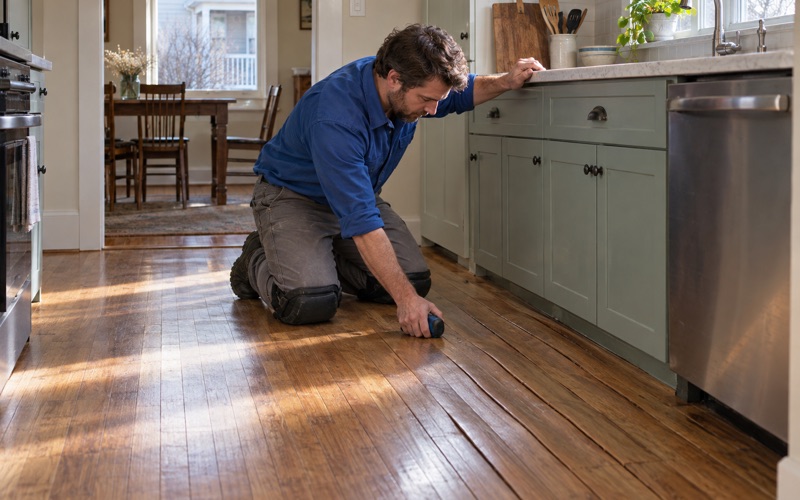
Where an old steam radiator or pipe came out, we fill the hole with matching boards woven into the surrounding floor rather than wood filler. If a leak from the unit above caused the damage, we trace the source, dry the floor and read it with a moisture meter before replacing anything, and we can document the water damage room by room for the adjuster.
Dust and Finish in a Shared Building
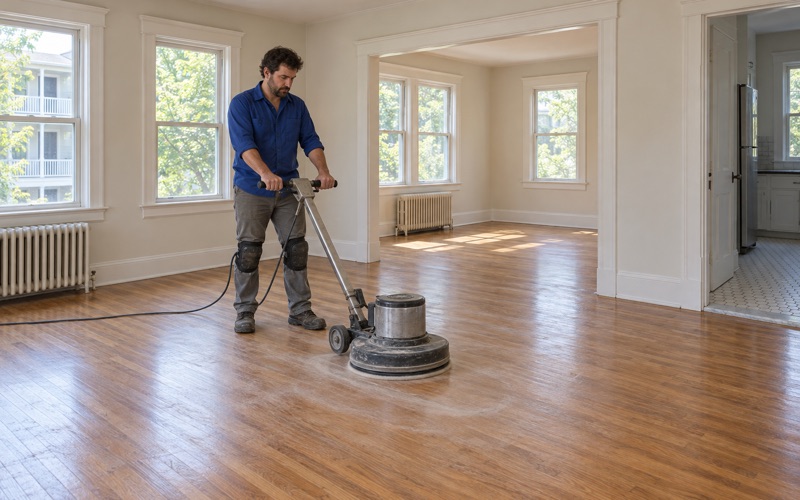
In a building where tenants share a stairwell and live on the other side of a wall, dust and fumes matter as much as the floor itself. We sand with dustless equipment and HEPA vacuum extraction, and we choose finishes that meet the Massachusetts VOC limits for wood coatings, which are stricter than the federal limits.
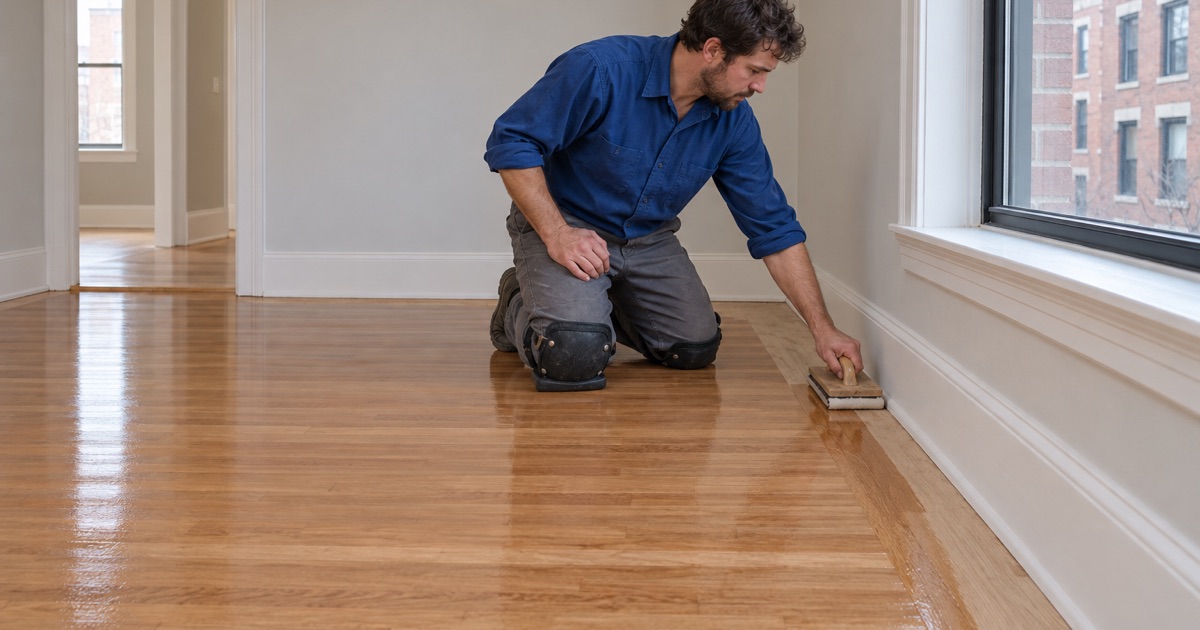
Waterborne polyurethane is our usual choice for rental units: it dries quickly, stays clear rather than ambering into orange oak, and gets a unit back into service sooner. Oil-modified polyurethane or a hardwax oil can suit an owner-occupied condo where the schedule has more room and the owner wants a warmer tone.
Rented Condos and Boston’s Rental Ordinance
Registration and the Five-Year Inspection Cycle
Boston’s rental registration and inspection ordinance, CBC 9-1.3, covers every private rental unit, and its definition of a rental unit includes a non-owner-occupied condominium. Owners register each unit by July 1 every year. Non-exempt rental units are inspected at least once every five years against the State Sanitary Code, 105 CMR 410.
The ordinance once worked differently. Boston’s 2003 version re-inspected a unit whenever it was vacated; the amended ordinance replaced that with the five-year cycle. A North End owner planning floor work should not expect a city visit timed to each move-out, so we schedule floor projects around the lease calendar rather than around an inspection date.
Exemptions and Where Questions Go
Rental units in dwellings of six or fewer units, one of which the owner occupies, are exempt from the inspection, and government-owned units are exempt as well. In a neighborhood where so many buildings hold three to nine units, some owners fall under that exemption and many do not.
Questions about registration or inspection belong with the City of Boston Inspectional Services Department. Our part is the floor: refinishing, board replacement and installation done well in the time a unit sits empty, with a clear scope in writing so an owner knows exactly what was done to each room.
Lead-Safe Sanding in Older Buildings
Because the great majority of North End housing predates 1978, we confirm the building’s age and check for painted surfaces before sanding starts. Massachusetts runs its own lead-safe renovation rules for homes built before 1978, and painted floor borders, painted thresholds and old coatings on stair treads get attention before any grit touches them.
That check also shapes the grit sequence. A floor with an old shellac finish, layers of paint at the edges or residue from black mastic is handled differently from a clean oak floor, and we tell the owner what we found before the sanding begins rather than after.
Planning Floor Work on North End Streets
Narrow Streets and Walk-Up Stairs
The North End covers 0.36 square miles of narrow, dense streets, with nearly one hundred establishments and a steady flow of visitors heading toward landmarks like the Paul Revere House, which dates from about 1680. Getting a drum sander, an orbital sander, a buffer and cans of finish up four or five flights takes planning.
We coordinate arrival times with owners and managers, stage equipment carefully in shared hallways, and protect stair treads, railings and doors on the way up and down. Stairs inside a unit are quoted by the tread and riser, not folded into a square-foot price, because the nosing and risers take hand work that a flat rate hides.
Seasonal Movement in Old Boards
Old apartment floors move with the seasons. Dry winter heat from steam radiators opens winter gaps between boards, and humid summers swell the same boards, so cupping or crowning can appear where moisture collects. We read moisture before sanding and avoid filling seasonal gaps that will close on their own.
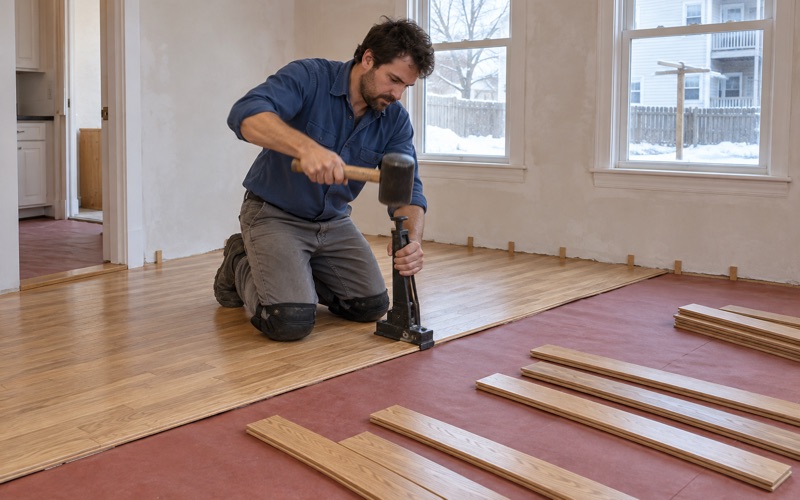
New flooring gets acclimation time in the unit before installation, with an expansion gap left at the walls under the baseboard and quarter round. We follow the NWFA Installation Guidelines for subfloor preparation and fastening, whether the job calls for flooring cleats, flooring staples or face nailing along a wall.
One Unit at a Time
Many North End buildings hold several units under one owner, so we can schedule floors unit by unit as leases end, keeping the occupied apartments running while one sits empty for work. Where an owner lives in one unit and rents the others, we work one floor at a time so the household stays in the building.
Before finishing, we lay stain samples on the actual boards in the unit’s own light, because a color that looks right on a showroom board can read very differently on century-old wood in a small apartment. Once the owner approves, we finish the floor and leave care instructions for the next tenant.
- 20+ Years on Wood Floors
- Free Written Estimates
- Stairs Priced Per Tread