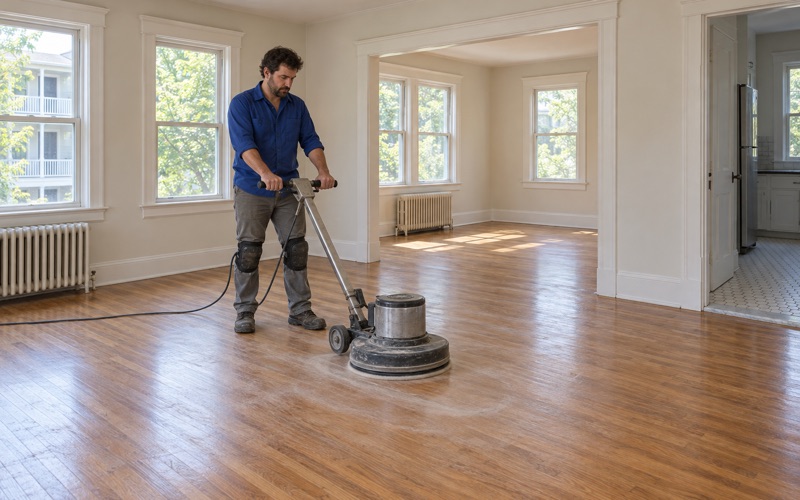
Malden Wood Flooring brings more than 20 years in the trade to wood flooring in Newburyport, where most of the floors we are asked to restore were laid long before anyone now living on them was born. We sand, refinish, patch and replace boards in old houses, and we treat each of those jobs as a restoration rather than a quick recoat. The floor you already have is usually worth keeping, and our work is to keep as much of it as the wood allows.
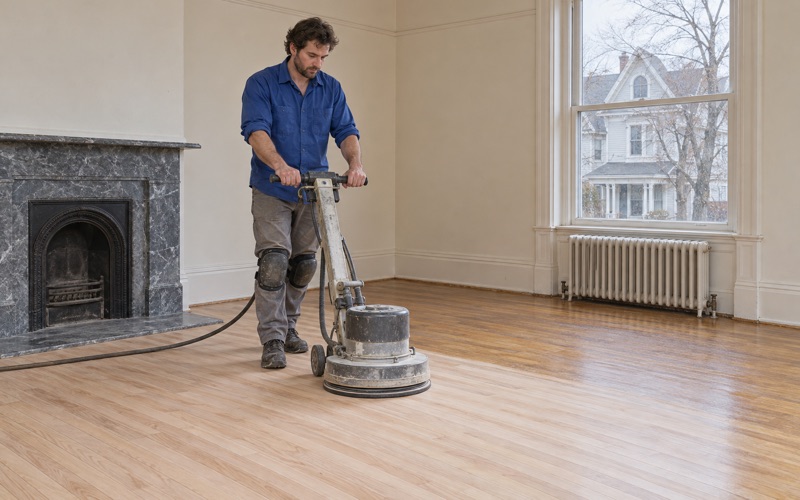
That age changes the order of the work. Before a drum sander touches an old floor, we check how much wood is left above the tongue, whether the boards are held with cut nails or face nailing, and whether any painted surface in the room dates to before 1978. Those answers decide whether a floor gets a full sanding, a lighter screen and recoat, or a board replacement in the worst spots.
We also plan around the people in the house. Owner-occupied homes get a schedule that keeps a kitchen, a bedroom or a whole floor usable, and rental units get finished while they sit empty. The sections below cover what is different about this work in Newburyport, from the historic district to the rules that do and do not reach an interior floor.
Old Floors in Newburyport’s Federal-Era Houses
Houses Inside the Newburyport Historic District
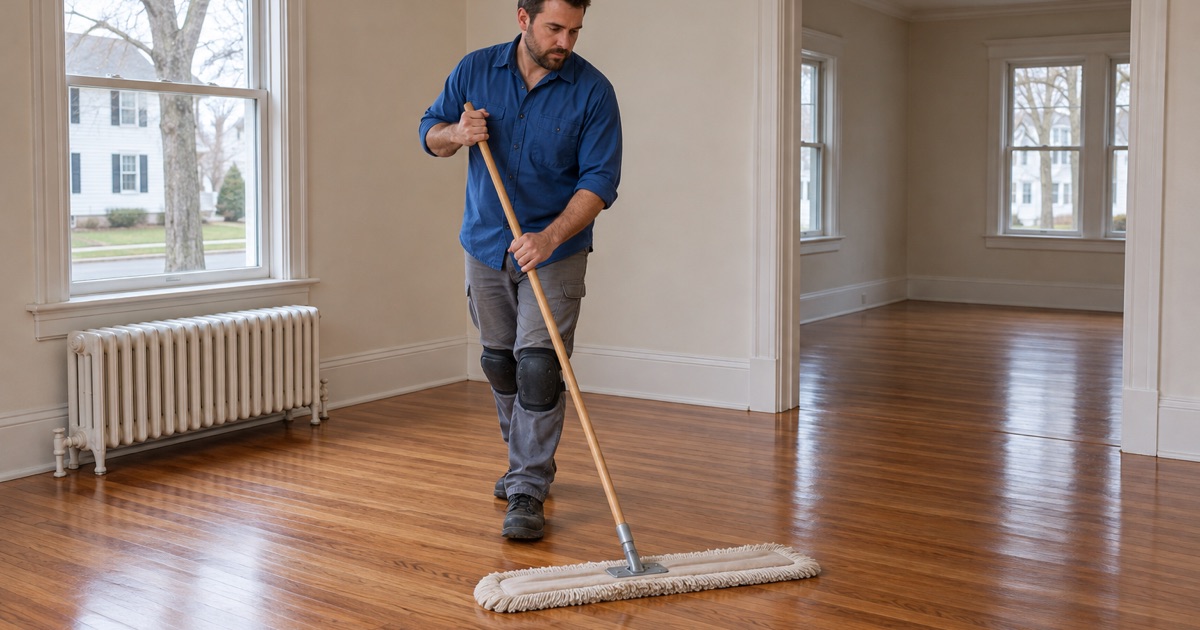
The Newburyport Historic District went onto the National Register on August 2, 1984, and it counts more than 2,500 contributing buildings across roughly 750 acres. Its listing describes it as dominated by Federal-period architecture in both its residential and commercial areas, with Greek Revival and Late Victorian buildings mixed in. For a flooring crew, that means a large share of the jobs in the city are in buildings that have been lived in, heated and walked on for well over a century.
Census estimates back that up. Of Newburyport’s 8,710 housing units, 3,913 were built in 1939 or earlier, which is 44.9 percent of the housing stock. When nearly half the homes in a city predate 1940, the safe assumption on any floor job is that the boards are old, have been sanded before, and may have been patched by more than one earlier owner.
Board Thickness Comes First
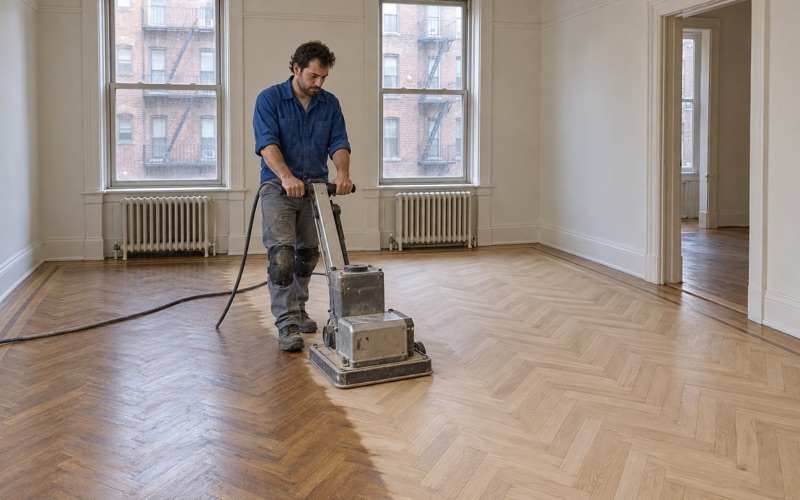
Every sanding removes wood, and a floor refinished several times over a century may have little left above the tongue and groove. We lift a floor register, a threshold or a loose board to see the profile before we quote a full sanding. If the wear surface is thin, we plan a gentler grit sequence, or we recommend a screen and recoat instead of cutting down to bare wood.
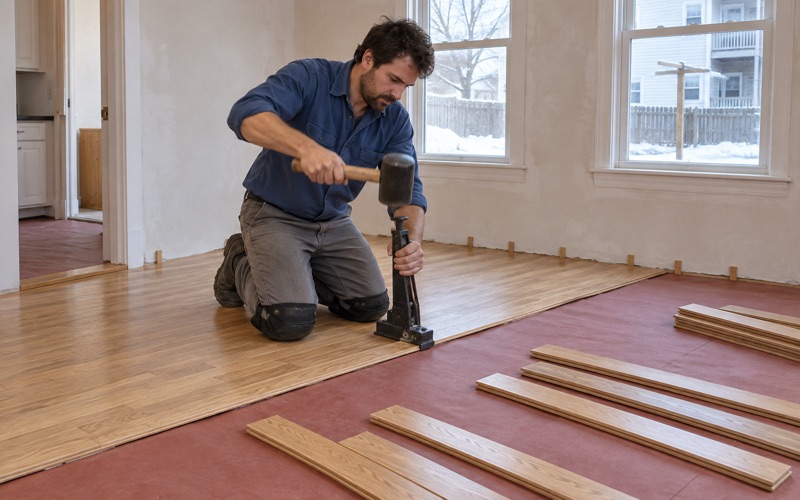
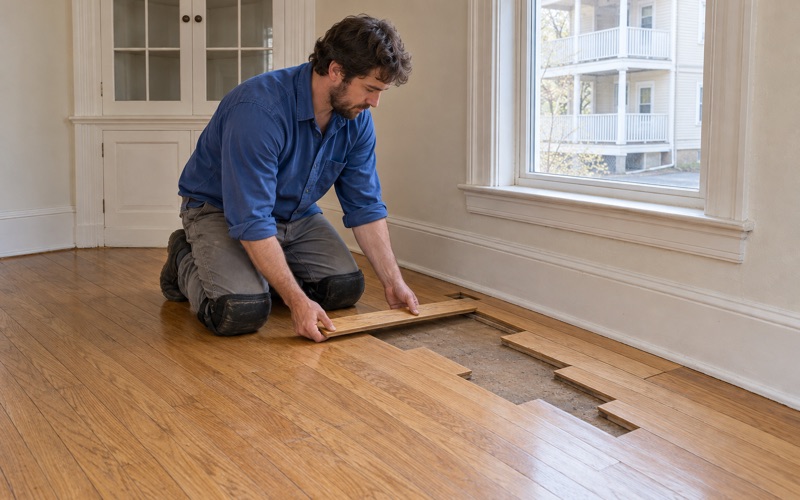
We count the boards that need attention at the same time. Old floors often have a few split or cupped boards near doorways and radiators, and those get a board replacement with stock matched for width and grain. Replacing six boards is usually a better answer than sanding a whole room hard enough to flatten them.
Lead Paint and Old Finishes
Massachusetts runs its own lead-safe renovation rules for homes built before 1978, separate from the federal ones, and most Newburyport houses fall well inside that line. Painted baseboards, painted stair risers and painted floor borders are common in old houses, so we check the build year and every painted surface before any sanding starts. Where paint is present, the job is set up around containment and cleanup rather than speed.
Old clear finishes need reading too. A floor coated in shellac finish or an early varnish behaves differently under the sander than modern polyurethane, and it can gum the paper if the grit sequence is wrong. We test a small area first so the first full pass goes the way we expect.
Looking for wood-flooring closer to Amesbury? See Wood-Flooring Services in Amesbury.
Refinishing Floors Along High Street and Market Square
High Street is lined with Federal-era sea captains’ houses, many of them topped with widow’s walks. Downtown, the Market Square Historic District went onto the National Register in 1971, and the surrounding blocks survive because the city changed course: by 1970 the historic downtown was scheduled to be razed, and it was restored through the 1970s instead. The floors inside those buildings carry the same long record of repairs and refinishing.
Floors Hidden Under Carpet and Linoleum
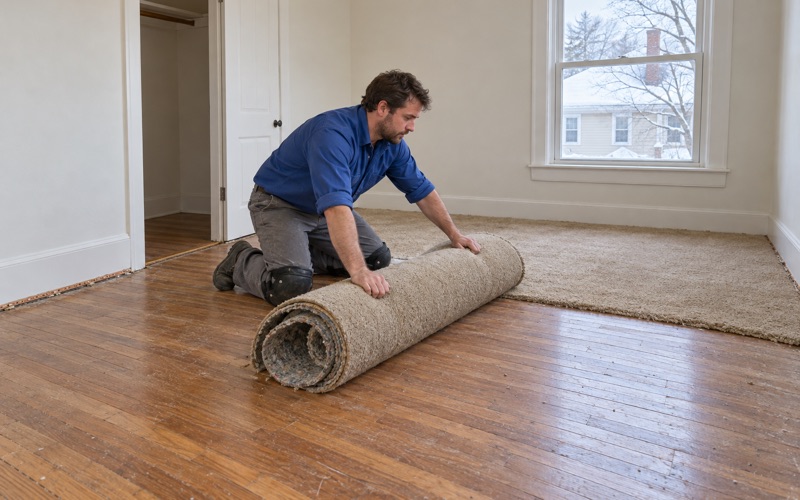
Many of the old floors we refinish here were covered up at some point, first with linoleum and later with wall-to-wall carpet. Under them we usually find carpet pad, tack strip, staples by the hundred, and sometimes black mastic from an old tile layer. All of that comes off by hand and with a scraper before sanding, because a staple under a drum sander tears the paper and gouges the board.
What turns up underneath varies from house to house, and we never assume a species until the floor is exposed. Some rooms show red oak or white oak added in a later renovation, while others show much older boards. Once the surface is clean we can tell you what you have, how much wear is left, and what it will take to bring it back.
Patching Where Radiators and Pipes Came Out
Plenty of High Street and downtown houses have lost a steam radiator or two over the years, and each one leaves holes where the pipes came up through the floor. We do not fill those holes with putty. We cut the damaged boards back to a clean joint and weave in matching boards, staggered like the rest of the floor, so the radiator removal patch disappears once the room is finished.
The same weave-in repair handles an old floor grate, a moved wall, or a doorway that was closed off. The goal is a floor that reads as one surface rather than a patchwork, which matters most in the front rooms of an old house where the floor is part of what visitors notice.
Choosing the Finish
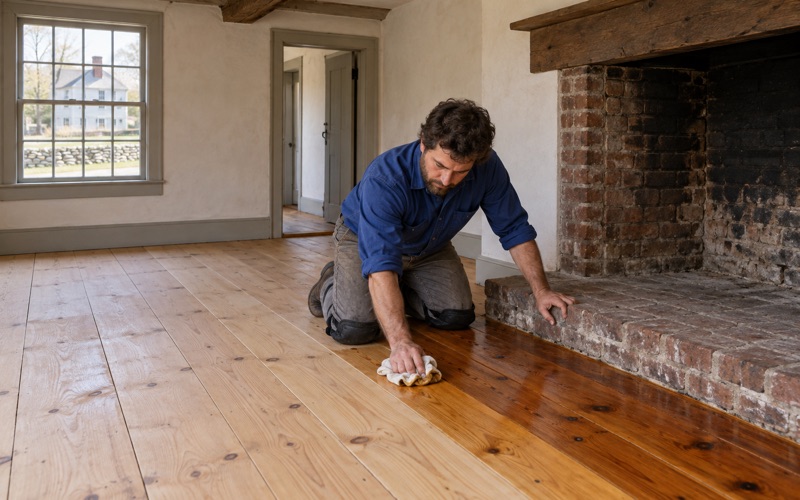
Massachusetts limits the VOC content of wood coatings more tightly than the federal rules do, so the finishes we use are chosen to fit those state limits. For most old floors that means a waterborne polyurethane, which dries clear and avoids the orange oak color some oil finishes produce over time. Where a homeowner wants a warmer tone, we talk through oil-modified polyurethane or a hardwax oil and what each asks of them in upkeep.
Sheen level makes a bigger difference on old boards than on new ones. A satin or matte finish softens the small dips and old nail holes that come with age, while a gloss finish shows every one. We lay down stain samples on the actual floor when color is in question, since old wood takes stain differently than new stock.
What Newburyport’s Preservation Rules Cover and What They Don’t
Owners of old houses in Newburyport often ask whether refinishing a floor needs sign-off from the city’s preservation boards. The rules the city has adopted are aimed at exteriors and demolition, not at the floors inside.
The Demolition Control Overlay District
In April 2014 the Newburyport City Council passed the Demolition Control Overlay District ordinance in unanimous votes. It applies to demolition of more than 25 percent of the exterior walls of structures listed as Contributing in the historic district. The Zoning Board of Appeals acts as the special permit granting authority and considers any advisory Historical Report from the Newburyport Historical Commission.
Nothing in that ordinance reaches a floor. Sanding, board replacement and refinishing all happen inside the walls, and the overlay district is written around the walls themselves.
The Demolition Delay
Newburyport also has a demolition delay, handled through the Historical Commission, which can hold up the demolition of older structures the commission finds preferably preserved. In May 2026 the council advanced an extension of that delay from 12 months to 18 months on first reading by a 9-2 vote, and final passage had not been confirmed when this page was written. Like the overlay district, it concerns tearing structures down, not interior finishes.
Fruit Street, the City’s One Local District
Newburyport has one local historic district, the Fruit Street Historic District, established in 2007. A much larger local district covering 794 buildings downtown and the full length of High Street was proposed in 2012, but it fell short of the required supermajority in early 2013. Owners on High Street sit inside the National Register district, not a local one.
Even on Fruit Street, state law limits what a district commission reviews. Massachusetts General Laws chapter 40C, section 7, keeps local historic district commissions out of interior features, so the floors inside a Fruit Street house are the owner’s call. We still work carefully around old trim, thresholds and baseboard in these houses, because those details are hard to replace.
Planning a Floor Job in the South End and Joppa
The South End and Joppa hold many of the city’s older homes, and a good share of Newburyport’s housing is attached. Census estimates count 1,274 one-unit attached homes in the city, and 77.5 percent of occupied homes are owner-occupied. Both facts shape how we schedule a job here.
Working Around a Household That Stays Put
Most floor jobs in these neighborhoods are in homes where the owner lives through the work. In owner-occupied two-families we refinish one floor at a time, so the household upstairs or downstairs keeps a working kitchen and a place to sleep. In an attached house we plan dust control with the shared wall in mind and run dustless sanding with HEPA vacuum collection wherever the floor allows it.
We walk through the order of rooms before the first day. Finish needs time to cure before furniture returns, so we set the sequence so that no one is left without a route to the bathroom or a way out the back door.
Rental Units Between Tenants
For owners renting out part of a house, the best time to refinish is between tenants, while the unit is empty. We scope those jobs so the floors are sanded, coated and cured inside the vacancy window, which keeps the turnover on schedule. Traffic lanes, pet urine stains and board gapping are the usual findings in a unit that has seen several leases.
Water Damage and Moisture
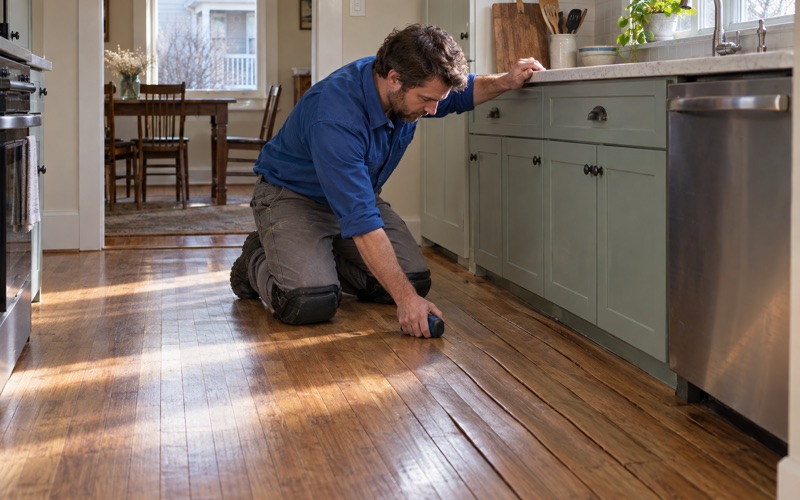
Leaks from an upstairs bath, a failed radiator valve or water coming up from a flooded lower level all show up in the floor as cupping, crowning or, in the worst case, buckling. Before we replace a single board, we trace where the water came from, dry the area and take moisture meter readings until the wood is back in range. Sanding a floor that is still wet leaves it crowned once it dries.
For an insurance claim, we document the damaged floors room by room so the adjuster can see what failed and where. That record also makes clear which boards can be saved and which need replacing.
Stairs and Engineered Floors
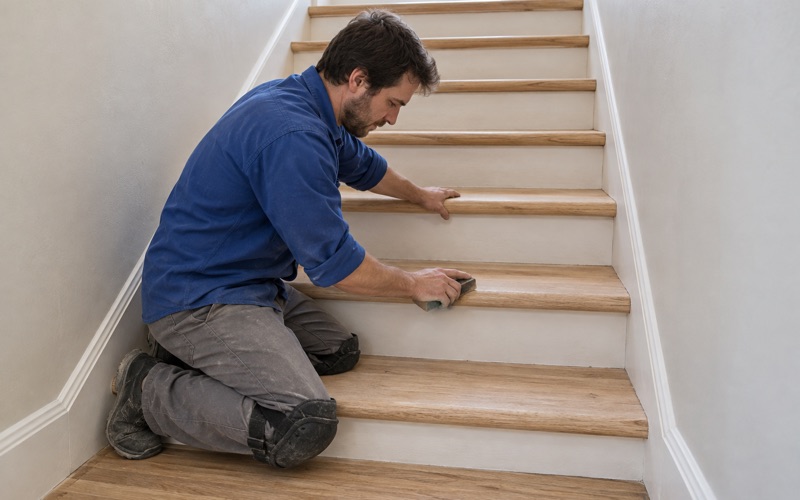
Old staircases are quoted by the tread and riser, not folded into a square-foot price, because every step is sanded and finished by hand. Worn stair nosing and split stair treads are common in houses of this age and are often the first thing an owner points out.
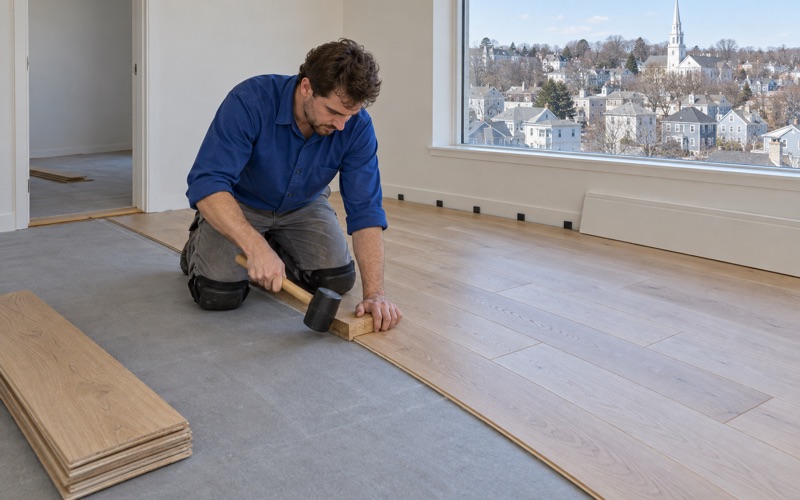
Newer engineered floors in renovated rooms need a different check. We measure the engineered wear layer before promising a sanding, since some products can take a full refinish and others only a screen and recoat.
- 20+ Years on Wood Floors
- Free Written Estimates
- Stairs Priced Per Tread