Malden Wood Flooring brings more than 20 years of hands-on work to wood-flooring in Nahant, and most of the floors we meet here are not new. They are solid boards that have been sanded before, patched before and sometimes covered over for decades. Our job is to read what is left in them, decide what can be saved, and finish them so they hold up to daily use again.
We refinish, repair and install solid hardwood and engineered floors, and we handle the water-damaged floors that follow a storm or a burst pipe. Before any sanding, we check the board thickness, the nail pattern and the finish already on the floor, because an older floor has only so much wood above the tongue and groove. That check decides whether a room gets a full sanding, a screen and recoat, or board replacement.
We plan each job around the people living in the house rather than around an empty building. You get a written scope before we start, dust stays down with dustless sanding and a HEPA vacuum, and we tell you plainly when a floor is better replaced than refinished.
Refinishing Floors in Nahant’s Older Houses
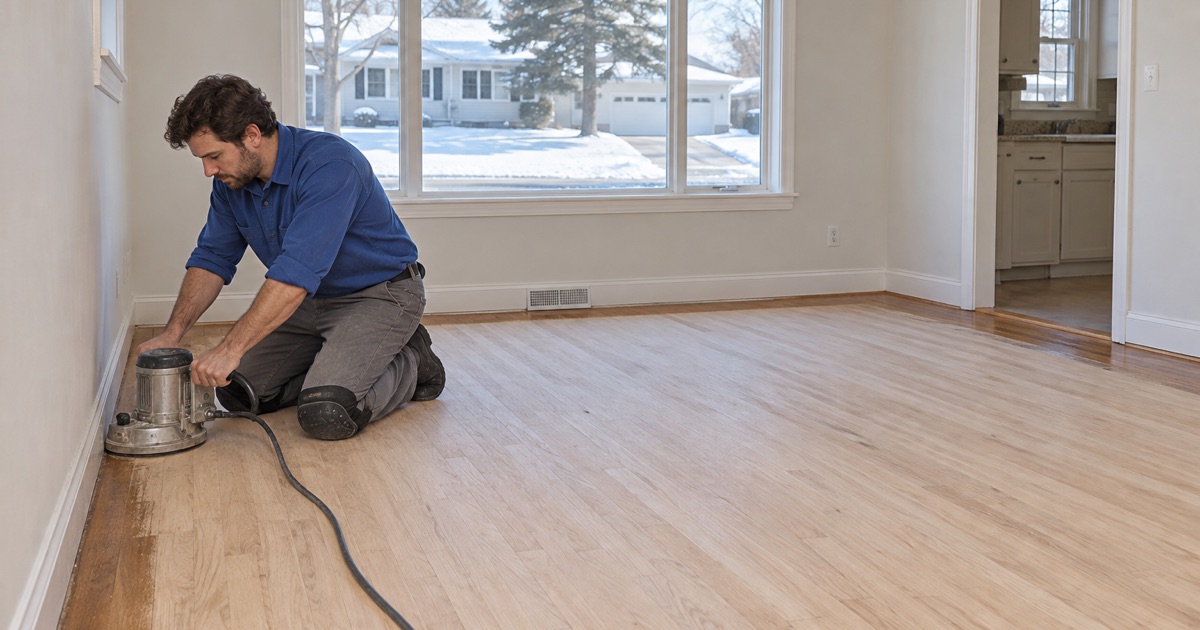
Prewar Boards and What Is Left to Sand
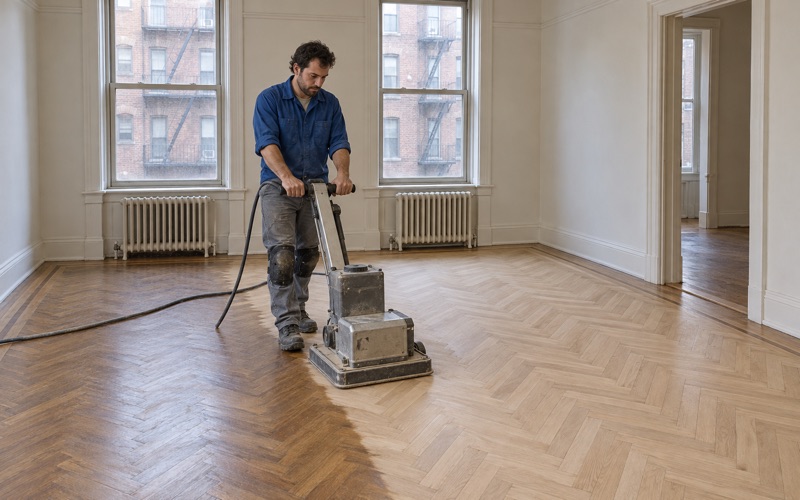
More than half of the town’s housing is prewar: census estimates put 52.8 percent of Nahant homes as built before 1940, with another 270 units added in the 1950s. Floors in houses of that age have often been sanded at least once, and sometimes several times. Each pass takes wood off the top of the board, so we pull a floor register or check an edge to measure what remains above the tongue before promising a full sanding.
When little wood is left, we switch to a lighter plan, such as a buffer and a screen and recoat, or we replace the worst boards with a weave-in repair. Old pine and early oak floors can also carry cut nails and face nailing close to the surface, and a drum sander that catches one tears the board. We set every exposed nail first and work through the grit sequence patiently instead of starting coarse.
Floors Hidden Under Carpet, Linoleum and Paint
Older houses often hide their wood under wall-to-wall carpet, linoleum or paint. When carpet comes up, we clear the carpet pad, staples and tack strip, then deal with any adhesive, because a sander loaded with glue burns streaks into the wood. Black mastic under old tile is checked before anyone scrapes or sands it, since some older mastics contain asbestos.
We also run into shellac finish and orange oak left from earlier refinishing work. Shellac does not bond well under a new polyurethane, so we take it off completely rather than coating over it. Stain samples on freshly sanded boards show how red oak or white oak will take color before a whole room commits to it.
Lead Checks Before the Sander Starts
Massachusetts runs its own lead-safe renovation rules for homes built before 1978, and in a town where so much of the housing is prewar, that check comes first. We confirm the build year and look at painted baseboard, quarter round, stair risers and any painted boards before sanding. Where lead paint is possible, the job is set up under the state rules rather than treated as routine dust.
The same care applies to what goes back on the floor. We use finishes that meet the Massachusetts VOC limits for wood coatings, which are stricter than the federal ones. The choice between waterborne polyurethane, oil-modified polyurethane and hardwax oil depends on how the room is used and the sheen level you want.
Looking for wood-flooring closer to Belmont? See Belmont Wood-Flooring.
Wood Floors in a Former Summer-Resort Town
A Resort Before It Was a Town
Nahant drew visitors long before it was incorporated. Its first hotel was built in 1802, and by 1817 a steamboat ran daily between Boston and Nahant. The town was incorporated on March 29, 1853, a step Wikipedia’s account ties to the temperance movement threatening the summer resort trade.
Longfellow and Louis Agassiz both kept seasonal residences here. That history tells us the town has been building houses for about two centuries. It does not tell us what any single floor is made of; the boards themselves tell us that once a corner is opened.
Detached Houses, Mostly Owner-Occupied
Nahant is a town of single-family houses more than apartments. Census estimates count 1,280 one-unit detached houses among 1,814 housing units, about 70.6 percent, and 78.9 percent of occupied households own their home. Of those owner households, 1,109 live in detached houses.
That shapes how we schedule. An owner living in the house needs a path through it while floors cure, so we sequence rooms to keep a kitchen, a bath and a bedroom usable. In the town’s two-family houses, we can work one floor at a time so the household upstairs or downstairs keeps living at home through the job.
Species and Patterns in Older Rooms
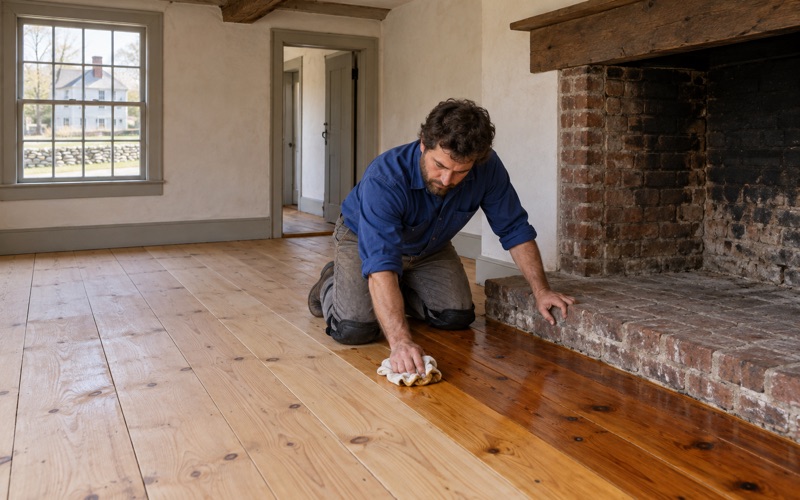
Houses from before the war can carry red oak or white oak strip, maple, parquet or herringbone in formal rooms, and eastern white pine or old-growth pine on upper floors. Each wears differently. Pine sits low on the Janka hardness scale and dents under chair legs, while oak tends to show traffic lanes where the finish wore through.
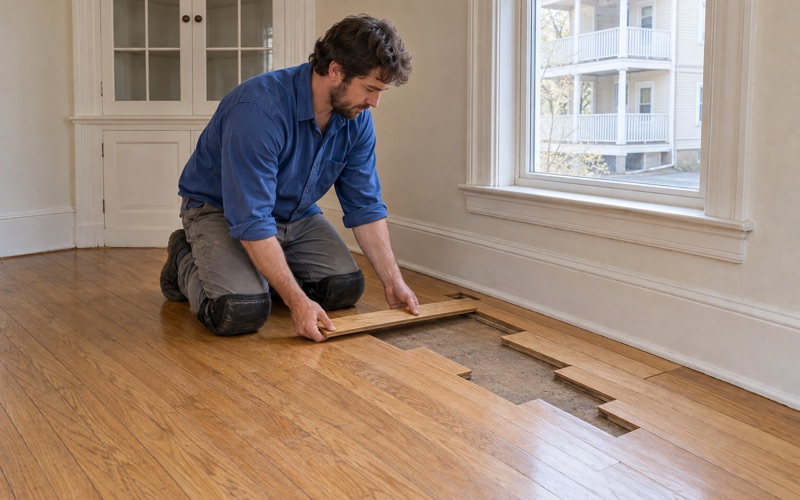
Matching an older floor during a repair takes care. Board width, species and cut, whether plain-sawn or rift and quartersawn, all need to line up, so we source replacement boards to match and weave them into the existing field rather than cutting a straight patch line. Holes left where old radiators and pipes came out get the same woven repair instead of filler.
When Storm Water Reaches Floors in Nahant
Flooding in the Town’s Own Plan
Nahant’s hazard mitigation plan, as quoted in published excerpts, puts the town’s areas of most frequent flooding at 54 percent of its land area, accounting for approximately 744 buildings. The same excerpts report nearly $4 million in damages from a March 2018 storm. Those figures do not say which houses take water, and we do not guess.
What the plan does tell us is that water damage belongs on this page. It is the reason we bring a moisture meter to every job in town and treat any report of water under a floor as something to investigate before anything else is decided.
Drying and Reading Moisture Before Replacing Boards
Wet hardwood swells, and the signs tend to come in order: cupping as the board edges rise, crowning if the floor is sanded too soon, and buckling when boards push up off the subfloor. We trace where the water came from, whether a storm, a leak upstairs or a flooded lower level, and dry the floor before deciding what to replace.
Moisture meter readings on the boards and the subfloor tell us when the floor has returned to normal. Many cupped floors settle back once they are dry, and sanding before then locks the damage in. Only boards that stay swollen, split or badly stained are cut out and replaced.
Documenting Damage for the Adjuster
When a claim is involved, we document water-damaged floors room by room for the adjuster, with photos, moisture readings and the extent of affected boards. We do not predict what a claim will cover. Our part is to give you and your carrier an accurate record of the floor.
Water stains and pet urine stains can look alike on old oak, and both can run deeper than a sanding reaches. We sand a small test area first, so you and the adjuster can see what refinishing will fix and what it will not before a whole room is committed.
Floor Work on an Island With One Causeway
Getting Boards and Equipment Onto the Island
Nahant is a tied island, connected to the mainland by a single causeway known as Nahant Road, with Long Beach and Short Beach lining its eastern side. Every sander, every bundle of flooring and every load of debris comes and goes by that one road. We schedule deliveries so new boards arrive early enough to acclimate indoors before installation.
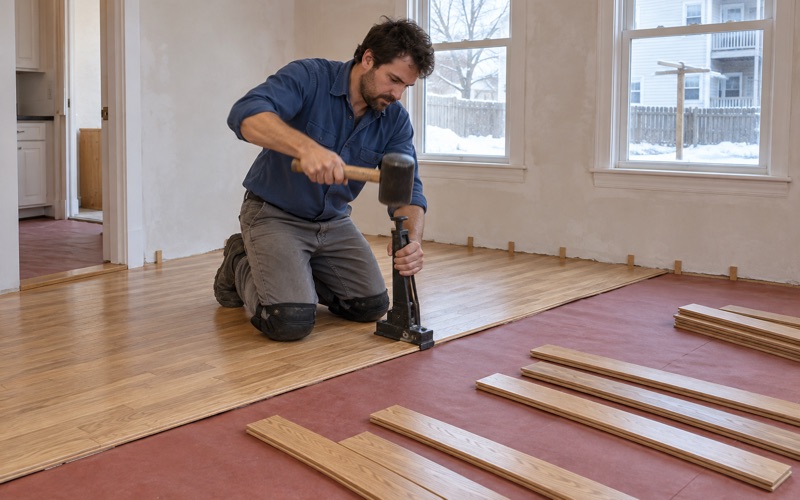
Acclimation earns its time on the coast, where indoor humidity shifts with the seasons. We let new boards sit in the house, compare them against the subfloor with a moisture meter, and leave a proper expansion gap at the walls. That gives the floor room to move so winter gaps stay small and summer swelling does not turn into buckling.
Weather, Finish Coats and the Causeway
Nahant sits in National Weather Service forecast zone MAZ007, and we watch that forecast when finish coats are on the calendar, because finish needs steady conditions to cure. The hazard plan excerpts also note that after the 2018 storm, the sand-supported stretch of road connecting about two-thirds of residents to the mainland became the plan’s number one priority.
The town has taken further steps on its shoreline, including a $3.5 million grant announced in February 2025 to stabilize and restore the Short Beach dunes. For a floor job, the practical point is simple: we build weather into the schedule rather than rushing a coat ahead of a storm.
Stairs, Transitions and Engineered Floors
We quote stairs by the tread and riser instead of folding them into a square-foot price, because stair treads, stair risers and stair nosing each take hand work. Thresholds, reducers and quarter round are refinished or replaced to match the finished floor, so the transitions between rooms read as one job.
For engineered floors, we measure the engineered wear layer before promising a sanding, since some prefinished products carry too little wood on top to sand even once. Where there is radiant heat below the floor, we check the product’s limits before recommending a finish or a replacement. Then you get one written plan covering every room, stair and doorway before work begins.
- 20+ Years on Wood Floors
- Free Written Estimates
- Stairs Priced Per Tread