Malden Wood Flooring has spent more than 20 years on wood-flooring in Melrose and across the area north of Boston, and a large share of that work has been in houses older than anyone living in them. We sand, repair and refinish solid hardwood and old softwood floors, and we tend to make the case for keeping a floor before we make the case for replacing it. An original floor with wood left to sand holds something a new one cannot put back.
Our first visit is mostly measuring. We check board thickness, look at where old nails and patches sit, read moisture in any room that has seen a leak, and note the house’s build year before a sander comes off the truck. That year matters twice in a house like these: it hints at what the floor is made of, and it decides how we handle old paint and finish under Massachusetts lead-safe rules.
What follows covers the floors we most often find here, what the city’s newer demolition rule does and does not touch, how we refinish a Victorian room without sanding its character away, and how we plan a job around a household that stays in the house while we work.
Original Floors in Melrose’s Pre-1900 Houses
A City Where Old Houses Are the Norm
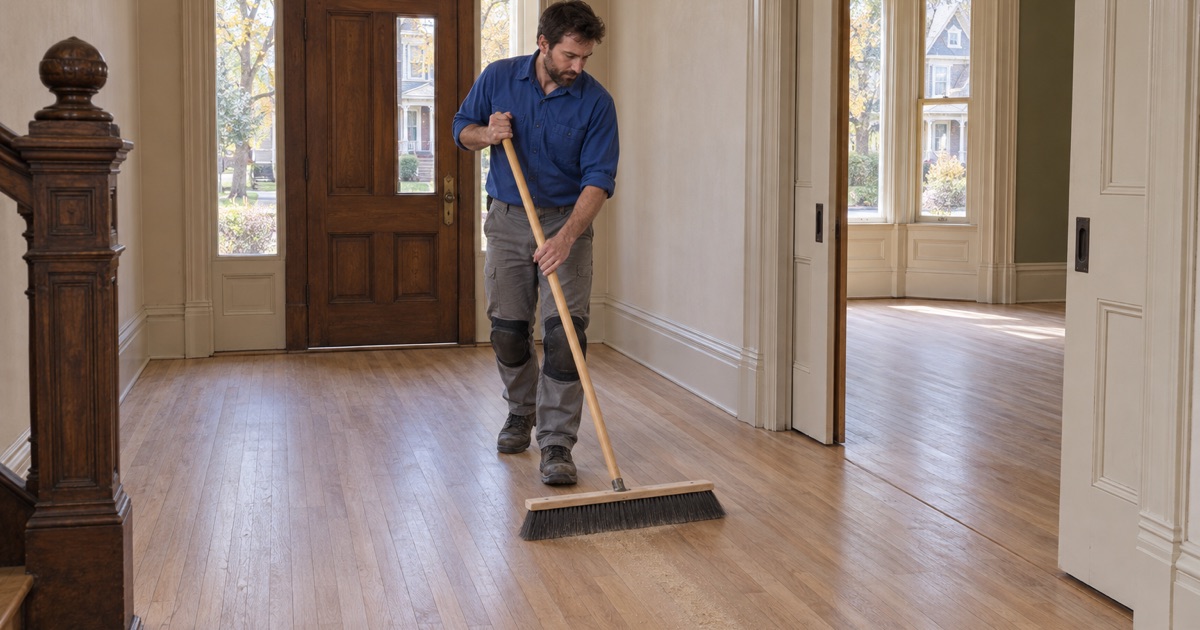
The City of Melrose says roughly 40 percent of its homes were built before 1900, and it points to its well-kept original Victorian architecture as part of the city’s identity. Census housing counts point the same way: 52.2 percent of the city’s housing units date to 1939 or earlier, and about 84 percent predate 1980. For a flooring crew, the house is usually older than anything on our truck.
It also means most floors here have been through several owners’ decisions. One room might keep its first boards under a later coat of varnish, the next might carry oak laid over the original decades later, and a kitchen might hide everything under two layers of linoleum. We do not assume a species or an age until we have pulled a register grille or lifted a threshold and looked.
What We Check Before Quoting
Many floors of this age were face nailed with cut nails, and those heads sit right where a drum sander wants to cut, so we set them below the surface first. We also count the boards that have already been replaced and measure how much wood remains above the tongue and groove. A floor sanded three or four times since the 1890s may have one careful refinish left, not five.
We look for the house’s history in the wood as well: powderpost beetle exit holes near a damp sill, soft spots left by carpenter ants, water stains around an old steam radiator, and pet urine stains that have gone black and deep. Each one changes the plan, and some mean a board replacement or a weave-in repair has to come before any sanding starts.
Owners Who Plan to Stay
Most Melrose homes are lived in by the people who own them: 67.2 percent of occupied units are owner-occupied, and of the city’s 8,328 owner households, 6,534 live in detached houses. In practice we are usually talking with someone who expects to live with the floor for a long time, which moves the conversation away from the cheapest finish and toward the one that will age well in that particular house.
Looking for wood-flooring closer to Chelsea? See Chelsea Wood-Flooring.
What Melrose’s 1899 Demolition Line Means for Old Floors
The Ordinance in Plain Terms
In November 2025 the Melrose City Council approved a demolition delay ordinance. As the Melrose Messenger reported it, the Melrose Historical Commission reviews any proposal to demolish more than half of a building built in or before 1899, and the city can delay that demolition for up to a year. An earlier draft using a 100-year threshold would have reached more than half the buildings in the city.
The ordinance, as reported, is about demolishing buildings, and the account says nothing about sanding, repairing or refinishing a floor. We do not present floor work as something that ordinance governs. If your plans also involve taking down a large part of an 1890s house, that question belongs with the city before any work is put on the calendar.
Why the Line Changes the Floor Conversation
What the rule does show is how the city now weighs its pre-1900 houses. Owners of those houses are more likely to keep the structure and work inside it, and the floors are one of the few original surfaces a family touches every day. A preserved house with a sanded-through floor has still lost something, which is why we treat old boards as material to conserve rather than consume.
That shapes the first questions we ask. Instead of pricing a new floor, we find out what the existing one can still give: how much wood is left, whether winter gaps and cupping come from seasonal moisture or from a real structural problem, and which damaged boards can be matched with wood salvaged from a closet or hall rather than bought new.
Refinishing Instead of Replacing in a Victorian Home
Sanding Old Boards Without Using Them Up
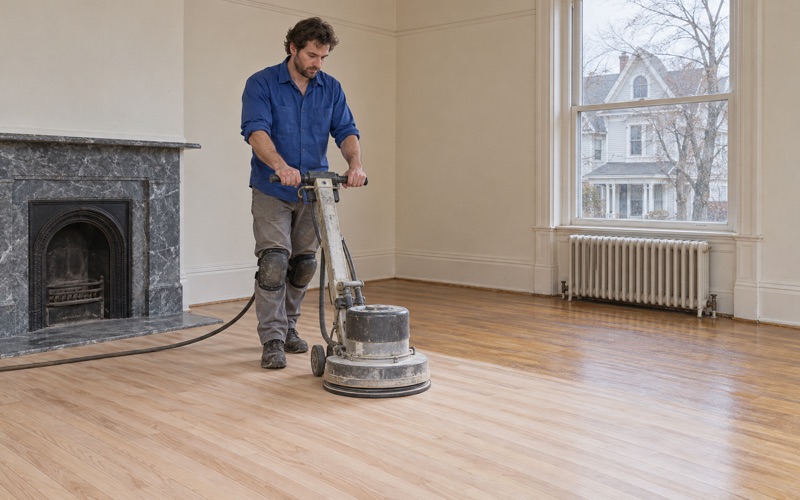
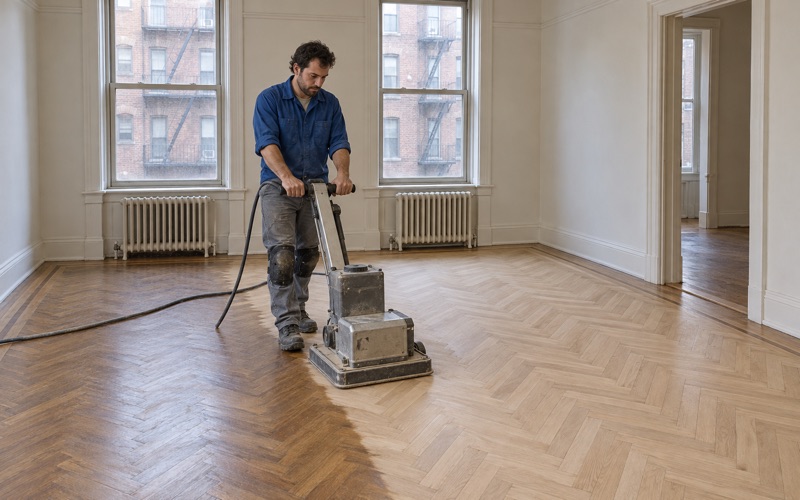
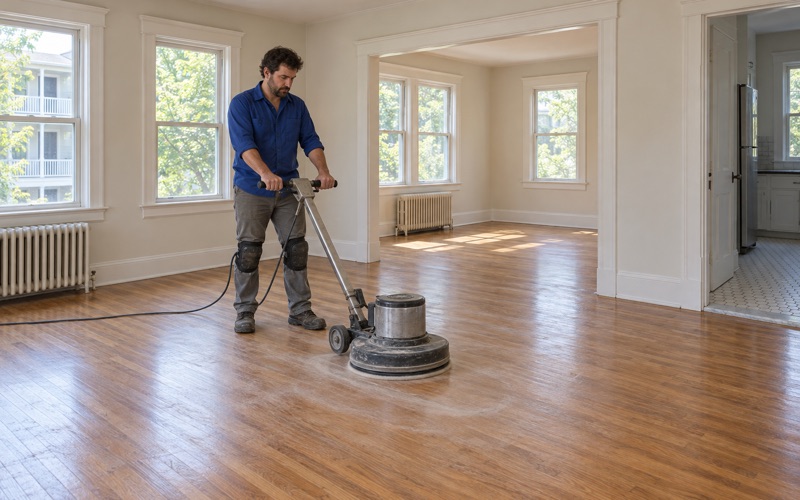
Old softwood and early hardwood floors do not forgive an aggressive first cut. We start the grit sequence only as coarse as the floor demands, run the drum sander with the boards, and finish with an orbital sander or buffer, stopping once the surface is flat rather than once it looks new. Dustless sanding with a HEPA vacuum keeps fine dust out of plaster moldings and radiator fins.
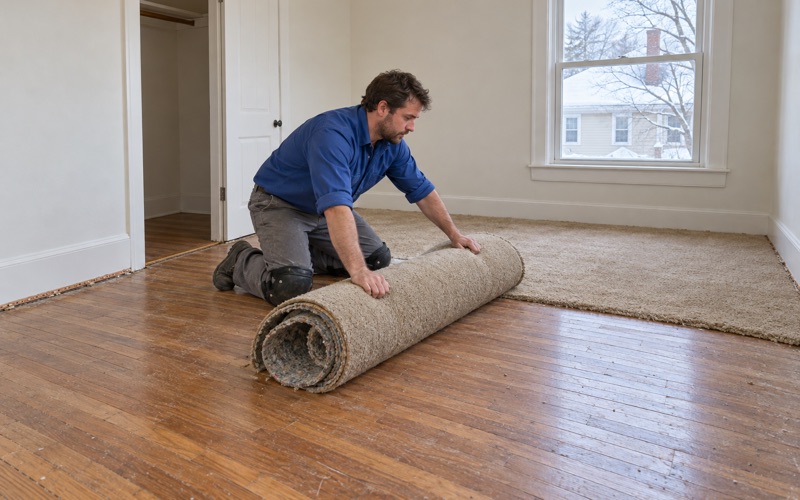
Older floors often carry a shellac finish, sometimes several coats of it, with black mastic or old adhesive near the edges where carpet or linoleum once ended. We clear carpet pad, staples, tack strip and adhesive before a sander touches the wood, because one staple caught in a drum gouges the thin layer of wood the floor still has to give.
Lead Checks in a City of Old Paint
Nearly every older house in Melrose predates 1978, the year that brings Massachusetts’ own lead-safe renovation rules into play. We confirm the build year and look at painted baseboards, quarter round, stair risers and any painted floor borders before sanding begins, then plan containment and cleanup around what we find rather than around a standard routine.
Painted floors turn up often in the back halls and upstairs bedrooms of Victorian houses. Where paint covers the boards, we handle that surface differently from bare varnished wood, and we tell you plainly how the lead-safe steps affect the schedule before the first day, so nothing about the timeline comes as a surprise halfway through the job.
Repairs That Match the House
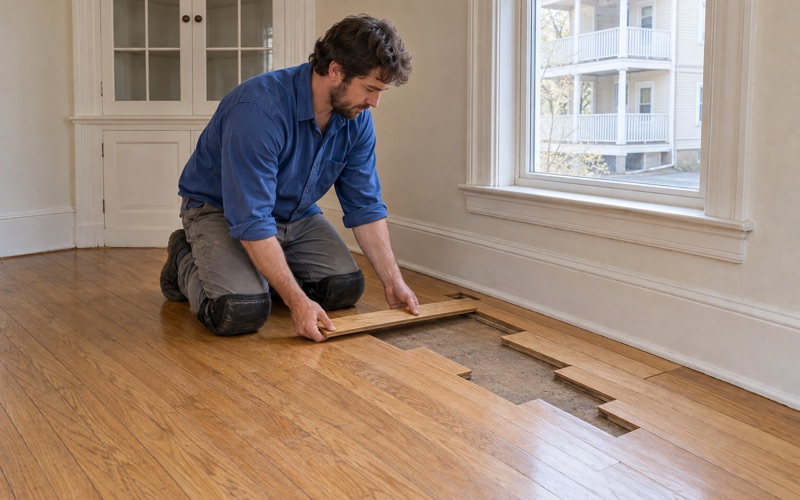
Old houses leave holes behind: a radiator pulled out during a heating change, a pipe chase abandoned in a kitchen, a register moved in a remodel. We patch those gaps with matching boards woven into the existing floor, staggering the joints the way the original installer did, instead of filling them with putty or a square plug that reads as a patch from across the room.
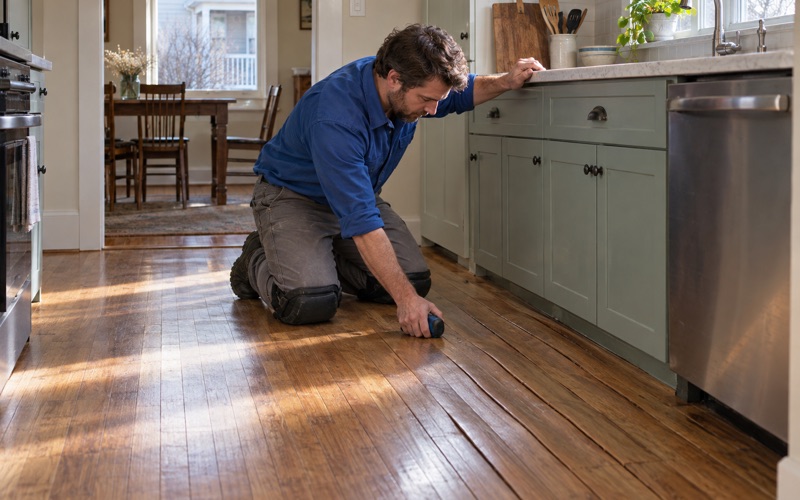
Water damage gets the same care. When a leak upstairs, an old radiator valve or a wet lower level has reached the floor, we trace the source, dry the area and read it with a moisture meter before any board is replaced. If the loss goes through insurance, we document the damage room by room for the adjuster so the claim reflects what actually happened.
Finishes That Suit Old Wood
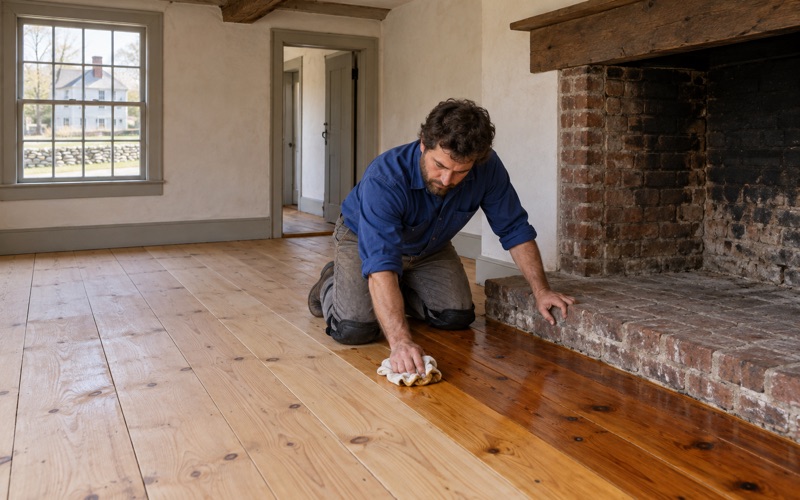
We choose finishes that fit the Massachusetts VOC limits for wood coatings, which are stricter than the federal ones. Waterborne polyurethane keeps old pine lighter, oil-modified polyurethane deepens toward amber, and hardwax oil suits owners who want a low sheen and easy spot repairs later. We lay stain samples on the actual boards, since old wood rarely takes color the way new stock does.
Downtown Review and Planning a Job Across Melrose
What the Historic District Commission Reviews
The Melrose Historic District Commission was established by the Board of Aldermen in 1979 under Massachusetts General Laws Chapter 40C. It administers the Downtown Historic District, which runs along Main Street from Foster Street to Emerson Street and along part of Essex Street. Its review covers changes visible from a public way, such as exterior materials, windows, doors, lights, signs and awnings.
Chapter 40C keeps district commissions out of interior features, so the floors inside a downtown building are not what that commission reviews. Where a floor project comes packaged with new windows, a changed doorway or other exterior work, that outside piece is the part to bring to the commission, and we keep our own work to the rooms inside.
Scheduling Around a Household
Because most of our Melrose customers live in the houses we work on, we plan around the rooms you need. In a single-family home we usually take one floor or one wing at a time, so bedrooms stay usable while the living room cures. In an owner-occupied two-family, we schedule one unit at a time so the household upstairs or downstairs keeps living in the house.
Cure time matters as much as sanding time. Waterborne finishes allow light foot traffic sooner, while oil-modified coats need longer before furniture and rugs go back down. We give you a day-by-day plan before we start, including when pets can return and when area rugs are safe to lay over the new finish.
Neighborhood Texture, Same Standard
Melrose became a town in 1850 and a city in 1900, and its neighborhoods grew up around the Boston and Maine railroad that arrived in 1845. The commuter rail stops at Melrose Highlands, Melrose/Cedar Park and Wyoming Hill still mark those older centers, and the streets around them and around Horace Mann hold houses that vary widely in size and trim.
The floors inside those houses, though, tend to share one pattern: layered finishes, patched radiator holes, and a mix of original and later boards. Whether the job is a single parlor near Wyoming Hill or a whole first floor in the Highlands, we bring the same measuring, the same repair standard and the same care with old wood.
Stairs, Transitions and the Last Details
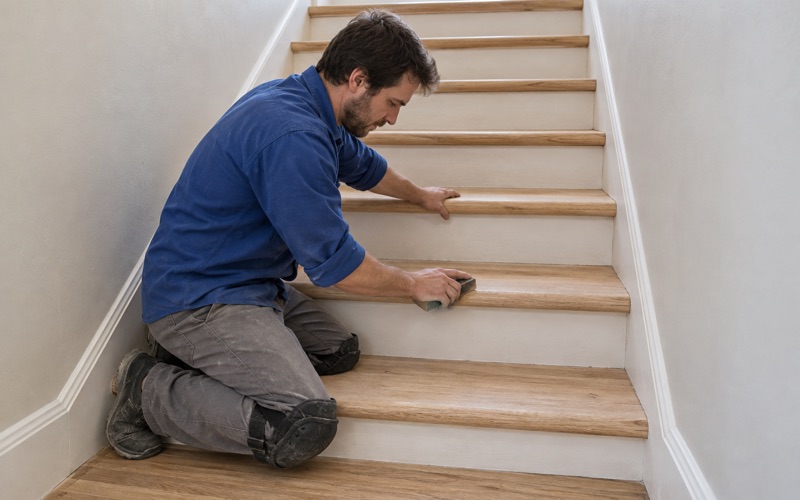
Victorian stairs get their own line on our quote. We price stair treads, risers and nosing by the piece rather than folding them into a square-foot rate, since a worn staircase can take as long as a room. Reducers, thresholds and quarter round get the same attention, because the places where old floors meet newer ones are where a refinish shows its seams.
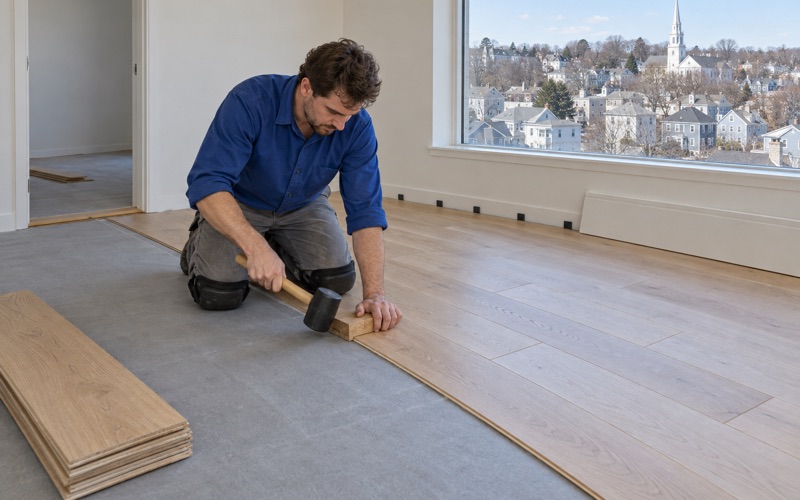
If a newer addition has an engineered floor, we measure its wear layer before promising a sanding. Some engineered floors can take a full refinish, and some should only get a screen and recoat. We would rather tell you that at the first visit than discover it halfway through a room with the finish already stripped.
- 20+ Years on Wood Floors
- Free Written Estimates
- Stairs Priced Per Tread