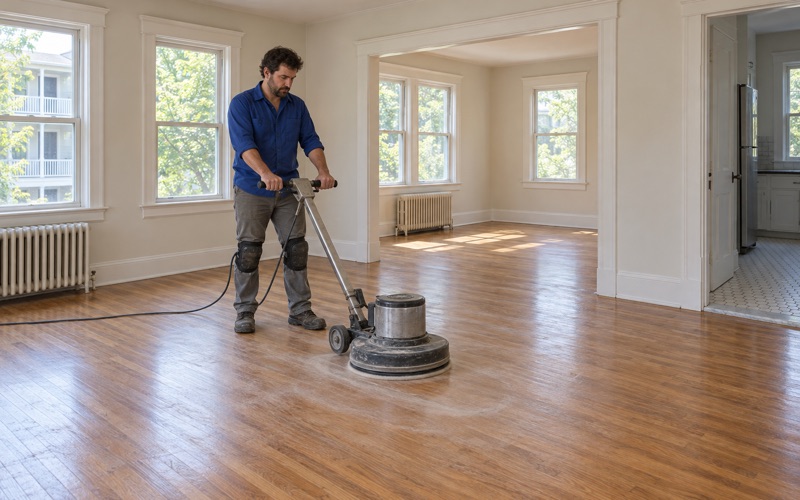
Malden Wood Flooring has handled wood-flooring in Medford for more than 20 years, and much of that work happens inside houses far older than the floors most contractors are used to. We sand, refinish, repair and install solid hardwood and engineered floors, and we treat an old floor as something to be measured before it is promised anything.
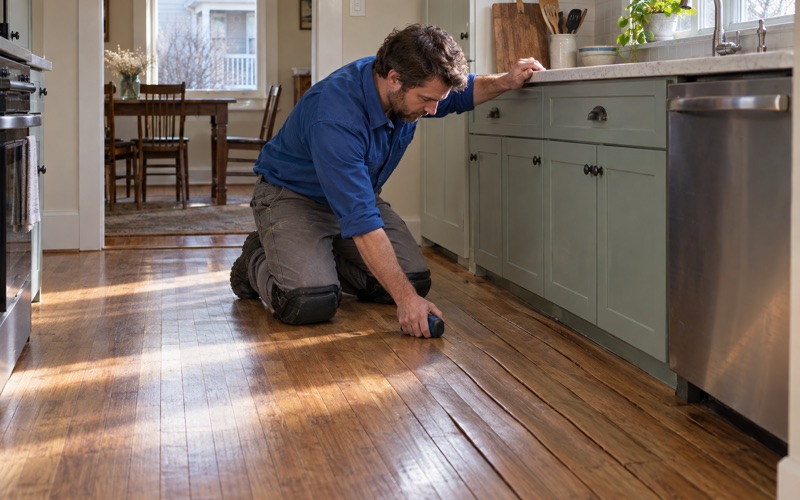
Our first visit is a reading, not a sales pitch. We check the board thickness and count, look at how the boards were fastened, run a moisture meter across the rooms in question and note the build year of the house. Those four things decide whether a floor gets a full sanding, a screen and recoat, a weave-in repair or a replacement, and we tell you which before any machine comes through the door.
We also plan around the people living in the house. Owner-occupied homes are scheduled so a household keeps a working kitchen and a way in and out, finishes are chosen to meet the Massachusetts limits on wood coatings, and painted surfaces in older homes are checked before a sander touches them.
Old Floors Inside Medford’s Oldest Houses
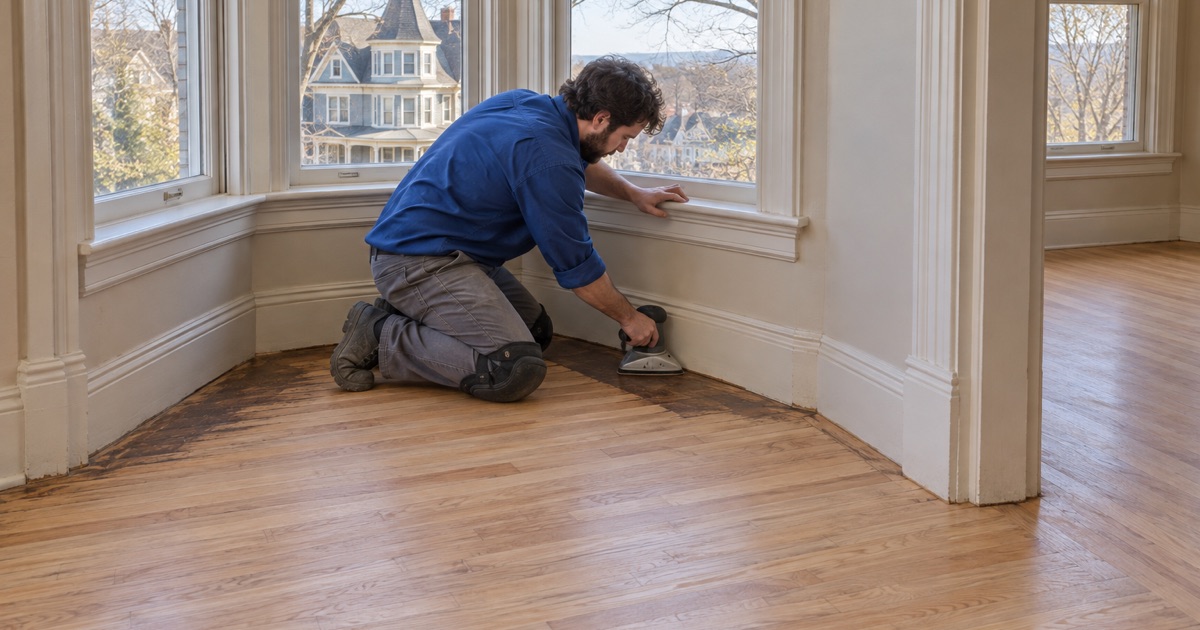
Medford was settled in 1630 as part of Charlestown and became a city in 1892, and its oldest housing sits in the Marm Simonds local historic district, centered on High Street in West Medford. The Medford Historic District Commission describes those homes as built mainly in the 1600s and 1700s. Floors in houses that age have been sanded, patched, covered and uncovered many times over.
What We Check First in a Colonial-Era House
Before we quote a refinish in a house of that age, we pull a floor register or a threshold where we can and measure what is left above the tongue. Old pine and early oak floors have often been sanded several times, and the wood above the tongue and groove, or above the nail heads on a face-nailed floor, is the only wood a sander can safely take.
We count the boards that are already thin, cracked or split at the nail line. A room with a handful of tired boards can usually be repaired and sanded; a room where most boards are near the tongue gets a gentler plan, such as a hand scrape, a light buff or a screen and recoat, rather than a drum sander.
Fasteners, Species and Past Repairs
We do not assume what species or fastener a colonial house holds. Floors in these homes may be eastern white pine, old-growth pine, early oak or boards replaced in a later century, and the fasteners range from cut nails driven through the face to modern flooring cleats and flooring staples from a past repair. Each one changes how we sand and how we set a replacement board.
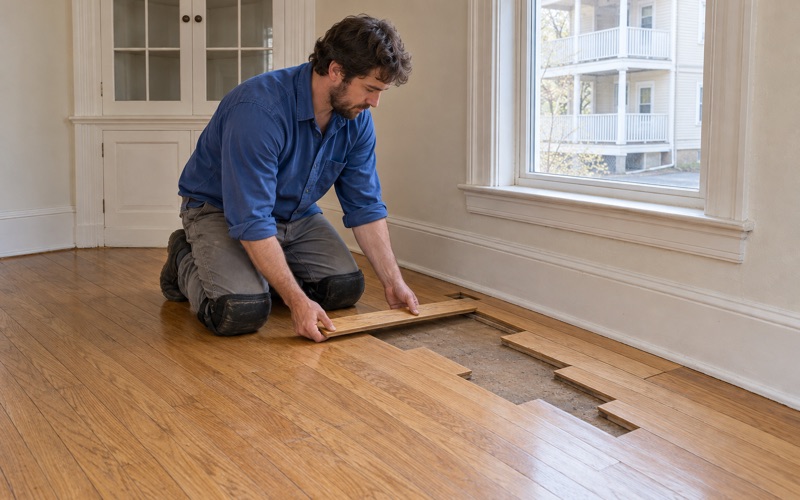
Where an earlier owner patched a floor with mismatched stock, we can lift that patch and weave in boards of the right width and grain. Where the floor shows powderpost beetle holes or old carpenter ants damage near an exterior wall, we point it out and look at the subfloor before we sand over it.
Finish Choices for Old Wood
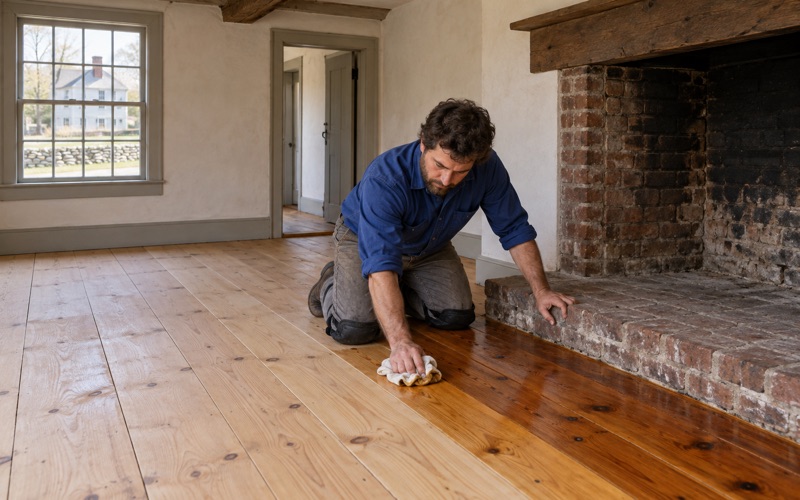
Old wood often carries a shellac finish or an amber tone from decades of oil-modified polyurethane. We sample the finish in a closet or corner, then show you stain samples and sheen level options on the actual boards, since old pine and new oak take color very differently.
For owners who want the floor to keep an older look, a hardwax oil or a low-sheen waterborne polyurethane often suits these rooms better than a high gloss. Every finish we use is chosen to fit the Massachusetts VOC limits for wood coatings, which are stricter than the federal ones.
Looking for wood-flooring closer to Somerville? See Wood-Flooring Services in Somerville.
What the Medford Historic District Commission Does and Does Not Review
Medford has two local historic districts, the Marm Simonds District and the Hillside Avenue Historic District, and both were established in 1985. The commission’s FAQ states that it reviews exterior architectural features visible from a public right of way, and that routine maintenance of a house is exempt from review.
Interior Floor Work Stays Inside the House
The same FAQ says the local districts do not require approval for interior changes or alterations, or for ordinary repair and maintenance. For a floor refinish, a board replacement or a new floor laid inside a Marm Simonds or Hillside house, the commission’s review is aimed at the outside of the building, not at the rooms we work in.
That is the commission’s own wording, and we point owners to it rather than restating it as a ruling. Anything about the building itself, including the city’s separate demolition delay process under the Medford Historical Commission, is a question for the city, and we encourage owners to call the office with any doubt before work begins.
Why the Pre-1900 Count Matters
The commission notes that Medford has fewer than 3,000 buildings constructed before 1900. That is a small share of the city, which means the floors in those houses are not replaceable stock. Once a board is sanded through or a run of old pine is torn out, the original is gone.
So our work in these houses leans toward conservation. We repair before we replace, keep sanding passes to the fewest the floor can bear, and save any sound boards pulled from a closet or back room to patch a more visible spot.
Lead Checks Before Sanding
Massachusetts runs its own lead-safe renovation rules for homes built before 1978, and every house in either district falls well before that date. We confirm the build year and look for painted surfaces, including painted borders, thresholds and baseboard, before sanding starts.
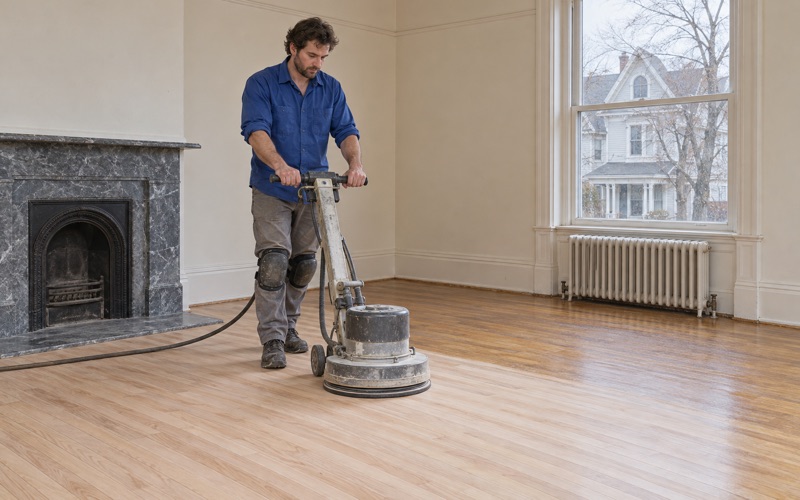
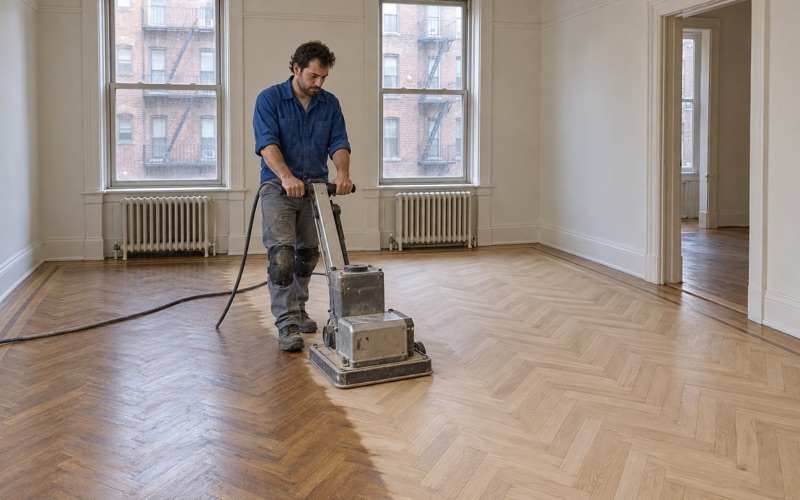
On the sanding itself we use dustless sanding equipment with a HEPA vacuum, and we clean between each step of the grit sequence. That keeps dust inside the machine rather than across a house whose trim and plaster are worth protecting.
Hillside Avenue’s 1890s Houses
The Hillside local historic district is centered on the hill above the library, where houses were built mainly around 1900. The Hillside Avenue Historic District listing covers fifteen properties on Hillside and Grand View Avenues, mostly 1890s Queen Anne, with Colonial Revival, Tudor and Shingle style houses among them.
Floors in Late Victorian Rooms
Houses of this period often mix floor types from room to room: narrow oak in the front rooms, a parquet or herringbone border in a parlor, maple or pine in a kitchen or back hall. We treat each room as its own job, because a border pattern and a plain strip floor need different sanding directions and different care at the edges.
Where oak has turned orange oak under old finish, a full sanding and a fresh waterborne coat usually brings it back toward a natural tone. Where a border has loose pieces, we reset them before sanding so they do not tear out under the machine.
Carpet, Linoleum and What Lies Under It
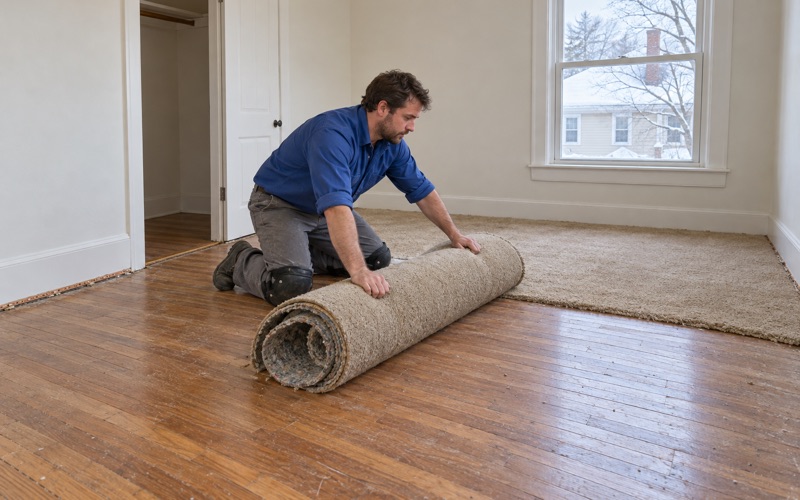
Many of these houses had their floors covered at some point. When oak turns up under old carpet, linoleum or paint, we clean off the carpet pad, staples, tack strip and adhesive before any sanding. Black mastic left under old flooring is noted and handled with care rather than ground into the room.
Radiator and pipe changes over the years often leave holes in these floors. We patch them with matching boards woven into the existing floor, not wood filler, so the radiator removal patch reads as part of the original run once it is finished.
Stairs in a Queen Anne House
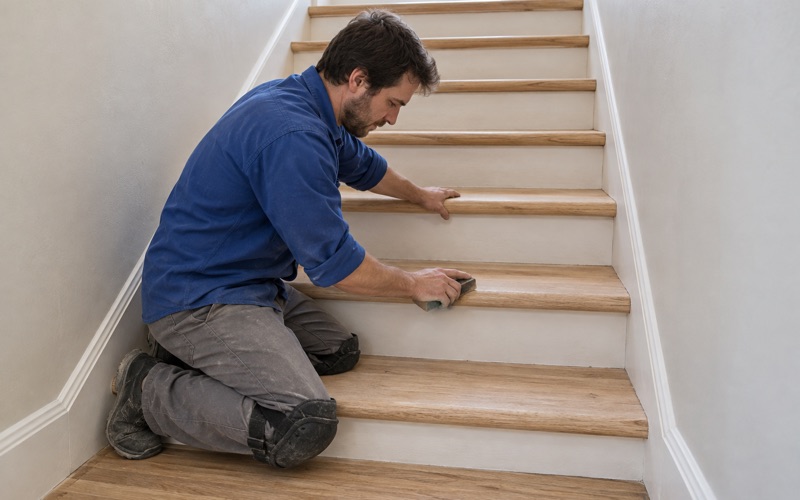
The main stair is often the most worn wood in the house, with deep traffic lanes on each tread. We quote stairs by the tread and riser rather than folding them into a square-foot price, since stair treads, stair risers and stair nosing take hand work that a drum sander never reaches.
Two-Family Floors Across Medford
The historic districts are where the oldest floors are, but the everyday Medford job is a two-family house. Census figures count 6,929 homes in two-unit buildings out of 25,587, or 27.1 percent of the city’s housing, and 48.8 percent of homes predate 1940.
Working One Floor at a Time
In an owner-occupied two-family, we schedule one unit at a time so the household upstairs or downstairs keeps living in the house. We seal off the work floor, run dustless sanding, and plan the finish coats around drying time so the stairway stays usable.
For a vacant unit between tenants, we work to the owner’s window. A full sanding and finish in an empty apartment can usually be planned around a move-out date, and we tell you at the first visit how many days the floor needs before furniture comes back.
Water Damage From the Unit Above
Stacked units share plumbing, so a leak from a kitchen or bathroom upstairs often shows up as cupping, crowning or water stains on the floor below. We trace the water, dry the area and read it with a moisture meter before any board is replaced, since sanding a cupped floor before it dries leaves it crowned later.
When the damage is part of an insurance claim, we document the floor room by room for the adjuster, with moisture readings and photographs of each area. That record also helps the owner decide between a weave-in repair and a full board replacement.
Seasonal Movement and Heat
Medford sits in the National Weather Service forecast zone Southeast Middlesex, and its floors see the usual swing from humid summers to dry heated winters. Winter gaps and board gapping near steam radiators are common in these houses, and most close again as the season turns.
We look at the gaps against the season before recommending any fix. A floor with normal seasonal gaps rarely needs filling, while buckling or a gap that stays open all year points to a moisture or fastening problem underneath.
New Floors and Engineered Options
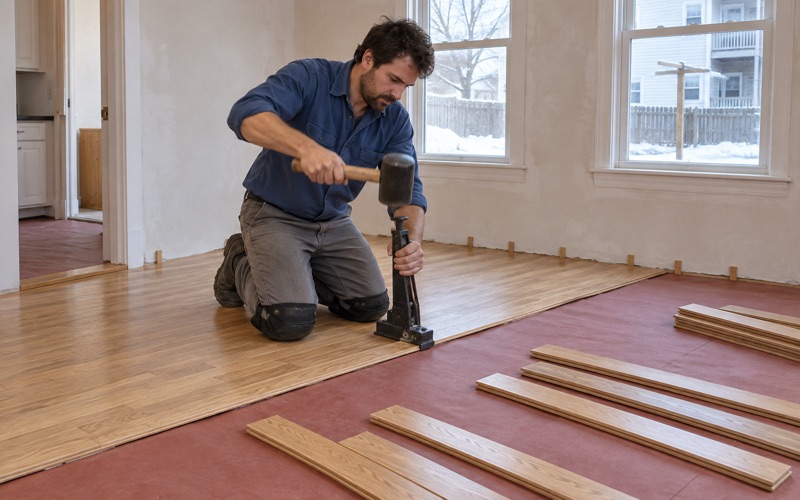
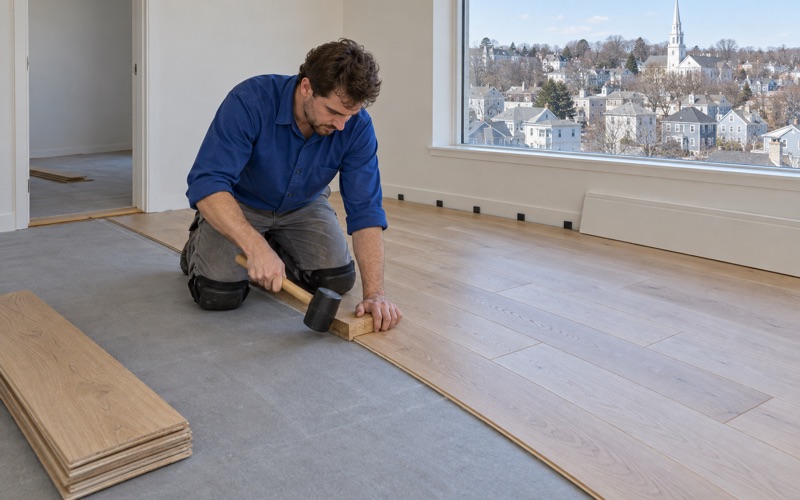
For a new floor in a two-family unit, we discuss solid hardwood, prefinished and site-finished options, and engineered flooring where radiant heat or a below-grade room calls for it. We allow for acclimation, an expansion gap at the walls and a vapor retarder where the NWFA Installation Guidelines call for one.
If you already have an engineered floor, we measure the engineered wear layer before promising a sanding. Some wear layers take a full refinish; others only a screen and recoat. We also finish the edges properly, with a reducer, threshold, quarter round or baseboard where a new floor meets an old one, from West Medford to Wellington.
- 20+ Years on Wood Floors
- Free Written Estimates
- Stairs Priced Per Tread