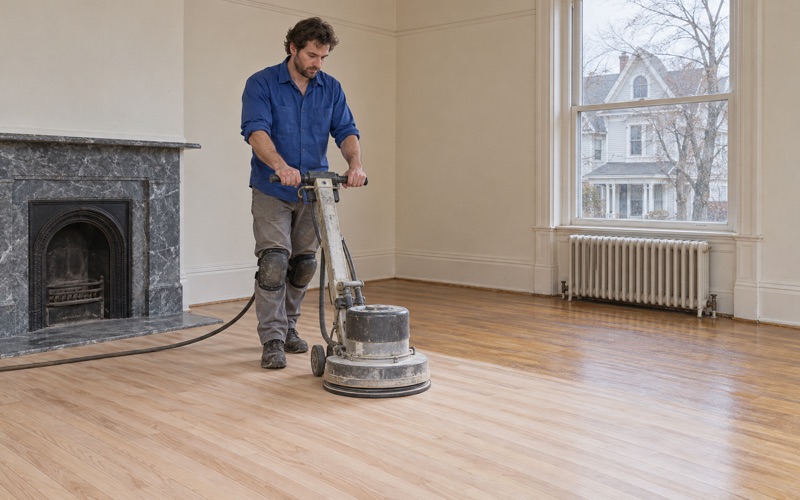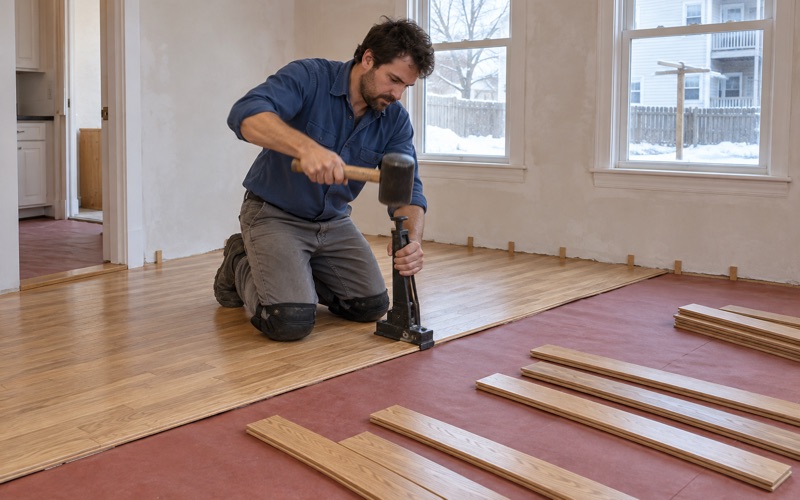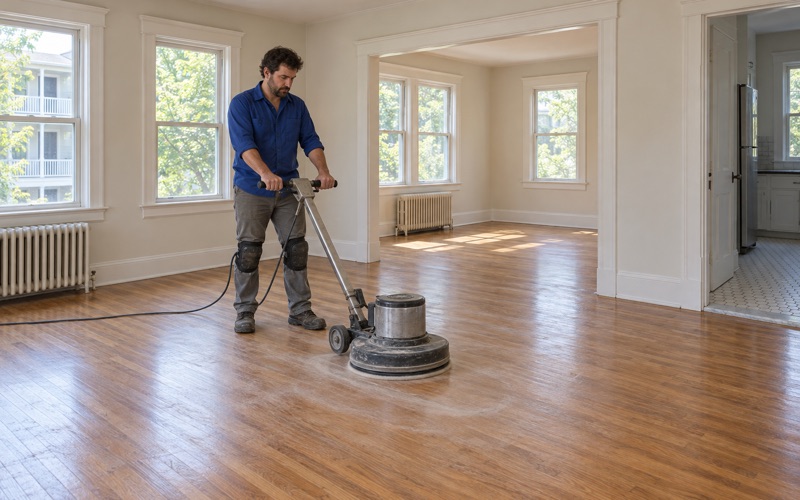
Malden Wood Flooring has spent more than 20 years on wood-flooring in Lynn and the neighboring cities, and most of the floors we open up here sit inside two- and three-family houses. That shapes how we quote, how we schedule and how we sand. A floor that has spent decades under tenants, carpet and a few coats of paint needs to be read before anyone plugs in a machine.
We refinish, repair and install solid hardwood and engineered floors for owners who live in one unit and rent the others, for landlords working between tenants, and for households who simply want the oak under the carpet back. Every job starts with the same questions: how old the house is, how much wood is left in the boards, and what finish the rooms can live with.
The sections below cover what we find in older multi-family houses, how we work around people who keep living in the building, and what a landlord should plan for when a unit turns over. If you already know the floor you have, skip to the planning notes at the end.
Floors in Lynn’s Three-Deckers and Two-Families
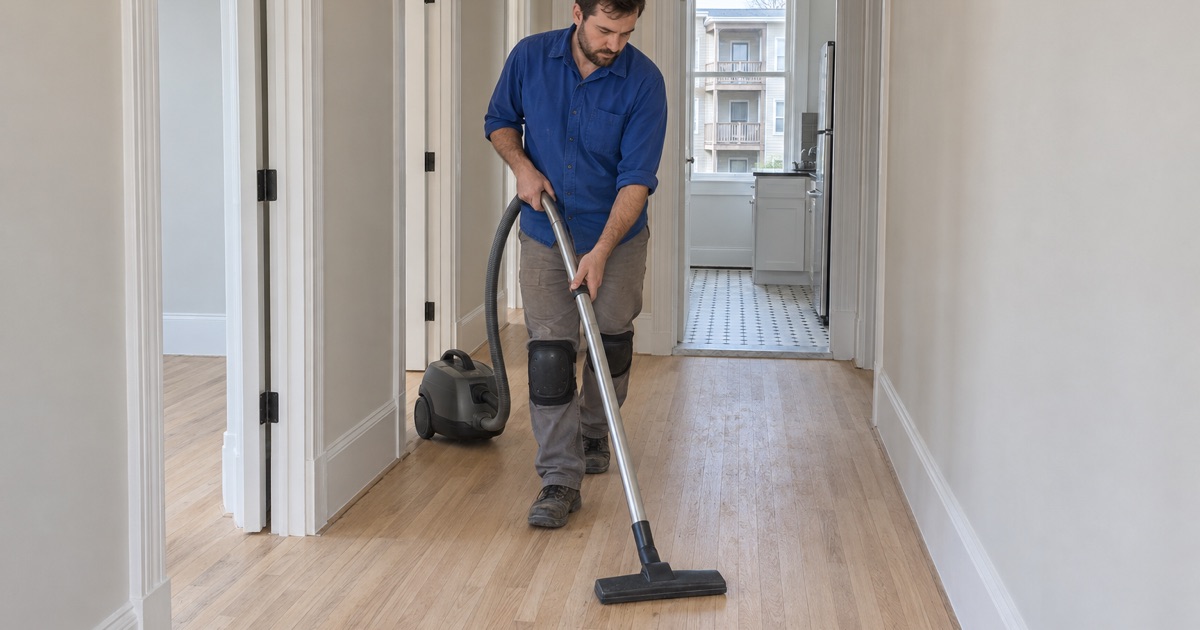
At the start of the 20th century Lynn was the world leader in shoe production, and the housing built for the people who worked in those factories is still much of what we sand here. American Community Survey figures count 17,360 Lynn homes, 45.7 percent of the housing stock, as built before 1940. That is the floor we plan around by default.
Boston College’s Global Boston project records that more than 850 three-decker apartment buildings went up across the city between 1905 and 1913, the majority in the Brickyard just west of downtown. Add the two-families and the result is a city where 12,326 homes sit in buildings of two to four units, each floor its own apartment with its own history of tenants, rugs and repairs.
What an Old Floor Usually Hides
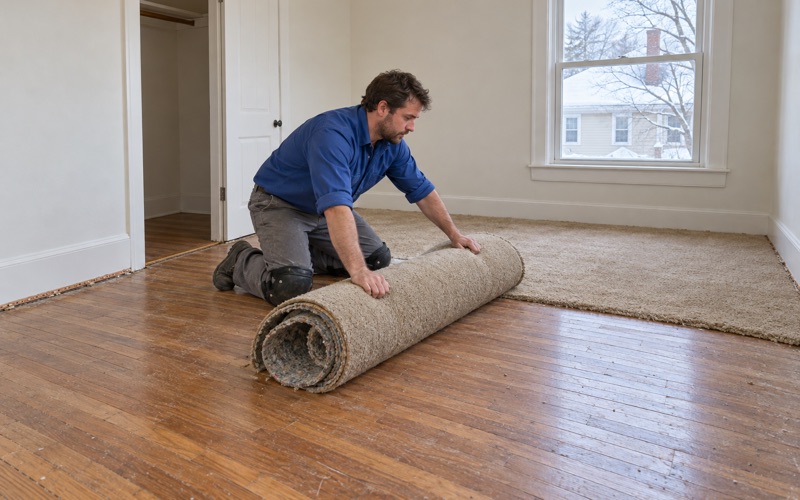
In a prewar three-decker we expect layers. Wall-to-wall carpet over a carpet pad, tack strip nailed around the edges, sometimes linoleum or black mastic underneath, and now and then a painted border where a rug once sat. The wood under all of that may be red oak, eastern white pine or a mix from rooms repaired at different times, so we lift a corner before we name a species.
When we find oak under carpet, linoleum or paint, the cleanup comes before any sanding. Pad, staples, tack strip and adhesive all come off by hand and scraper, because a drum sander dragged across a staple gouges the board. Black mastic gets tested before we touch it, since older adhesives are not something to grind into the air of an occupied house.
Checking the Wood That Is Left
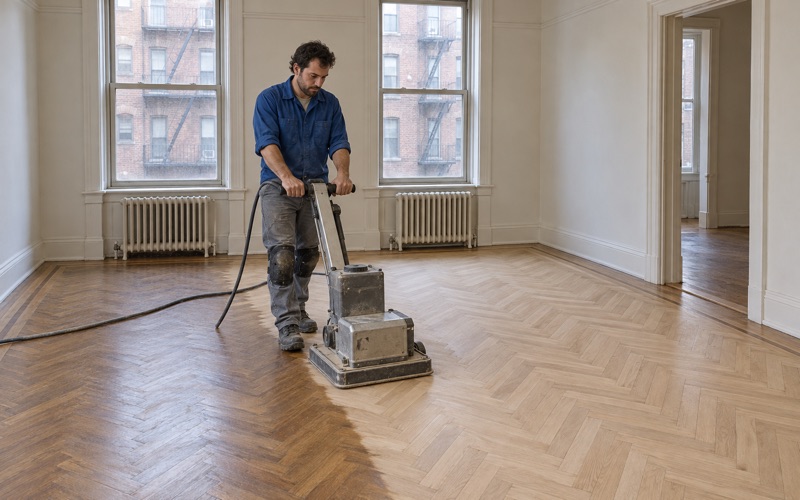
A floor laid before 1940 may already have been sanded more than once, and tongue and groove boards only have so much wood above the tongue. Before we promise a full refinish we pull a floor register or a threshold and look at the edge of a board to see how much remains. Old pine is softer than oak by Janka hardness, and it wears thin faster.
If the boards are too thin for another pass with a drum sander, we say so and talk about a lighter screen and recoat, a board replacement in the worst traffic lanes, or new flooring. Cut nails and face nailing are common on floors this age, and every nail head gets set below the surface before the sanding starts.
Patching Where Radiators and Pipes Came Out
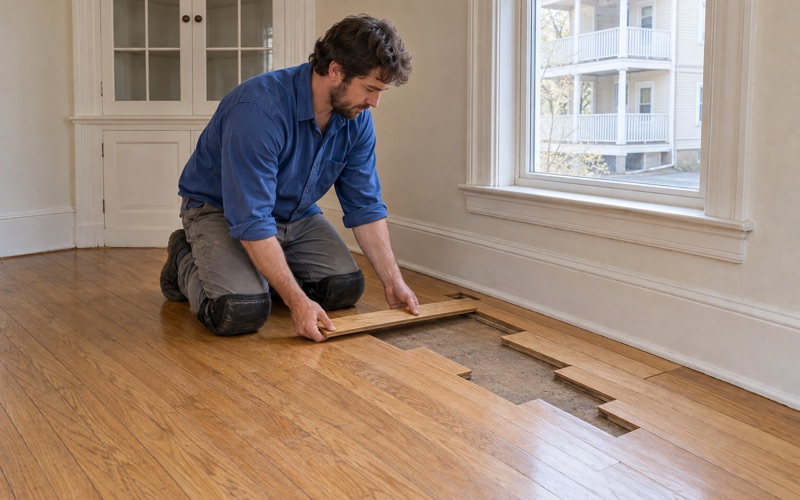
Older multi-family houses often came with steam radiators, and when a heating system gets replaced the old pipe holes and radiator footprints stay in the floor. We do not fill those with putty. We weave in matching boards, cutting out the damaged pieces and toothing new ones into the surrounding rows so the patch runs with the grain.
A good weave-in repair disappears once the room is sanded and finished together. The hard part is matching width and species, and on an older floor that sometimes means salvaging boards from a closet or under a built-in rather than buying new stock that is a different width.
Painted Trim and Lead Rules
Because nearly half the city’s homes predate 1940, painted baseboard, quarter round and painted floor borders come up often. Massachusetts runs its own lead-safe renovation rules for homes built before 1978, so we confirm the build year and look at every painted surface before a sander goes near it.
That check changes the job plan, not just the paperwork. It decides whether trim comes off first, how rooms get sealed, and how dust gets collected with a HEPA vacuum and a dustless sanding setup. In a building where children live on another floor, that planning is the part of the job we take most seriously.
Looking for wood-flooring closer to South End? See South End Wood-Flooring.
Refinishing a Two-Family While the Household Stays
ACS figures count 3,487 Lynn owner households living in two-to-four-unit buildings: 2,142 in two-unit houses and 1,345 in three- or four-unit buildings. Each of those owners lives in a building that holds other apartments, which means a floor job cannot simply empty the house. We plan around the people who are still there.
One Floor at a Time
When an owner lives in the building, we schedule the work one floor at a time so the upstairs or downstairs household keeps living there. The unit being sanded is cleared and sealed, while the other apartment keeps its kitchen, bathroom and entrance. Shared front hallways get covered and kept passable.
Working floor by floor also lets the owner see a finished result before committing to the next unit. If the stain samples in the first apartment looked right in daylight, the second one goes faster, and if the sheen level felt too glossy, we adjust it before it goes down everywhere.
Finishes That Fit Massachusetts Limits
Massachusetts sets VOC limits for wood coatings that are stricter than the federal ones, so we choose finishes that fit them. In an occupied two-family that usually means a waterborne polyurethane, which dries faster and smells less than an oil-modified polyurethane. Hardwax oil is another option for owners who want a softer look and easy spot repair.
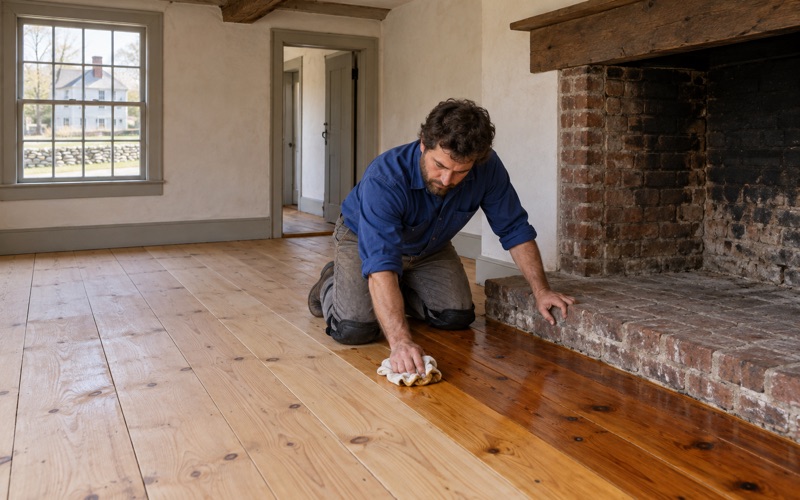
Each finish ages differently. Waterborne coats stay clear on maple and white oak, while oil-based finishes amber over time and deepen the orange oak look many older floors already have. We walk through that trade-off with samples on the actual boards, because a finish that looks right in a showroom can look very different on century-old wood.
Stairs and Shared Hallways
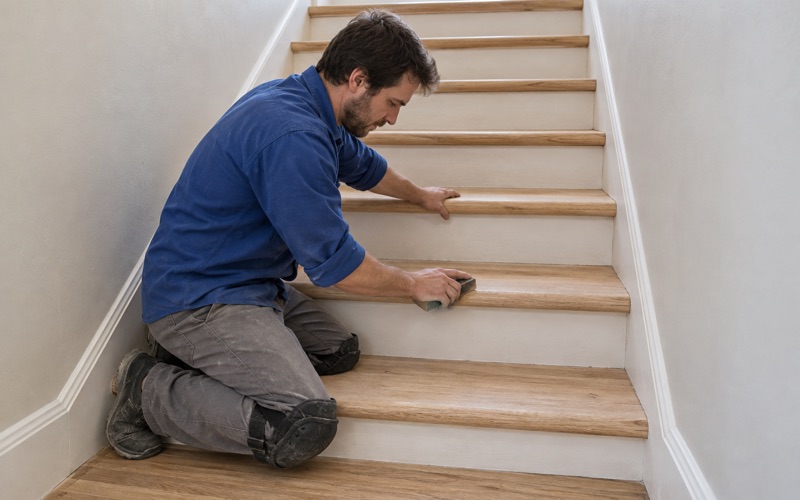
Three-deckers mean stairs, and stairs take far more handwork than open floor. We quote stair treads, stair risers and stair nosing by the piece, not folded into a square-foot price, so the owner can see exactly what the staircase costs. Worn nosing on a front stair shared by every unit is often the first thing to fix.
Stairs in a shared hall are also the hardest part to schedule, because everyone in the building uses them. We usually finish them in sections, alternating treads, so there is always a dry step to walk on while the rest cures.
Floor Work for Lynn Landlords Between Inspections
According to the ACS, 51.9 percent of Lynn households rent, 18,892 of 36,414. The city’s Rental Ordinance requires owners of rental units, condominium units included, to register them every year, and each unit gets an inspection every five years through the Lynn Inspectional Services Department, which now uses its own inspectors.
The city lists initial registration at $25 and renewal at $15 per unit, with a $100 fee for a rental unit inspection, and a $300 fine for each day a long-term rental goes unregistered. We do not speak for what inspectors look at; that is the city’s call. What we can do is keep a landlord’s floors in shape on a predictable schedule.
Using the Vacant Window Between Tenants
The easiest time to refinish a rental floor is when the apartment is empty. We turn rental floors in two- and three-family houses around in the vacant window between tenants, so the unit is sanded, finished and cured before the new lease starts. A landlord who calls when notice is given usually gets the best scheduling.
Vacant units also let us deal with things tenants live around, such as pet urine stains, water stains by a radiator or window, and board gapping in rooms that sit over an unheated space. Deep pet stains often need board replacement rather than sanding, since the discoloration runs through the wood.
Screen and Recoat or a Full Sand
Not every turnover needs bare wood. If the finish is worn but the boards are not, a screen and recoat with a buffer takes off the dull top layer and adds fresh finish without removing wood. That matters on an old floor where the boards cannot spare many more full sandings.
A full sand makes sense when there are scratches through the finish, gray wear in traffic lanes, or a previous tenant’s rug has left a clear outline. We walk the unit and tell the landlord which rooms need which treatment, rather than sanding the whole apartment because one room needs it.
Leaks From the Unit Above
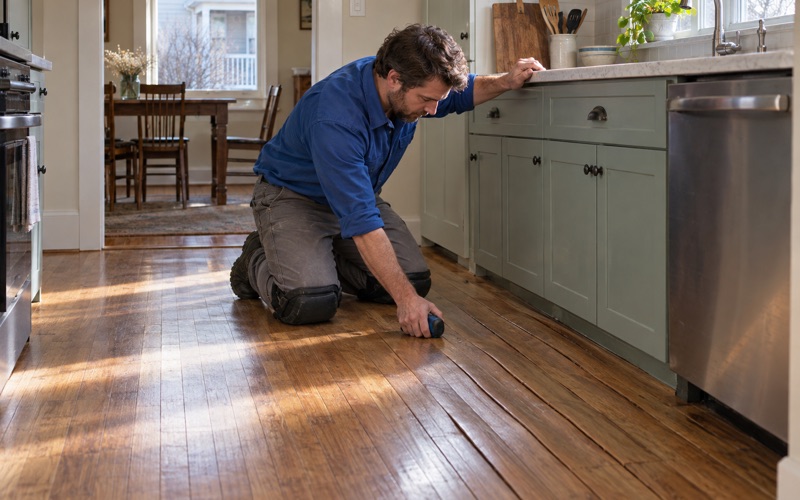
In stacked apartments, a leak on the third floor becomes a problem on the second. When water comes down from a bathroom, a radiator valve or a pipe, we trace the source, dry the floor and read it with a moisture meter before any board is replaced. Replacing boards over a wet subfloor just brings cupping or buckling back.
When there is an insurance claim, we document water-damaged floors room by room for the adjuster, with moisture readings and photos of cupping, crowning and stained boards. That record helps a landlord or owner separate what the leak damaged from older wear.
Planning a Floor Job in Lynn
Lynn covers about 13.5 square miles, and the housing changes block by block. The Brickyard holds much of the early three-decker stock, while West Lynn neighborhoods such as Pine Hill and Tower Hill and East Lynn areas like the Diamond District, the Highlands and Fay Estates each add their own mix of single-family and two-family homes.
Older Floors in the Diamond District and the Highlands
When we work on older single-family houses, in the Diamond District, the Highlands or anywhere else in the city, we watch for details a three-decker rarely has. Parquet or herringbone borders, rift and quartersawn oak, or a shellac finish never fully sanded off all reward a slower grit sequence and careful edge work with an orbital sander.
We also look closely for winter gaps and old insect damage. Powderpost beetle holes and carpenter ants turn up in old framing and flooring, and we point them out before quoting, because a board that looks sound on top may be hollow underneath.
Engineered Floors in Newer Units
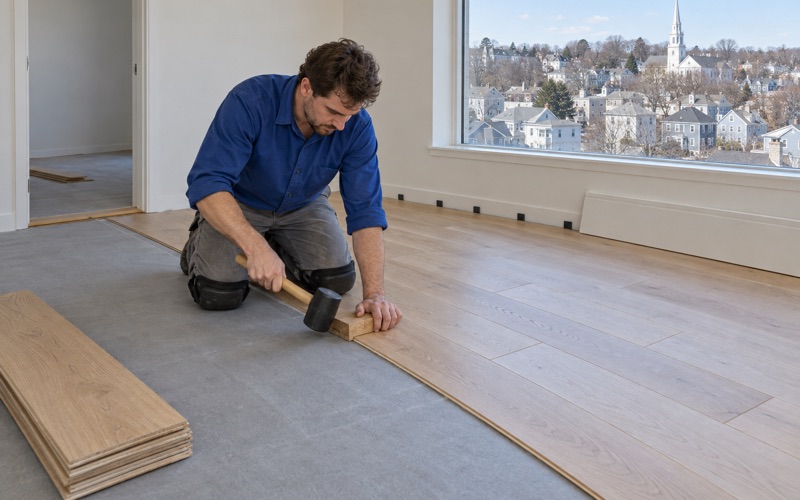
Not every Lynn floor is old. The ACS counts 1,366 homes built from 2010 through 2019 and 270 since 2020, and newer units often carry engineered or prefinished flooring. Before we promise that an engineered floor can be sanded, we measure the engineered wear layer, because some are thick enough for a refinish and some are only good for a recoat.
What Helps Us Quote
Tell us the rough build year, how many units and floors are involved, whether anyone is living in the space during the work, and what is on the floor now. Photos of a lifted carpet corner, the stairs and any water stains save a trip.
From there we come out, check board thickness and moisture, confirm the lead question for a pre-1978 house, and put the rooms, stairs and repairs on separate lines. You see what each part costs and can decide which floors go first.
- 20+ Years on Wood Floors
- Free Written Estimates
- Stairs Priced Per Tread