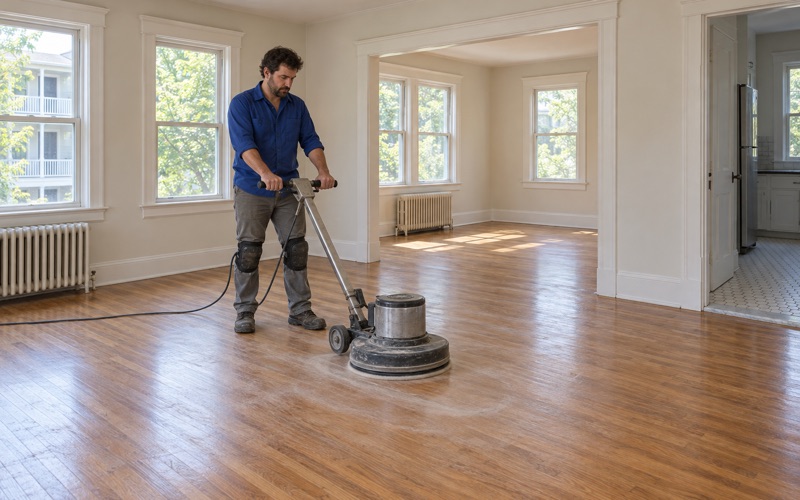
Malden Wood Flooring has spent more than 20 years on wood flooring in East Boston and the rest of our corner of greater Boston, and the work here has shifted as the neighborhood has grown upward. We sand and refinish, repair, replace and install solid hardwood and engineered floors, from a single scratched room to a full unit.
A lot of what we are asked to look at now is younger than the floors we started out refinishing. Prefinished engineered planks, site-finished oak laid over a concrete deck, and floors a first owner wants to trade up all raise different questions than a century-old pine floor does, and we answer those questions before anyone talks about price.
We still spend plenty of days in older houses too. Either way, the job begins with measuring what is actually there: the wear layer, the moisture reading, the board thickness, the condition of the subfloor. The plan is built to fit the floor in front of us rather than a template carried over from the last job.
Floors in East Boston’s Newer Buildings
Building in East Boston picked up sharply in the last fifteen years. In ZIP 02128, census estimates count 2,544 homes built between 2010 and 2019, more than in any single decade counted since 1939, and another 579 built in 2020 or later. Those figures come from the 2024 five-year American Community Survey for the ZIP code area, so read them as a close proxy rather than an exact neighborhood count.
Big Buildings, Shared Walls
Much of that growth went into large buildings. About 17.1 percent of the housing units in ZIP 02128, 3,290 of 19,193, sit in buildings of fifty or more units. Floor work in that setting runs on the building’s schedule: elevator reservations, loading hours, quiet hours and whatever flooring rules the condominium documents or the property manager have set.
Condominiums in Massachusetts are governed under M.G.L. c.183A, and the master deed and bylaws are where an association writes down what it expects from a floor change, including any underlayment it wants under new boards. We ask for those documents before we quote, because the association decides what product can go down, and learning that after demolition costs everyone time.
What Floors in Newer Homes Tend to Be
Homes built since 2010 usually came with different materials than the neighborhood’s older housing. In our experience, newer multifamily floors are often prefinished engineered planks, laminate or luxury vinyl, laid over a concrete or wood subfloor, sometimes with radiant heat below. We confirm what a particular unit actually has before recommending anything, because the answer changes every option that follows.
That matters most with engineered flooring, which can only be sanded as far as its top layer allows. We measure the engineered wear layer, usually at a vent opening or a threshold, before we promise a refinish. A thin veneer may take a screen and recoat but not a full sanding, and we tell you that plainly rather than finding out halfway through.
Early Wear in Young Floors
A floor that is ten years old can already show traffic lanes from the door to the kitchen, a dulled sheen near a slider, and pet urine stains where a crate sat. Board gapping and winter gaps show up when heating season dries the air, and cupping or crowning can follow a slow leak from a dishwasher or an upstairs bathroom.
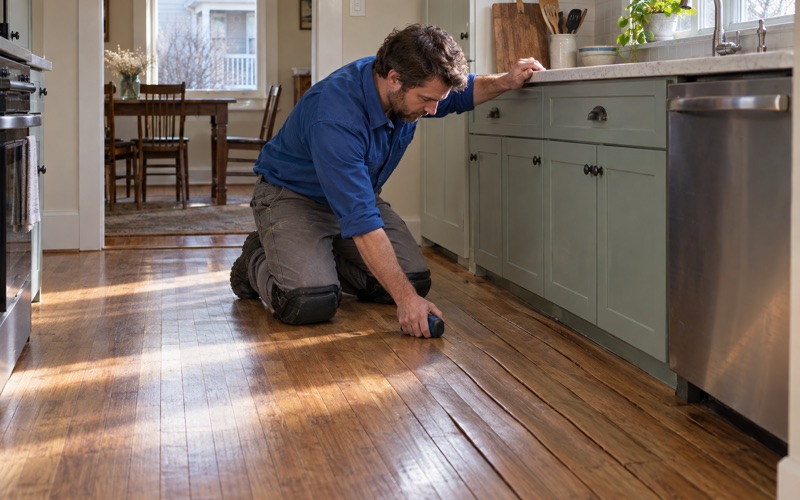
When water is the cause, we trace the source, dry the area and read the boards with a moisture meter before replacing anything. If the damage is headed for an insurance claim, we document it room by room for the adjuster, with readings and photos, so the claim rests on measurements instead of guesses.
Looking for wood-flooring closer to North End? See Wood-Flooring Services in North End.
Suffolk Downs: A New Neighborhood on a Racetrack
The largest change in East Boston housing is happening on the old track. Suffolk Downs, the former horse racing site on the border of East Boston and Revere, is being redeveloped by HYM Investment Group across 161 acres into a mixed-use neighborhood planned for 10,000 apartments and condominiums, including more than 900 affordable units and forty acres of new open space.
Because the redevelopment is being built in phases, the area around the old track will keep changing for years, with new buildings rising beside finished ones. For residents, that means floors of several ages within a short walk of each other, and for us it means East Boston floor work will keep tilting toward newer homes.
Amaya and Portico
The first residential building there, the 475-unit Amaya, delivered its first homes in June 2024 and held its grand opening that September. The second, Portico, is a 473-unit building with ground-floor retail that broke ground on December 17, 2025. Both are early pieces of a build-out that will add homes in stages.
We have no connection to the developer or to either building, and we do not know what flooring is in them. What we do know is what owners and tenants in any new building tend to ask once they settle in: how to repair a damaged plank, how to protect a finish, and whether a floor can be changed.
Blue Line Access and Moving Day
HYM describes the site as served by two stops on the MBTA Blue Line, and the Suffolk Downs and Beachmont stations set the daily rhythm of the area. For our crews, a large new building means planning around move-ins, shared freight elevators and loading areas that many households are trying to book at once.
We reserve those windows with building management ahead of time, protect corridors and elevator cabs, and carry materials in and debris out on the schedule the building sets. A floor job in a new building is as much logistics as carpentry, and handling that part well keeps the neighbors on your floor from noticing we were there.
Upgrading Floors in a Newer Condo or Apartment
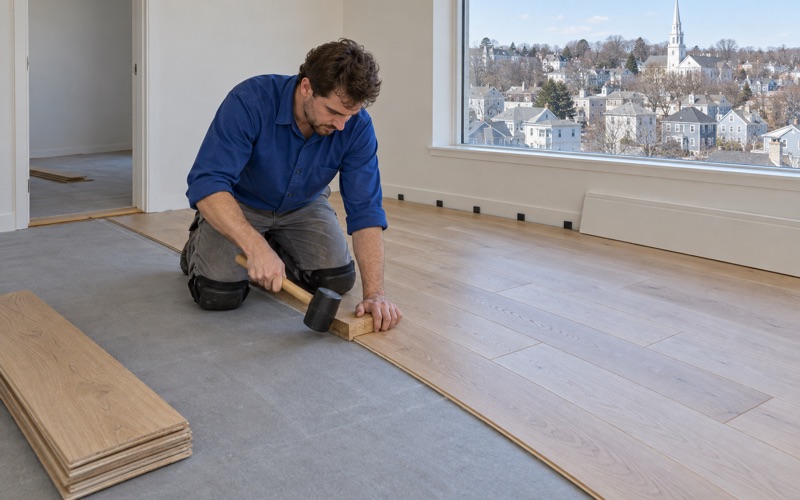
Many owners of units built in the last decade or two want something better than what the builder put down. That might mean replacing a laminate or vinyl floor with solid hardwood or engineered oak, refinishing an existing wood floor to a new color, or matching new stair treads to the living room.
Choosing a Species and Construction
Over a concrete deck or radiant heat, engineered flooring is usually the more stable choice, because its cross-ply core moves less than solid boards as humidity swings. Over a wood subfloor, solid red oak, white oak or maple all work, and rift and quartersawn white oak holds its shape well. Janka hardness helps compare how each species handles dents.
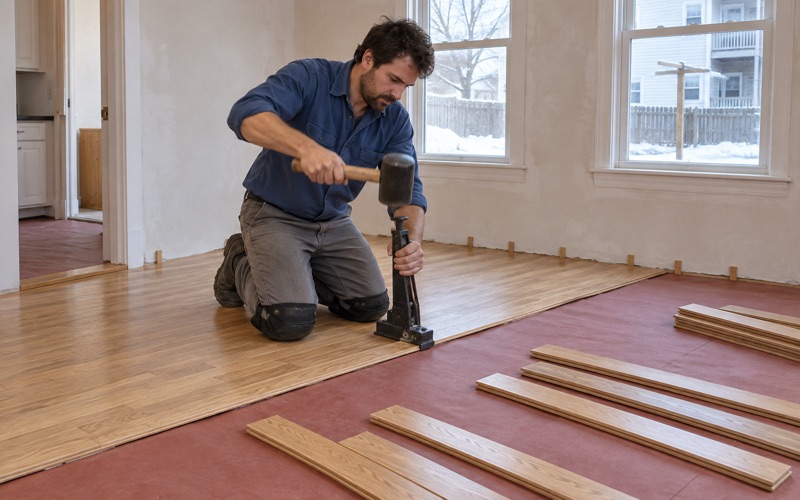
We follow the NWFA Installation Guidelines on acclimation, expansion gap and vapor retarder, and we test moisture in both the subfloor and the new boards before installing. Where the association calls for a specific underlayment, we use it and keep the product sheet for your records, since boards often move with the unit when it sells.
Refinishing Instead of Replacing
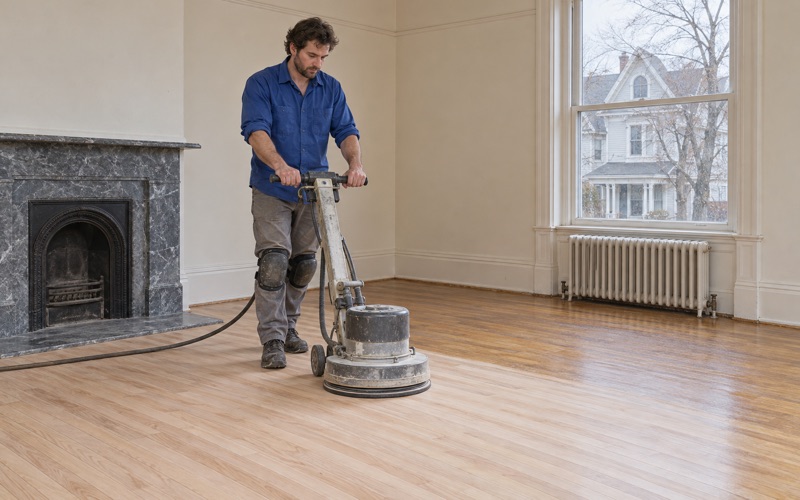
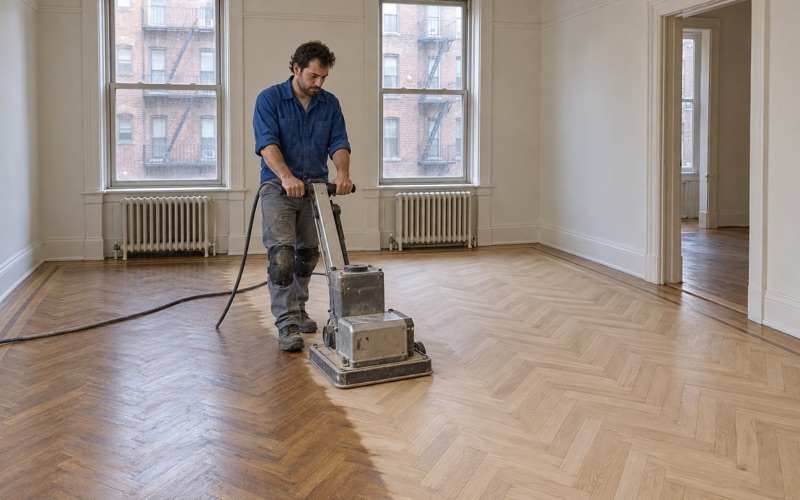
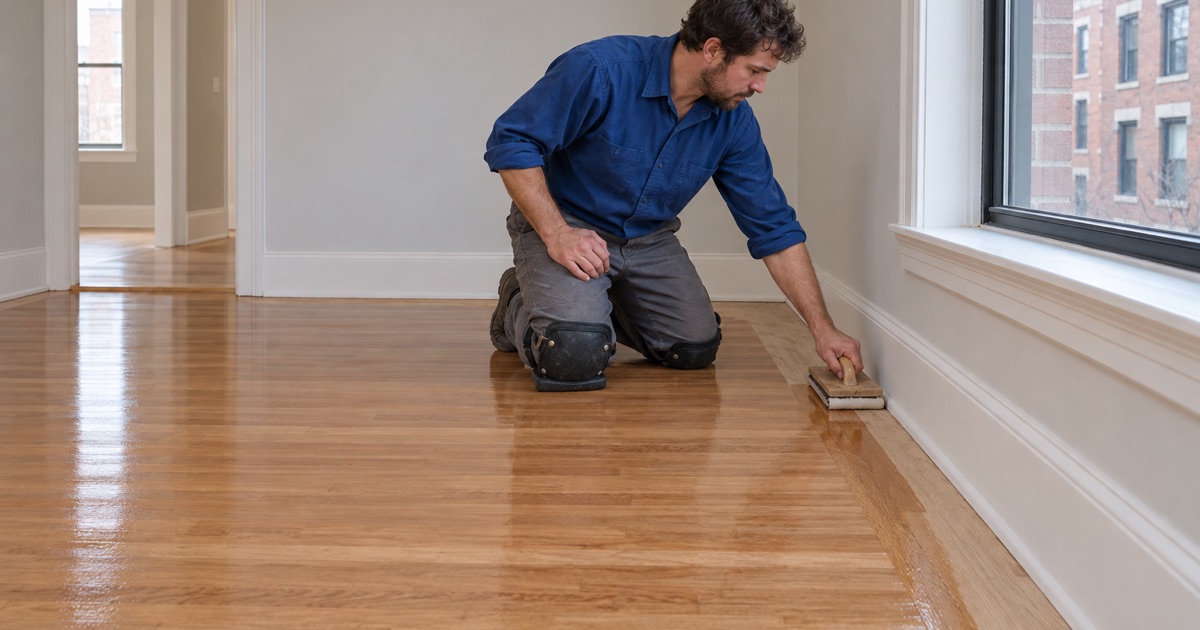
If the existing floor is solid or has a thick enough wear layer, sanding and refinishing can change the color and sheen level without tearing anything out. We work with dustless sanding and HEPA vacuums, which matters in a building where hallway air is shared, and we lay out stain samples on your own boards first.
For finishes, we choose waterborne polyurethane or hardwax oil that meets the Massachusetts VOC limits for wood coatings under 310 CMR 7.25, which are tighter than the federal standard. Those products carry less odor into neighboring units and dry faster between coats, which helps when an owner needs to be back in the unit quickly.
Stairs, Trim and Transitions
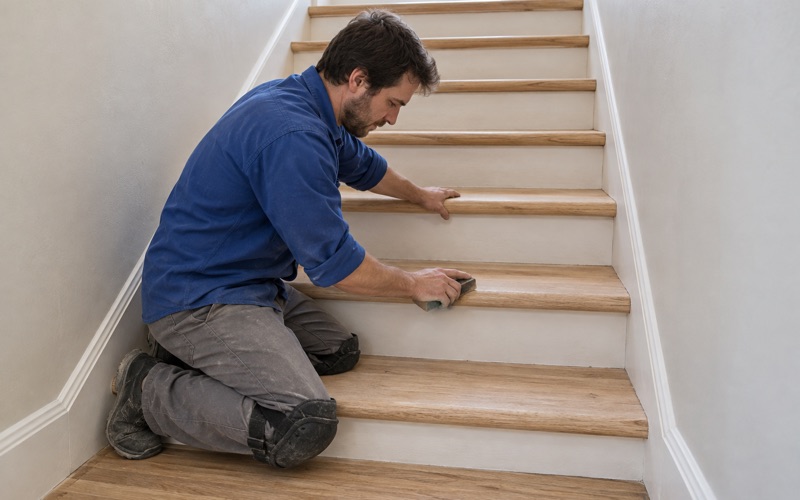
Two-level condos and townhouse-style units bring stairs into the project. We price stairs by the tread and riser rather than folding them into a square-foot rate, since each step takes its own sanding, nosing work and finish coats. Quarter round and baseboard are removed and reset or replaced so the new floor meets the walls cleanly.
Stair nosing, reducers and thresholds are where a new floor most often looks unfinished if they are rushed. We match profiles and finish them with the floor, so the step from new boards to tile in a kitchen or bath reads as planned rather than patched, and nothing catches a sock or a vacuum.
Planning a Floor Project in East Boston
Not every East Boston home is new. Census estimates put 10,217 of the ZIP code’s 19,193 units, about 53.2 percent, in buildings from 1939 or earlier, so plenty of our work still happens in older houses with very different floors. East Boston is a neighborhood of the City of Boston, and building matters run through Boston’s Inspectional Services Department.
Older Houses Down the Street
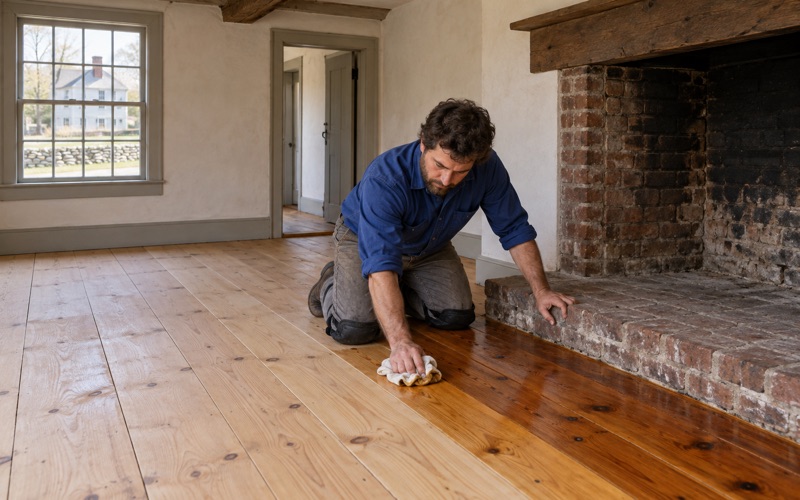
In an older house, we check the build year and any painted surfaces before sanding, because the Massachusetts Lead Law sets the state’s own lead-safe renovation rules for homes built before 1978. Old pine and early oak get a board count and a thickness check first, since boards sanded several times already have less wood left.
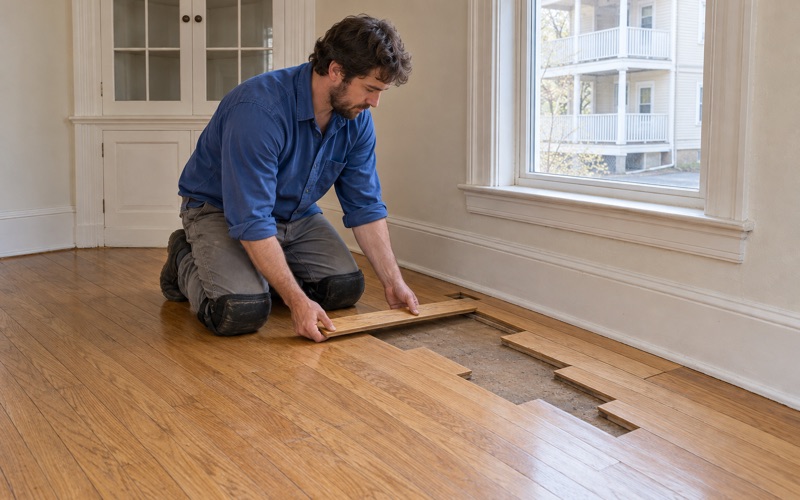
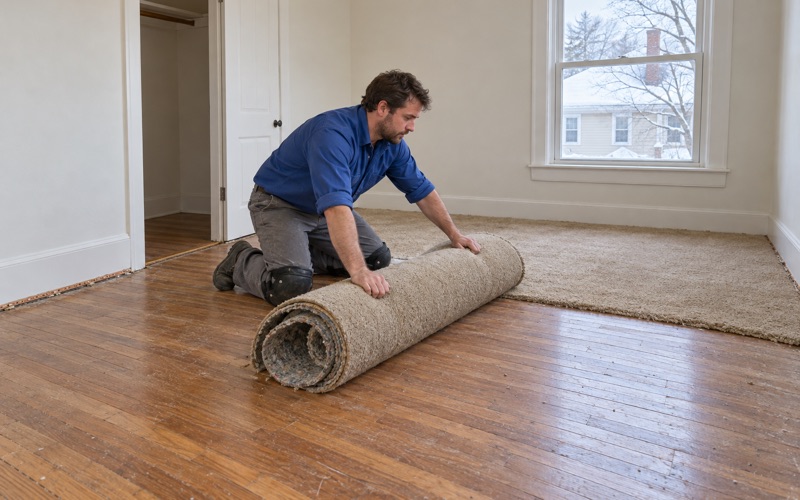
Floors found under carpet, linoleum or paint are cleaned of carpet pad, staples, tack strip and adhesive before any sanding. Where a steam radiator or old pipe came out, we weave matching boards into the floor rather than filling the hole. In owner-occupied two-families, we can work one floor at a time while the household stays put.
Moisture, Weather and Timing
East Boston falls in National Weather Service forecast zone MAZ015, Suffolk, and sits on the harbor, where humid summers and dry heated winters both show up in wood floors. We read moisture in the subfloor and the boards before installing, and we plan finishing work for conditions that let coatings dry properly.
In a lower-level unit, we treat any floor below grade with extra care, testing the concrete and using a vapor retarder suited to the product. A floor installed over concrete that was never tested can cup or buckle within a season, and the test costs far less than tearing out and replacing the floor.
What to Have Ready
Before we visit, it helps to know the unit’s build year, whether you own or rent, and whether the building has a condominium association or a property manager with flooring rules. Photos of damaged areas and any insurance claim number speed things up. From there we measure, test, explain the options, and give you a written quote.
Timing depends on the job. A screen and recoat is short, while a full sanding with stain or a new installation takes longer because of acclimation and drying between coats. We tell you how long the finish needs before furniture goes back, and we leave the floor clean and ready to live on.
- 20+ Years on Wood Floors
- Free Written Estimates
- Stairs Priced Per Tread