Malden Wood Flooring has spent more than 20 years on wood-flooring in Chelsea and across the cities near our Malden shop, and much of that work happens in houses older than their owners’ grandparents. We refinish, repair and replace solid hardwood and old softwood floors, rebuild worn stairs, and plan every job around the age of the house before a sander comes off the truck.
In an older home the floor is rarely the only question. Painted baseboards, a stair stringer coated many times over, a window stool shedding chips onto the boards below: all of it sits within a few feet of where we sand. So we check the build year and every painted surface first, because Massachusetts runs its own lead-safe renovation rules for homes built before 1978, and that answer shapes how we contain the room.
This page covers the work we see most often in Chelsea’s older one-to-four-family houses, especially where young children live or visit, and how a floor project can fit alongside the city’s own lead hazard program instead of getting in its way.
Floor Work in Chelsea Houses Built Before 1978
Chelsea’s housing is old in a way few cities match. According to the Census Bureau’s 2024 five-year American Community Survey, 68.9 percent of the city’s housing units were built before 1980, and nearly half predate 1940. In a city of 2.21 square miles, the smallest in Massachusetts by land area, that is a lot of original floor packed close together.
Original Pine and Early Oak Under Later Coverings
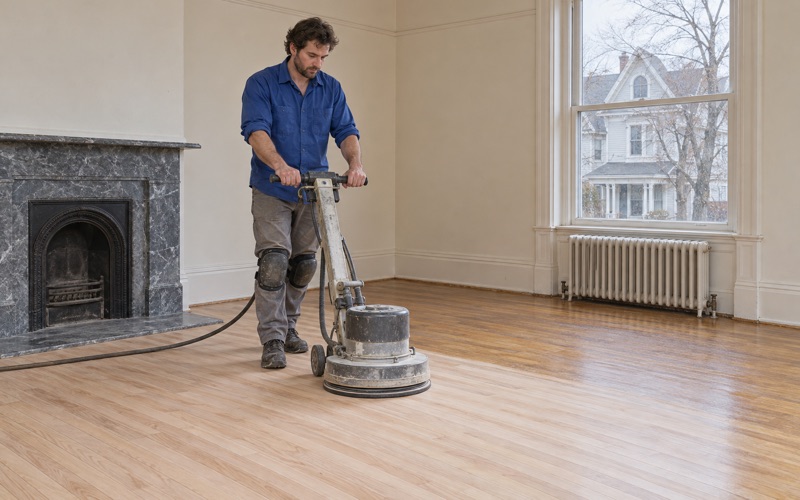
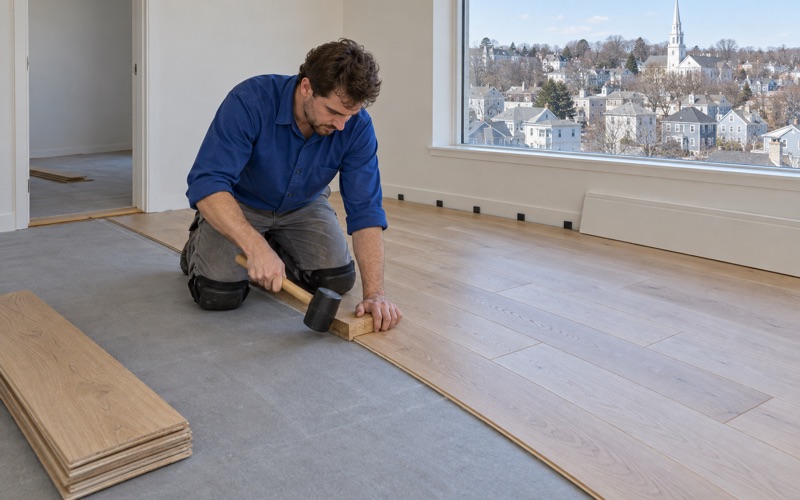
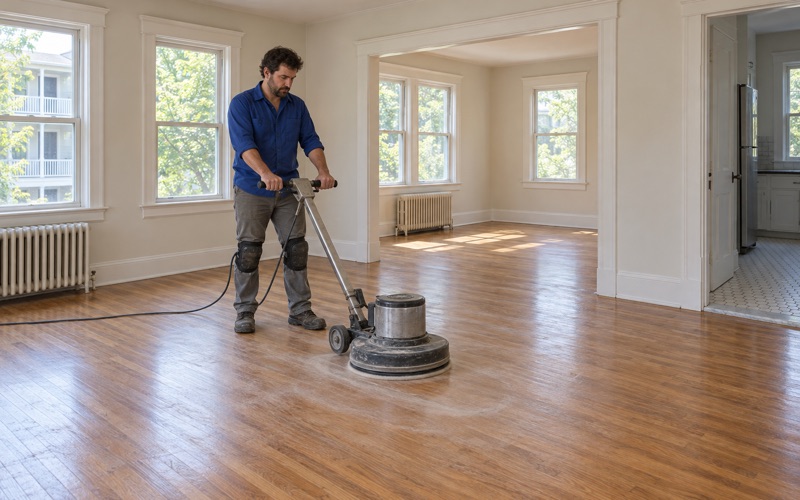
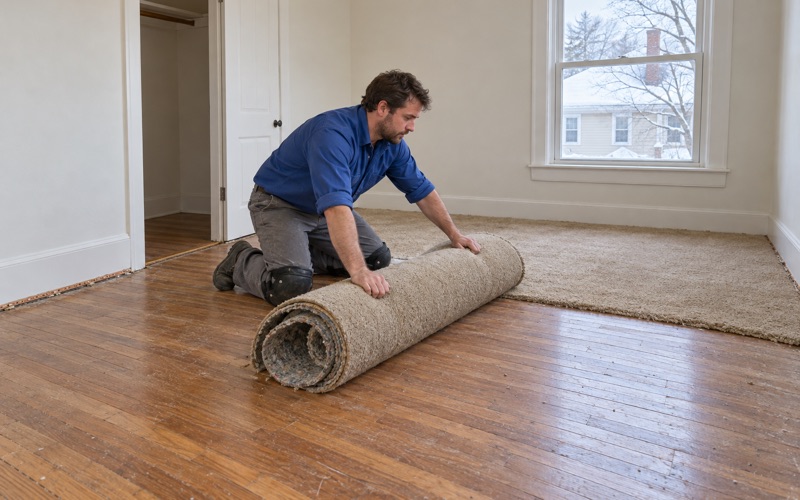
Most older Chelsea houses we open up have eastern white pine or early red oak under one or two later layers. Carpet pad stapled to the boards, tack strip nailed along the walls, linoleum glued down in a kitchen, sometimes black mastic from an old tile floor. We clean all of that off, pulling staples and scraping adhesive, before a single pass with the drum sander.
Black mastic from that era can contain asbestos, so we stop and have it identified before anyone scrapes or sands it. Paint splashed onto the boards along a baseboard or doorway gets the same pause. Uncovering a floor is where an older house tells us what it is made of, and we would rather learn that with a scraper than with a sander.
How Much Wood Is Left
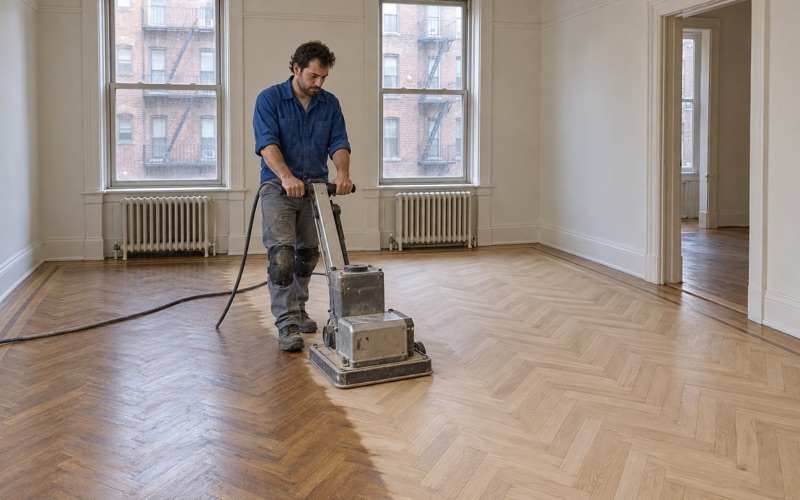
Old-growth pine and early oak are often thinner above the tongue than a modern floor, and decades of sandings take more off each time. We check the board count at a floor register or threshold, measure what remains above the tongue and groove, and look for exposed cut nails that signal a floor already sanded close to its limit.
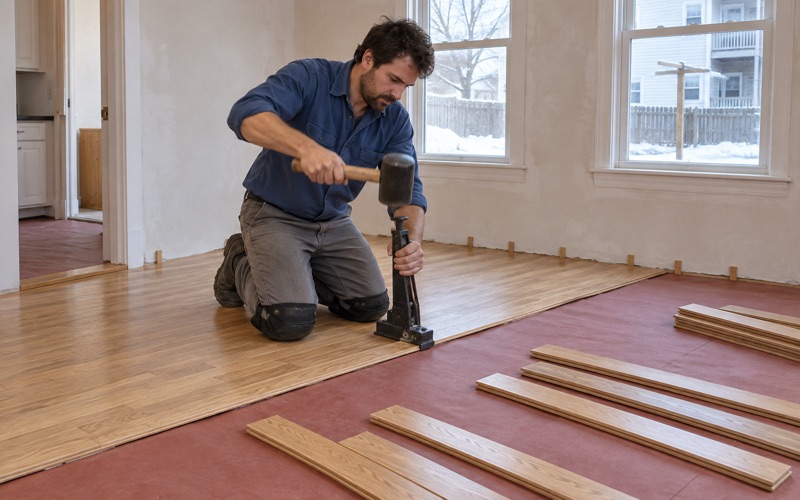
When there is room, a full refinish with a careful grit sequence brings the grain back. When there is not, a screen and recoat, a targeted board replacement or a weave-in repair keeps the floor in service without taking the last of its wood. We would rather tell you that before quoting a sanding than after the machine has made the decision for us.
Radiator Holes, Patches and Winter Gaps
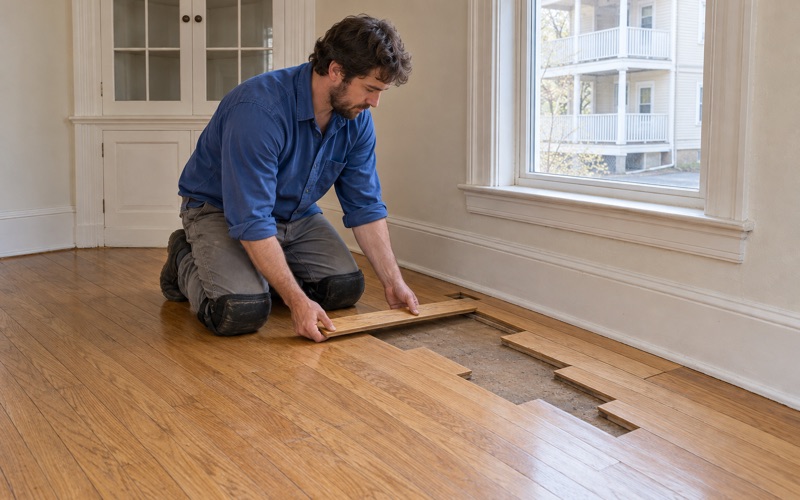
Steam radiators and their pipes were standard in houses of this age, and many have since been moved or taken out. The holes they leave behind, along with old plywood patches and mismatched strips, are something we fix by weaving in matching boards so the repair runs with the grain instead of sitting on top of it as filler.
Radiator heat also opens winter gaps between boards as the house dries out in January. Those gaps usually close again by summer, and we explain which ones are seasonal before anyone reaches for wood filler. Filling a seasonal gap tends to cause crowning or buckling once the boards swell back in humid weather.
Looking for wood-flooring closer to Medford? See Wood-Flooring in Medford.
Lead Paint, Dust and Sanding With Young Children at Home
Floor sanding makes fine dust, and in a house built before 1978 some of what that dust lands on, or comes from, may be lead paint. Where a toddler crawls across the floor and puts hands in the mouth, how that dust is controlled matters as much as how the floor looks when we leave.
Checking Painted Surfaces First
Before we quote, we note the build year and look at every painted surface the job will touch: baseboards, shoe molding, quarter round, door casings, stair risers and any boards that were painted over. The Massachusetts Lead Law and the state’s own renovation rules apply to pre-1978 homes, and they shape how a room is prepared, worked in and cleaned.
Painted boards are a different job from varnished ones. Sanding through old floor paint is exactly the kind of work that needs a containment plan, and sometimes the better answer is replacing a painted section rather than sanding it. We talk that through with you, room by room, before any work goes on the calendar.
Containment and Cleanup in an Occupied House
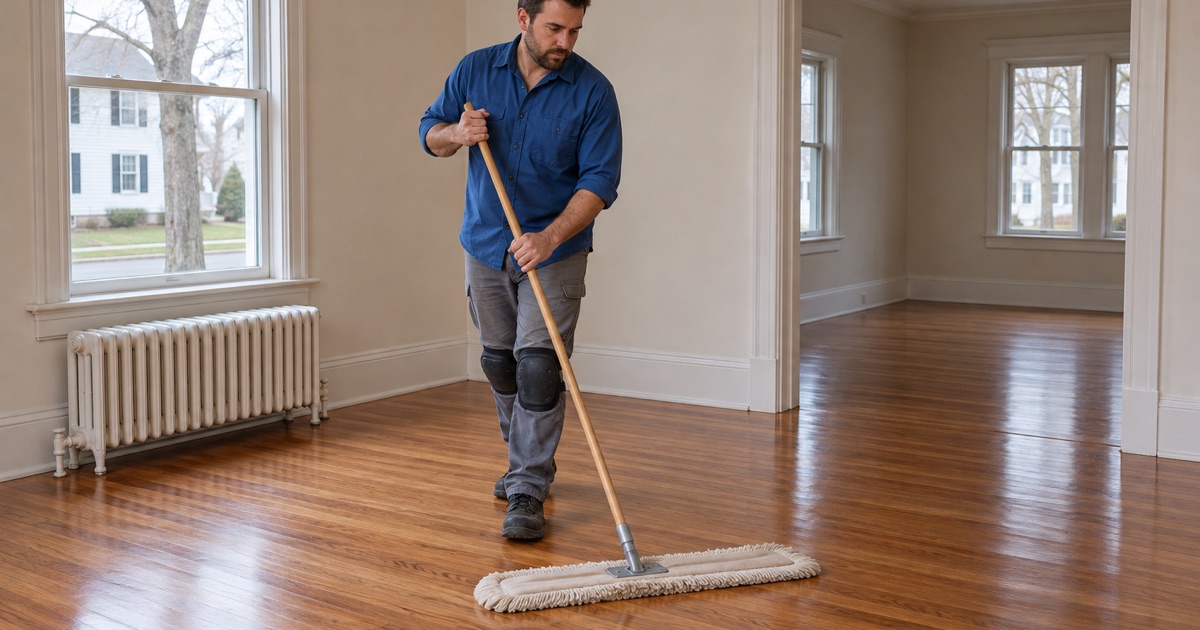
We use dustless sanding equipment connected to HEPA vacuums and seal off doorways and vents in the rooms we work in. Between coats and at the end of the job, floors, sills and nearby surfaces are HEPA vacuumed and wiped rather than swept, because sweeping lifts fine dust back into the air your family breathes.
If an independent clearance test is part of your plan, whether for a city program or your own peace of mind, we schedule so the tester sees the room after our final cleaning and before furniture comes back. We do not promise a test result. What we do is make sure the room is ready to be tested and nothing is carried back in on top of it.
Keeping Children Out of the Work Area
With a child under six at home, we plan the order of rooms so bedrooms and play space come back into use first, and the work area stays closed until cleanup is done. In an owner-occupied two-family, we schedule one floor at a time so the household keeps a clean, usable home upstairs or downstairs while the other floor is worked.
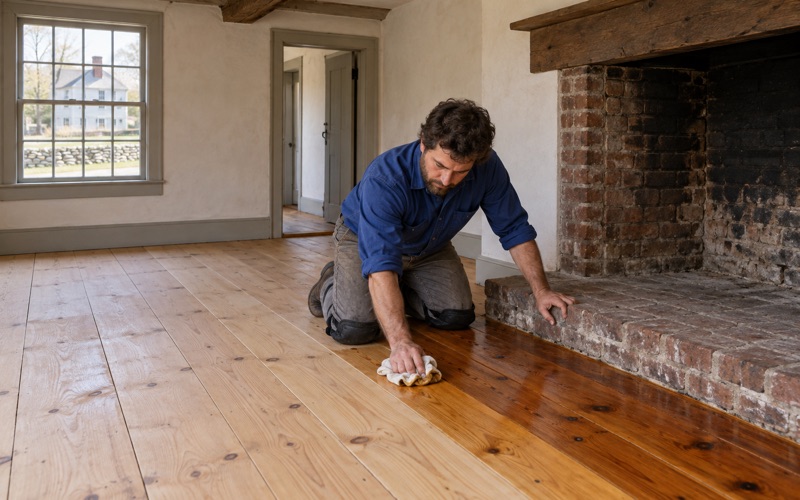
Finish choice matters here too. Waterborne polyurethane cures with less odor and fits the Massachusetts VOC limits for wood coatings, which are stricter than the federal ones. Oil-modified polyurethane and hardwax oil remain options, and we lay out the cure time and ventilation each one needs so you can decide when the kids come back into the room.
Stairs, Trip Hazards and Worn Floors
In older houses the stairs and thresholds usually wear out before the rest of the floor. For a family with small children or an older relative, a loose tread or a lifted board edge is a practical safety problem, and trip hazards are one of the categories Chelsea’s healthy-homes work names alongside moisture, mold and pest exclusion.
Treads, Risers and Nosing
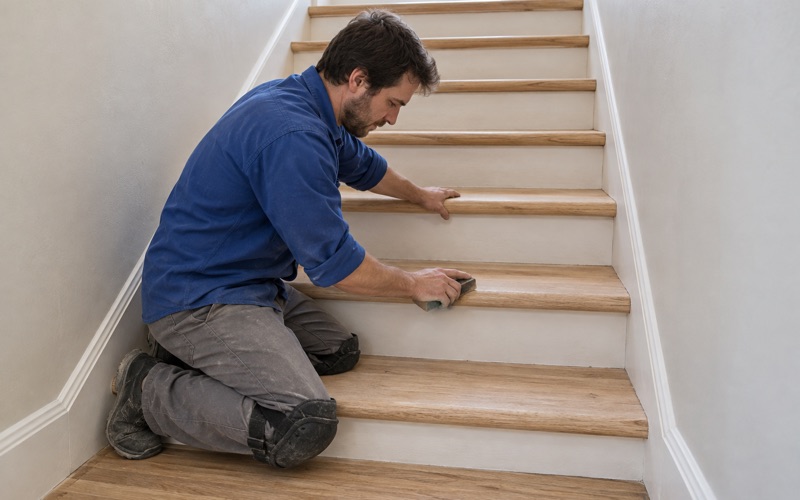
We quote stairs by the tread and riser rather than folding them into a square-foot price, because each stair is its own piece of work. A worn tread may need sanding, a split one replacement, a loose stair nosing re-fastening, and a painted riser its own lead-safe approach before anything else happens on that flight.
On many older staircases the treads are original and the risers have been painted again and again. We can refinish the treads, replace damaged ones in a matching species, and either leave painted risers alone or handle them as a separate step, depending on their condition and how you want the finished stair to look.
Lifted Boards, Reducers and Thresholds
Trip points in older homes collect at doorways and transitions: a threshold worn into a dip, a reducer that has come loose where two floors meet, a board edge lifted by cupping after a leak. We re-fasten, replace or re-level these pieces so the transition sits flush and a small foot or a slipper has nothing to catch on.
Loose floorboards often trace back to failed cut nails or face nailing that has worked out over the decades. We re-secure them from above where possible, or replace them with new boards fastened with flooring cleats, and we check the subfloor underneath while the board is up so the same spot does not loosen again.
Moisture, Stains and Pests Under the Surface
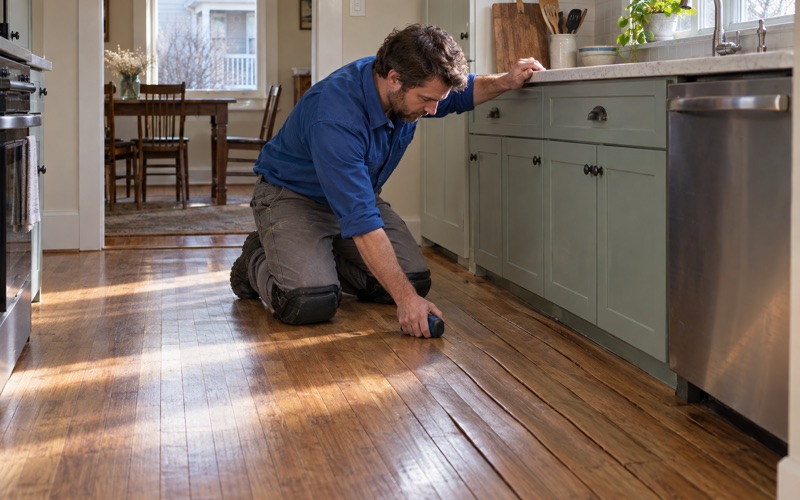
Moisture shows up on floors before it shows up anywhere else. A leak from a radiator valve, a bathroom above or a wet lower level can cause cupping, gray water stains and soft spots. We trace where the water came from, dry the area and read it with a moisture meter before any board is replaced, so new wood does not fail for the same reason.
Pet urine stains, dark water stains and damage from powderpost beetle or carpenter ants often turn up once a carpet comes out. We tell you which boards can be sanded clean and which need replacement, and if a leak led to an insurance claim, we document the damaged floors room by room for the adjuster.
Floor Projects Alongside Chelsea’s Lead-Safe Program
Chelsea has put federal money behind making older homes lead-safe. The city’s Department of Housing and Community Development runs a Lead Hazard Control and Healthy Homes Program funded by more than $2 million from HUD, and it is aimed squarely at the kind of house and household this page describes.
What the Program Offers
According to the city, the program grants up to $15,000 per unit for lead hazard control and up to $19,000 per unit for healthy-homes repairs. It covers privately owned one-to-four-family houses in Chelsea built before 1978 that are not federally assisted. Eligible lead work includes lead inspections, window and door replacement, paint stabilization, component replacement and clearance testing.
Owner-occupants qualify at or below 80 percent of Area Median Income with a child under six living in the home or regularly visiting it. Affordable rental properties can also qualify, and a 15-year affordable housing restriction applies to grant recipients. Applications go to Room 101 at City Hall, 500 Broadway, and Chelsea 3-1-1 at 617-466-4209 can point you to the right office.
Where Floor Work Fits
Floors and stairs are not named on the program’s list of eligible work, and we are not part of the program. What we can do is plan around it. If your home is getting lead hazard work, it usually makes sense to let window replacement and paint stabilization finish first, then bring the floors back once that work and its testing are complete.
Sequencing it this way means the floors are not sanded, finished and then walked on by other trades carrying debris. It also means your family moves back into rooms that have been made lead-safe and refinished together, rather than living through two separate disruptions months apart.
Planning the Rest of the Job
Low- and moderate-income owners of one-to-four-unit buildings may also look at the city’s CDBG Housing Rehabilitation Program, which offers deferred-payment loans for work addressing code compliance and health and safety violations. Whether any of that reaches floors is a question for the city, and we are glad to provide a written scope you can bring to that conversation.
For any Chelsea floor project, we start with a visit: the build year, the painted surfaces, the species and thickness of the floor, the stairs and any moisture history. Then you get a written quote that separates floor area, stairs and repairs, with a schedule that keeps the household, and any young children, clear of the work.
- 20+ Years on Wood Floors
- Free Written Estimates
- Stairs Priced Per Tread