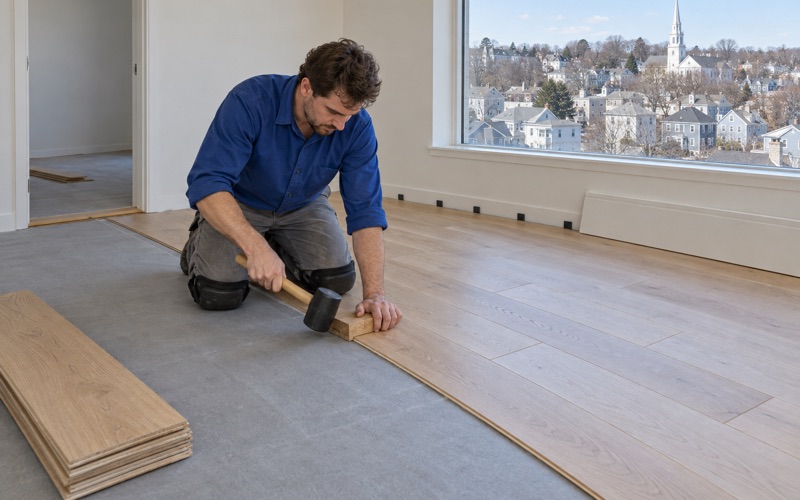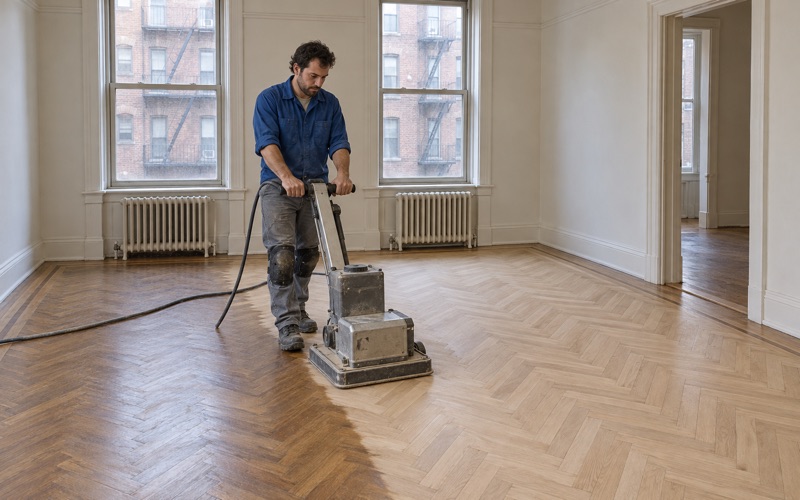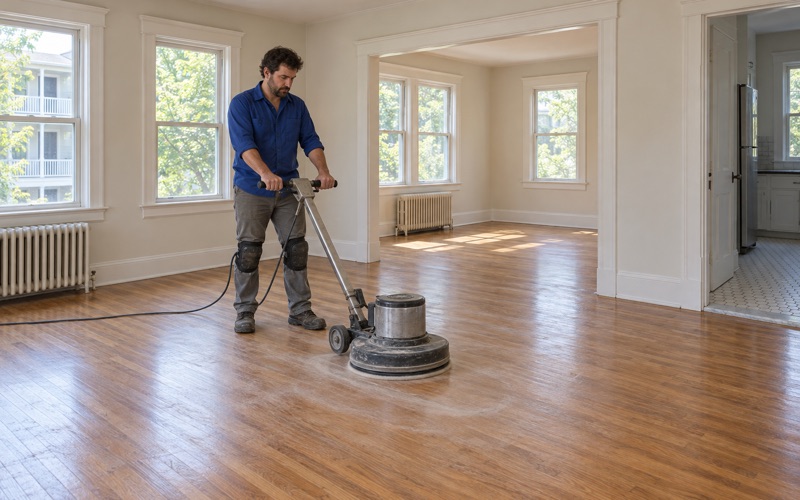
Malden Wood Flooring brings more than 20 years of experience to wood-flooring in Charlestown, and much of our work here happens one unit at a time inside larger buildings. We sand, refinish, repair and install solid hardwood and engineered floors in condominiums, apartments and houses, and we plan each job around the building it sits in.
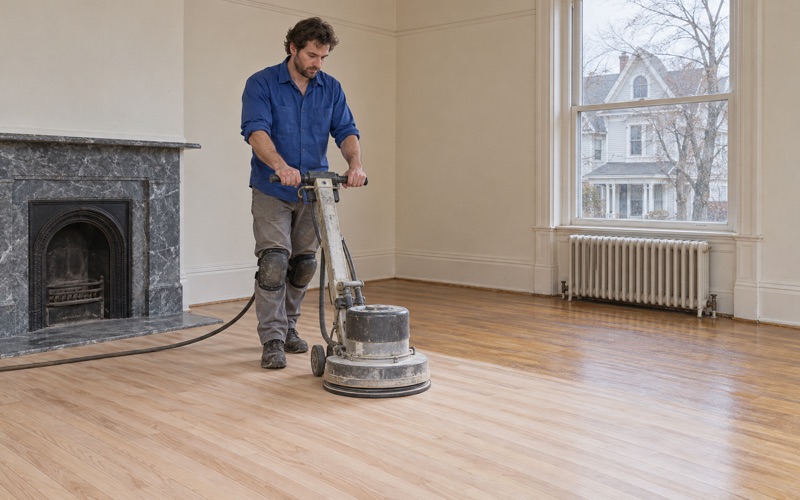
A condo floor in a big building is a different job from a floor in a detached house. Elevators, loading times, neighbors on the other side of a wall and a shared hallway all shape the schedule, so we settle those details with you before a drum sander comes through the door.
Before any quote, we look at what is actually under your feet: the species, whether it is solid or engineered, how much wear layer remains and what finish is on it now. That inspection decides whether a screen and recoat, a full sanding or board replacement is the honest answer.
Floors in Charlestown’s Navy Yard Condominiums
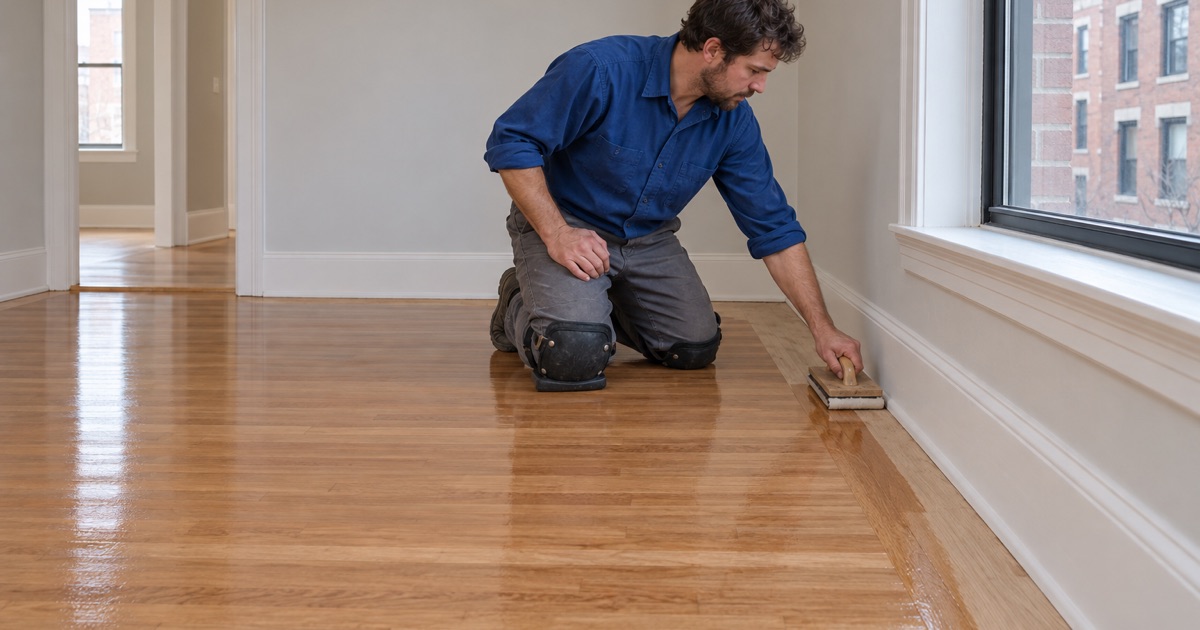
A large share of Charlestown’s newer housing sits inside a former navy base. The Charlestown Navy Yard was formally deactivated on July 1, 1974, and in May 1979 the Boston Redevelopment Authority took title to the site. What followed was a long conversion of naval buildings into homes, alongside new construction on the same ground.
From Naval Buildings to Homes
By the mid-1990s, the redevelopment had created 990 residences, and those homes were largely condominiums. Building 42, known as Constitution Quarters, was the first adaptive-reuse project in the former yard; in 2004 it was converted to condominiums and renamed Parris Landing. The Architects Collaborative renovated Shipyard Quarters, an eleven-story industrial building, in 1990.
The conversions kept coming well past that first wave. The Ropewalk’s conversion to an apartment building was completed in 2021, and the Harborview apartment building opened after 11 years of development. The result is a neighborhood where a unit’s floor may date from 1990, 2004 or the last few years, in a building that was never designed as housing.
What We Check Before Quoting a Converted Unit
None of the sources we have read describe the floor systems inside these buildings, and we do not guess at them. Each unit gets its own look: whether the floor is solid hardwood or engineered, whether it was prefinished or site-finished, and what sits beneath it. A floor laid during one conversion may have nothing in common with the unit next door.
On an engineered floor, we measure the wear layer before we promise a sanding, because a thin top layer may only take a screen and recoat. On solid hardwood, we check board thickness and how close the sanding would come to the tongue and groove. If the numbers say sanding is off the table, we tell you up front.
Unit-by-Unit Work in Converted Industrial Buildings
Converted industrial buildings tend to share walls, corridors and elevators among many households. We plan the job so dust stays inside your unit, running dustless sanding with HEPA vacuum extraction and keeping tools and materials staged inside the unit instead of in common areas.
Scheduling works the same way. We ask about any building procedures for contractors, elevator reservations and working hours before we book, then set the grit sequence, drying time and coat count around those windows. Those procedures come from your building, not from us, so we work to whatever your management hands us.
Looking for wood-flooring closer to East Boston? See Wood-Flooring in East Boston.
Working Inside a National Historic Landmark District
The Navy Yard is a U.S. National Historic Landmark District and part of Boston National Historical Park. That status concerns the yard as a historic place. We do not treat it as a set of rules for the inside of your unit, and we will not tell you a federal agency or commission has reviewed your floor.
Knowing Who Answers Which Question
Charlestown has been part of the City of Boston since it was annexed on January 5, 1874, and it sits in Suffolk County. Building questions go to the City of Boston Inspectional Services Department, so if a project goes beyond refinishing, we check with ISD rather than assuming an answer.
For a condominium, your association’s documents, written under the state condominium law, M.G.L. c.183A, are the place to look for anything that touches flooring work. We ask you to check them before we schedule, and we plan around whatever they say rather than guessing.
Lead-Safe Checks and Finish Choices
Building age matters here. In ZIP 02129, 5,080 of 10,107 housing units were built in 1939 or earlier, according to the Census Bureau’s 2024 five-year estimates. Massachusetts runs its own lead-safe renovation rules for homes built before 1978, so we confirm the build year and look for painted surfaces, such as trim and thresholds, before sanding begins.
Finish choice follows state rules too. Massachusetts limits volatile organic compounds in wood coatings under 310 CMR 7.25, and those limits are stricter than the federal ones. We choose a waterborne polyurethane, oil-modified polyurethane or hardwax oil that fits, and we lay out stain samples and sheen levels in your own light before the first coat.
Charlestown’s Large Buildings and Their Units
Large buildings are a real part of Charlestown’s housing mix, not only inside the Navy Yard. Census figures for ZIP 02129, used here as a proxy for the neighborhood, count 2,561 of 10,107 housing units, or 25.3 percent, in buildings of fifty or more units. Among renter households, 1,634 of 4,752, or 34.4 percent, live in buildings that size.
Ownership is close to an even split. The Boston Planning Department’s 2025 figures show 52.0 percent of Charlestown’s occupied homes are owner-occupied, so a floor job here may be for an owner living in the unit or for a landlord between tenants.
Water From Above
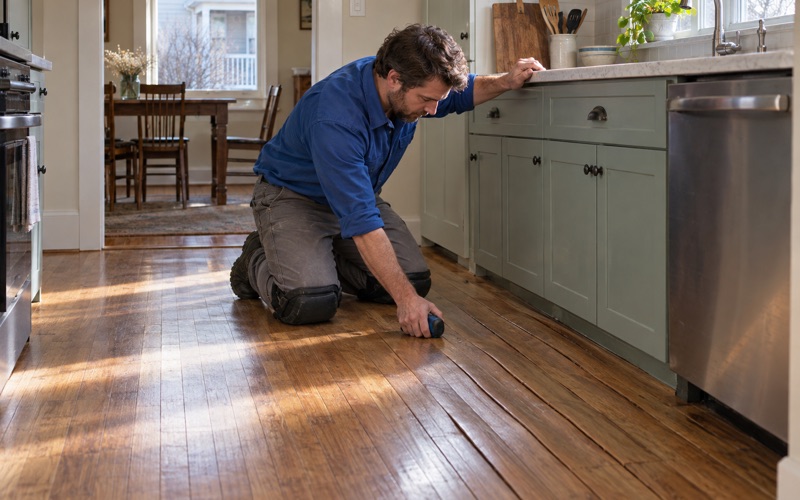
Stacked units bring a problem a detached house rarely has: water from a leak upstairs. When a floor shows cupping, crowning or water stains, we trace the source, dry the area and read the boards with a moisture meter before anything is replaced. Pulling boards while they are still wet only moves the problem somewhere else.
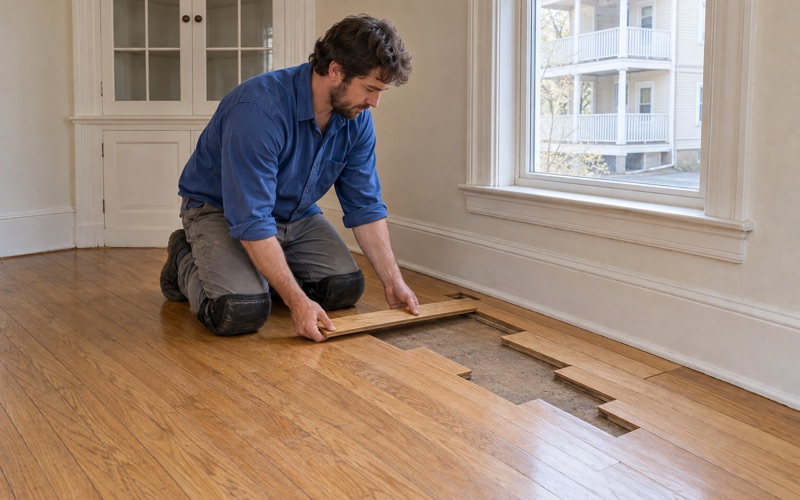
If an insurance claim is involved, we document the damage room by room for the adjuster, with moisture readings and photos. Once the floor is dry, we replace the damaged boards and weave the new ones into the existing layout, so the board replacement does not read as a patch.
Rental Units Between Tenants
Boston requires annual rental registration and a five-year rental inspection, with owner-occupied buildings of six or fewer units exempt from the inspection. For landlords, the vacant stretch between tenants is the time to deal with traffic lanes, pet urine stains and worn finish, and we plan our work to fit inside that window.
A screen and recoat can often refresh a rental unit’s floor on a short turnaround, while deeper wear or stains call for a full sanding. We tell you which one the floor needs after we see it, not before, and we give you a finish date you can plan a move-in around.
Winter Gaps and Seasonal Movement
Charlestown sits in the National Weather Service’s Suffolk forecast zone, MAZ015. Winter heat dries a wood floor and summer humidity swells it, so board gapping in winter is often normal movement. We check whether winter gaps close again in summer before calling anything a defect.
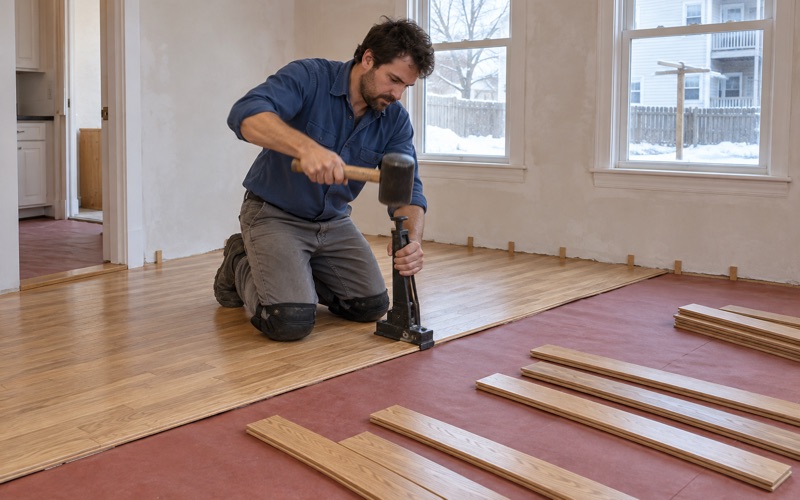
New floors get the same attention. We let boards reach acclimation before installing, leave the expansion gap at the walls, and follow the NWFA Installation Guidelines, which matters most where radiant heat or a below-grade space can change the moisture picture.
Planning a Floor Project in Charlestown
Most projects start with a visit. We look at the floor, measure what needs measuring and talk through the building’s logistics before we price anything, so the quote reflects the real job.
What the Quote Covers
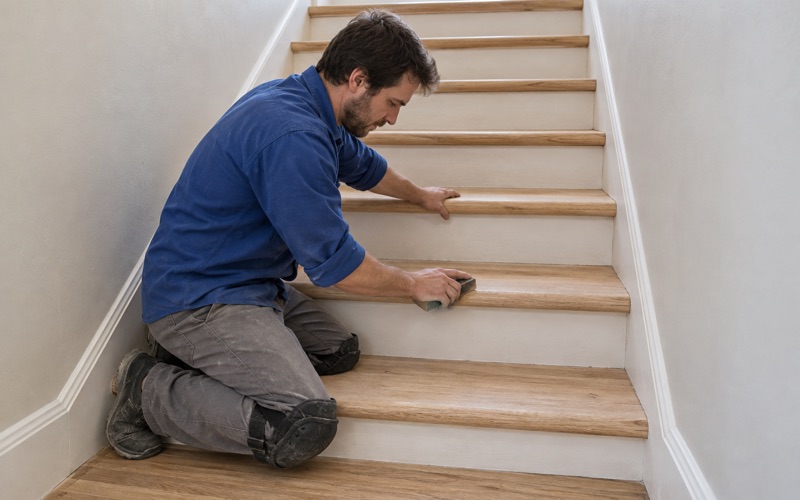
Quotes are written by the room and by the task. Stairs are priced by the tread and riser rather than folded into a square-foot number, and stair nosing, reducers, thresholds and quarter round are listed wherever they apply.
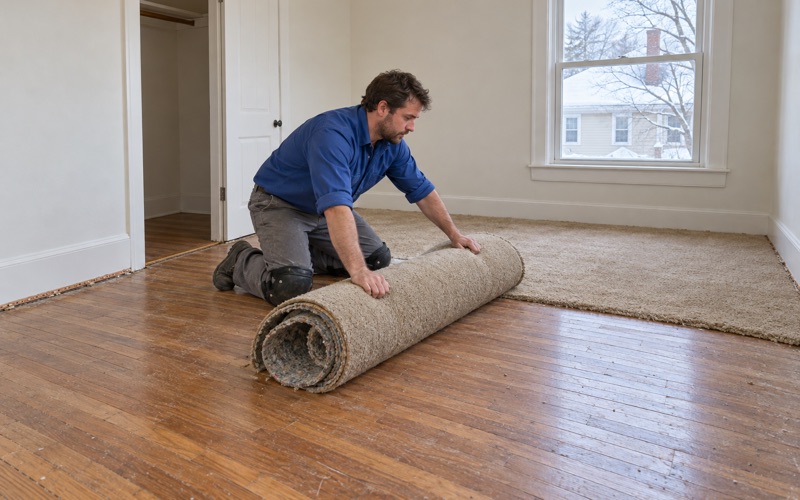
If carpet, linoleum or old adhesive covers a wood floor, the quote includes pulling the carpet pad, staples and tack strip and cleaning off any black mastic before sanding. Red oak or white oak sometimes turns up under those layers, and we tell you what we find before the sander starts.
Floors in Charlestown’s Older Houses
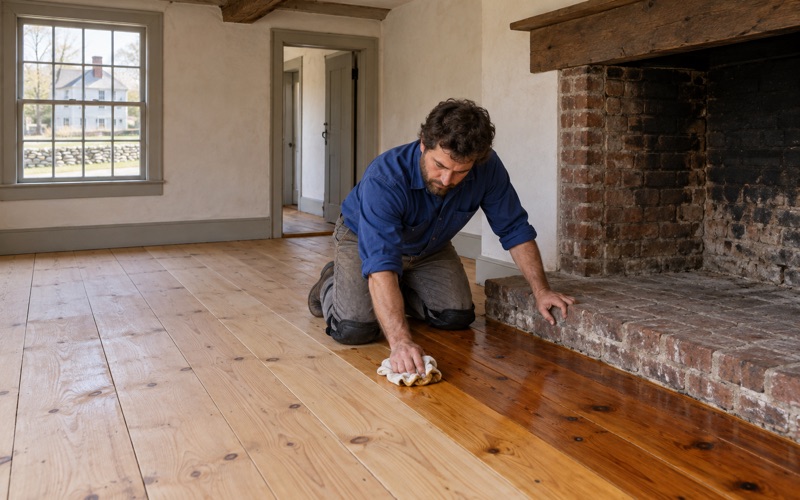
Not every Charlestown job is in a large building. Older houses can hold old pine and early oak floors that have been sanded several times already, so we count boards and check their thickness first, because old boards have less wood left to take.
Where old radiators or pipes came out, we patch the holes with matching boards woven into the floor instead of filling them. In an owner-occupied two-family, we can work one floor at a time so the household keeps living in the house while the other level is done.
Scheduling Around Your Household
Finish work means time off the floor. Waterborne finishes usually let you back on sooner than oil-modified ones, and we give you a day-by-day plan so you know when furniture can return and when rugs can go back down.
- 20+ Years on Wood Floors
- Free Written Estimates
- Stairs Priced Per Tread