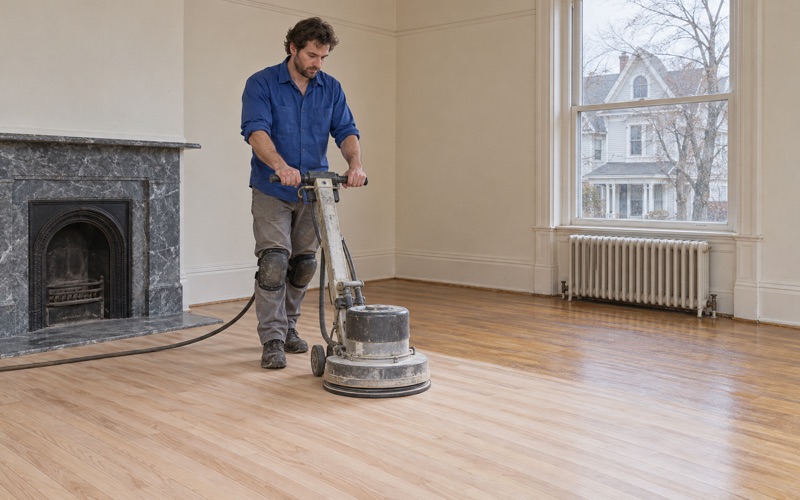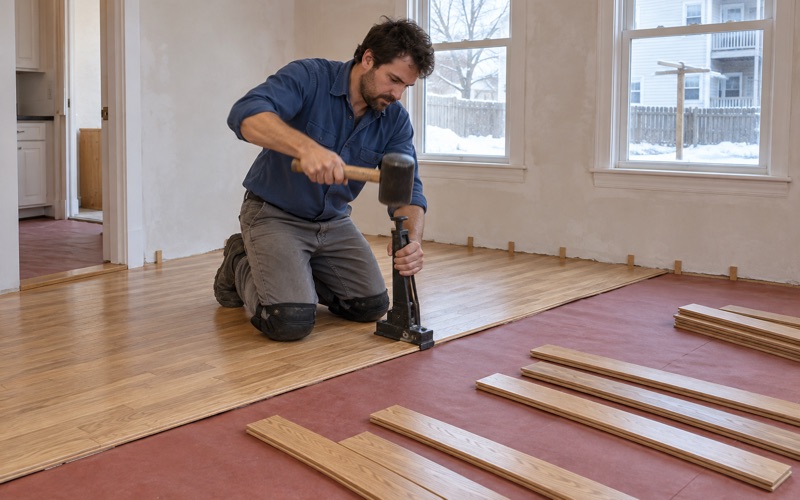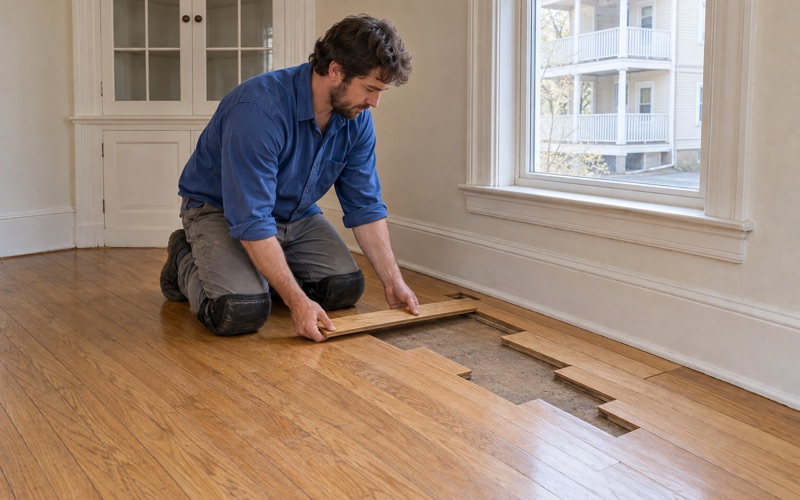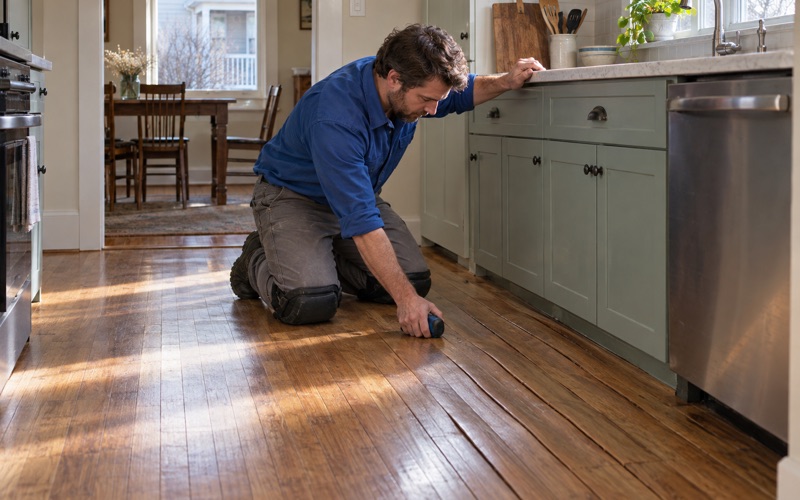
Malden Wood Flooring has spent more than 20 years on wood-flooring in Boston, sanding, repairing and refinishing solid hardwood, old pine and engineered floors for owners and landlords. Most of that work starts the same way: we look at the floor, the house and the paint before anyone talks about a sheen level or a stain color.
What sets a Boston job apart is less the wood than the way it gets paid for and prepared. The city runs a home repair loan that names flooring as a covered repair, and it runs a separate deleading loan for owners of older homes. Both change how an owner plans a floor project, and both reward a written scope that describes the work room by room.
This page covers what those programs say, how lead paint shapes a sanding job in an older house, and how we sequence refinishing, board replacement and stair work so a household can keep living at home. We do not run either program and cannot tell anyone how an application will turn out. What we can do is describe the floor work clearly enough to plan around.
Boston’s Home Repair Loans Cover Flooring
Flooring Is on the City’s List
The Boston Home Center runs a Home Repair and Improvement Program for owner-occupants, and its list of covered repairs includes flooring by name. The same list covers roof, gutter and masonry work, porches, steps and structural safety, door and window repair or replacement, and air-source heat pumps and HVAC upgrades. Floors sit on that list beside the repairs that keep a house sound, which says something about how the city treats them.
For a wood floor, that usually means the work an older house has been putting off. Think of traffic lanes worn through the finish, water stains around a steam radiator, boards that cupped or buckled after a leak, or a floor still buried under carpet pad and tack strip. Whether a given job fits the program is the city’s decision, not ours, so we describe the condition plainly and let the owner take it from there.
Who the Program Is Written For
Eligible owners, in the program’s own words, own and occupy a one- to four-family home or a condo. Household income has to be at or below 135 percent of Area Median Income, and the owner needs less than $100,000 in financial assets. Seniors 60 and older are exempt from that asset limit.
The owner-occupant rule matters in a city where most homes are rented. ACS figures put 101,166 of Boston’s 283,374 occupied units in owners’ hands, about 35.7 percent. Many of those owners live in two- and three-family houses with a tenant or relative on another floor, which shapes how a floor job gets scheduled.
How the Loan Is Structured
The program offers deferred, interest-free loans of up to $50,000, with no monthly payments. The loan comes due on sale, transfer or refinance, and one-third of the full loan amount is forgiven after 10 years of continuous owner-occupancy.
For a floor project, the practical point is that the scope deserves care up front. An owner weighing a full sand and refinish against a screen and recoat, or a patch against replacing a whole room, is choosing work that will be carried for years. Getting the square footage, the repairs and the finish right before any paperwork starts saves revising the plan later.
Looking for wood-flooring closer to Lynnfield? See Wood-Flooring Services in Lynnfield.
Lead Paint, Sanding Dust and Older Homes
A Citywide Build Era
Boston’s older housing is spread across the city rather than held in one pocket. The ACS 2024 five-year estimates count 224,691 of 310,625 housing units, 72.3 percent, as built before 1980. Of those, 145,114, or 46.7 percent of all units, were built in 1939 or earlier.
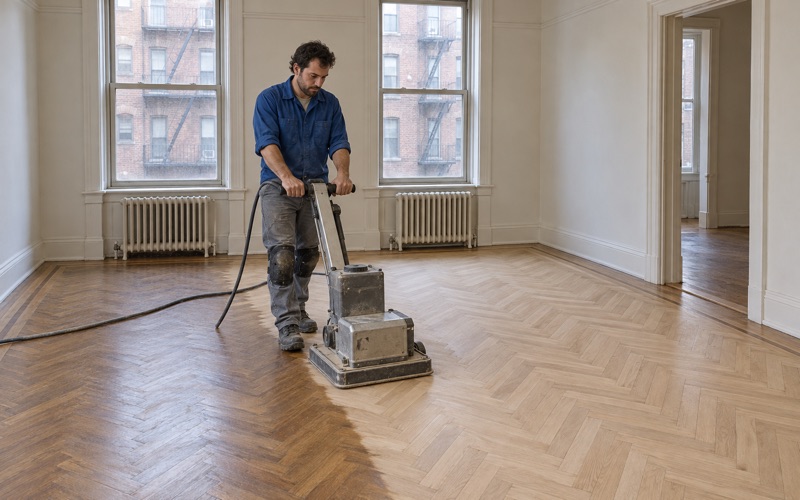
Houses of that age tend to carry the floors we see most often: red oak and white oak strip laid tongue and groove, some of it face nailed with cut nails, and pine in back rooms and upper floors. They also tend to carry decades of paint on baseboards, window trim, stair risers and sometimes on the floor itself.
Painted Surfaces and Sanding Dust
The Boston Public Health Commission says lead is most commonly found in the paint of homes built before 1978. It also notes that dust from damaged lead paint can get on surfaces and toys where a child can accidentally eat it. A drum sander run along a painted baseboard, or through a painted border on an old floor, is exactly the kind of work that turns paint into dust.
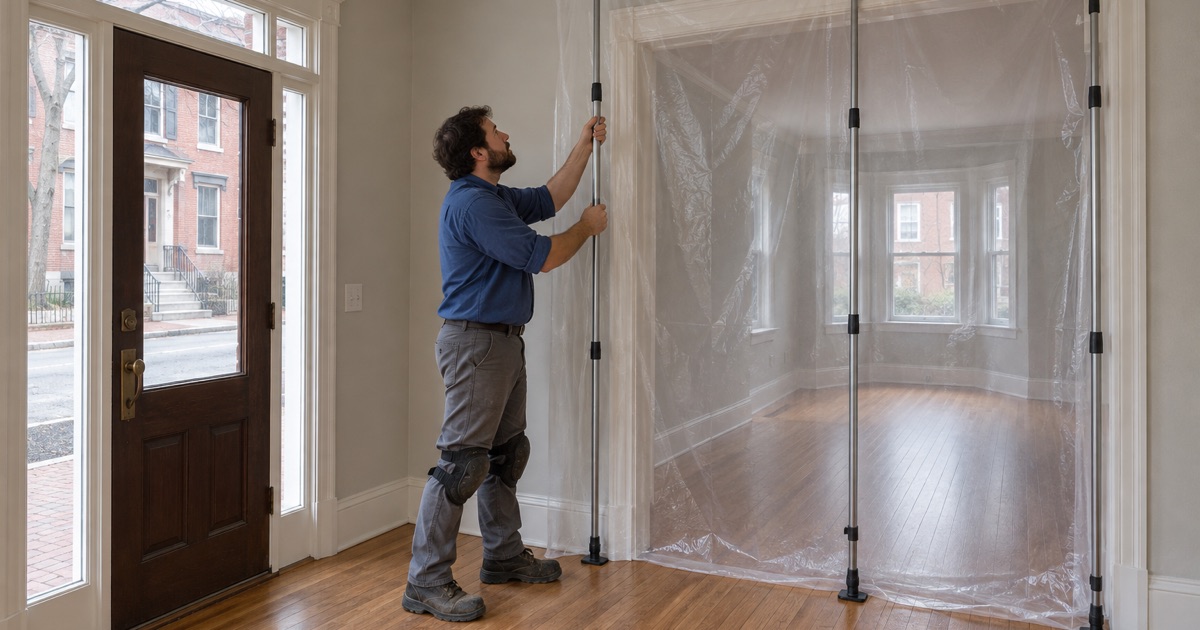
So before sanding starts, we check the house’s build year and look for painted surfaces on and around the floor, because Massachusetts runs its own lead-safe renovation rules for homes built before 1978. Paint found under carpet or on a stair riser changes the plan. We would rather learn that on the first visit than halfway through the grit sequence.
Lead Safe Boston for Owners and Landlords
Lead Safe Boston offers forgivable loans of up to $12,000 for each unit for lead paint removal. That figure includes a $10,000 per unit grant, which is repayable if the owner moves, sells, refinances or transfers within three years. Owner-occupants of one- to four-family homes with children age six or younger qualify under income limits set at 80 percent of the CDBG moderate income figures.
Investor owners can use the program too, but they must prioritize tenants with young children and meet tenant income rules. The BPHC separately offers home lead hazard inspections and lead hazard reduction services. For floor planning, the order is what matters to us: a new finish is best laid after the painted trim work is done, not scuffed and dusted by the next trade.
Planning a Floor Project Around a City Loan
A Scope That Reads Room by Room
A program that lists flooring still needs someone to say what the flooring work actually is. We write it up by room: square footage, species and grade, whether the boards will take another full sanding, where board replacement or a weave-in repair is needed, and which finish goes down.
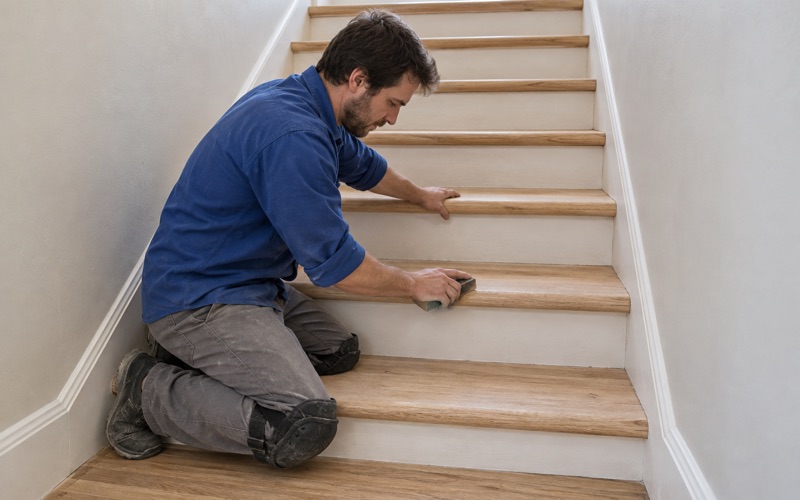
Stairs are quoted by the tread and riser, not folded into a square-foot price, because stair treads, stair risers and stair nosing each take their own time. An itemized quote is something an owner can keep with their own records and paperwork. It also keeps the conversation about the house instead of about a single lump sum.
Keeping a Two-Family Lived In
Owner-occupants who share the house with another household need the building to keep working during the job. We schedule an owner-occupied two-family one floor at a time, so the household upstairs or downstairs keeps living in the house while the other unit is sanded, finished and cured.
When a rented unit sits empty between tenants, that vacant stretch is the easiest time for sanding and refinishing. We plan the turnaround so the floor is dry and ready for furniture before the next move-in date, with thresholds, reducers and quarter round reset at the end.
Water Damage and Radiator Patches
Water from a leak upstairs, a steam radiator or a flooded lower level is traced, dried and read with a moisture meter before any board is replaced. If there is an insurance claim, we document the water-damaged floor room by room for the adjuster. That record keeps the insured damage separate from wear an owner may be planning to address anyway.
Where an old radiator or pipe came out, the hole is patched with matching boards woven into the floor rather than filled. A weave-in repair takes longer than putty, but once the room is sanded and finished, the patch reads as part of the original run of boards.
Wood Floor Work Anywhere in Boston
Old Pine and Early Oak
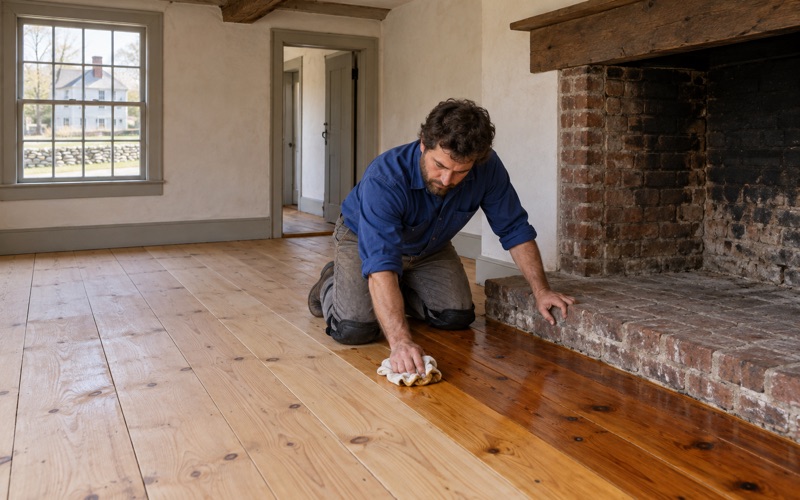
A house built before 1940 has often been sanded more than once. Before we refinish old-growth pine, eastern white pine or early oak, we check the board count and thickness, because older boards have less wood left above the tongue. A heavy drum sander pass can use up what little remains.
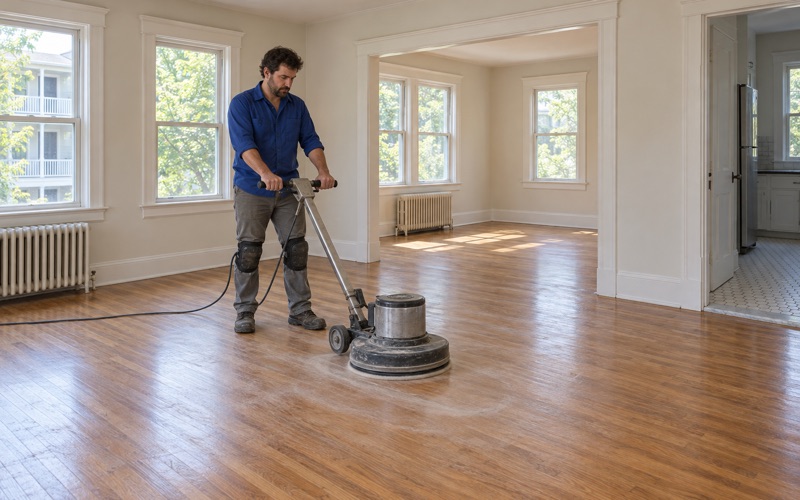
Where a floor is too thin for another full sand, a screen and recoat with a buffer can refresh the finish without cutting into the wood. Pet urine stains and deep water stains that have turned black usually call for board replacement instead, laced into the existing tongue and groove.
Uncovered Floors and Finish Choices
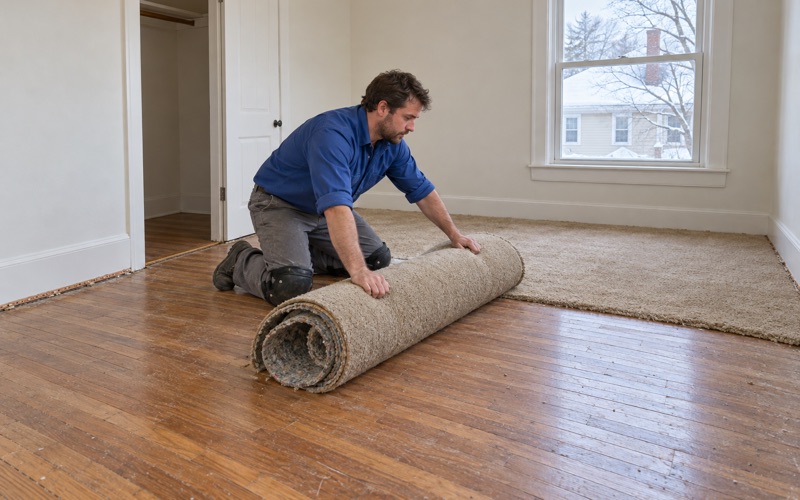
Oak found under old carpet, linoleum or paint is cleaned of carpet pad, staples, tack strip and adhesive before it is sanded. Orange oak under an aged shellac finish is common in older houses, and once sanded it often shows the grain of red oak or white oak well enough to take stain samples before a color is chosen.
Finishes are chosen to fit the Massachusetts VOC limits for wood coatings, which are stricter than the federal ones. Within those limits, we weigh waterborne polyurethane, oil-modified polyurethane and hardwax oil against the room’s traffic, the sheen level an owner wants, and how long the household can stay off the floor.
Engineered Floors and the Seasons
Engineered flooring from a later renovation can be sanded only if its engineered wear layer allows it, so we measure that layer before promising a sanding. Some prefinished products are better served by a board replacement or a recoat than by a full sand.
Boston sits in National Weather Service forecast zone MAZ015, ‘Suffolk,’ and the seasons show up in the wood. Winter gaps open between boards when the heat runs and the air is dry, while cupping or crowning can follow a humid summer or a leak. That is why we read moisture before closing gaps, replacing boards or putting down a new finish.
- 20+ Years on Wood Floors
- Free Written Estimates
- Stairs Priced Per Tread